


Listen to the article
France has uncovered a sophisticated disinformation campaign targeting a major defense deal between India and French aircraft manufacturer Dassault Aviation, according to a report by Viginum, the French government agency responsible for detecting foreign digital interference.
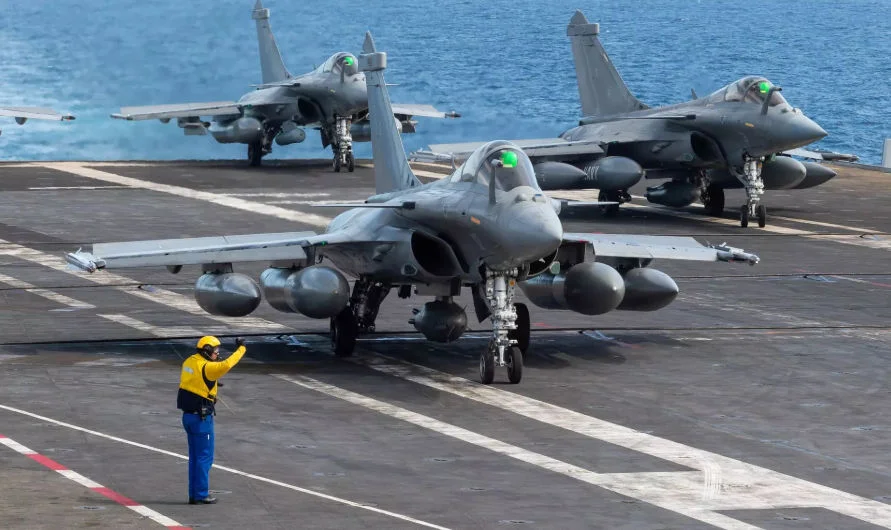
The campaign, which began in November 2025, involved a series of forged letters circulated on social media platforms aimed at undermining India’s planned acquisition of 26 Rafale Marine fighter jets for its naval aviation fleet. These aircraft are intended to bolster the air wing capabilities of India’s indigenous aircraft carrier, INS Vikrant.
The operation was initially exposed by French satirical weekly Le Canard enchaîné before being formally investigated by French authorities. According to the Viginum report, the first instance of disinformation appeared on November 25 when a fabricated document surfaced on X (formerly Twitter). The post came from an account presenting as a Pakistani digital communications expert.
The forged letter, falsely attributed to Éric Trappier, CEO of Dassault Aviation, claimed that delivery of the naval fighter jets would face significant delays. It further alleged that Indian pilots would be required to complete a mandatory ten-week training program in New Delhi before the aircraft could be handed over, suggesting complications in the multi-billion dollar defense agreement.
The campaign intensified on November 26 when a second fake letter, again bearing Trappier’s signature, was shared by a different social media account known for distributing pro-Pakistani content. This document attempted to validate the first forgery by calling on Indian authorities to investigate the supposed “leak” of the initial letter, effectively reinforcing a fabricated narrative of internal discord and administrative complications.
The disinformation effort took a diplomatic turn on December 8 with the circulation of a third forged letter, this one purporting to be from India’s External Affairs Minister. The falsified document contained pointed criticism directed at the French ambassador in New Delhi regarding the alleged delays, apparently attempting to create tension in the Franco-Indian diplomatic relationship.
When contacted by French media, Dassault Aviation declined to comment specifically on the forged letters, indicating they preferred not to amplify the reach of the disinformation. This approach marks a departure from the company’s previous strategy of aggressively denying similar rumors targeting their defense contracts.
Defense analysts note that this incident is not isolated. In May 2025, following India’s “Operation Sindoor,” a network of approximately 1,000 fake social media accounts coordinated the distribution of manipulated videos and images falsely claiming that Pakistani forces had shot down three Indian Rafale jets using Chinese-origin defense systems.
Intelligence assessments, including reports from U.S. agencies, have previously indicated that such campaigns often aim to undermine confidence in French defense exports while promoting competing military platforms from rival nations. The timing of this latest operation is particularly significant as it coincides with India’s confirmed commitment to the Rafale Marine platform to enhance its naval aviation capabilities in the Indo-Pacific region.
The Rafale M (Marine) is the carrier-capable variant of Dassault’s multirole fighter, equipped with specialized landing gear, a strengthened airframe, and an arrestor hook for carrier operations. This acquisition represents a significant enhancement to India’s maritime security posture, particularly as regional naval competition intensifies in the Indian Ocean.
The revelations from Viginum highlight the increasing vulnerability of major defense procurement programs to information warfare tactics. As international defense partnerships become more critical to regional security architectures, particularly in the Indo-Pacific, the protection of legitimate information channels from malicious digital interference has emerged as a security priority for both France and India.
Fact Checker
Verify the accuracy of this article using The Disinformation Commission analysis and real-time sources.

10 Comments
The Rafale fighter jet acquisition is an important capability boost for India’s naval forces, so I’m glad the French authorities were able to expose this disinformation effort. Undermining such deals through forged documents and social media manipulation is a concerning tactic that needs to be addressed.
You make a good point. Maintaining the integrity of major defense procurement processes is crucial. Disinformation campaigns like this one undermine national security and must be rigorously countered.
The Rafale fighter jet deal is crucial for India’s naval aviation capabilities, so I’m glad the disinformation campaign was exposed. Fabricating documents and spreading false information on social media to undermine such an important procurement is unethical and concerning.
Absolutely. It’s reassuring that the French government was able to detect and investigate this operation. Maintaining the integrity of major defense contracts is vital for national security.
The exposure of this disinformation campaign against the Rafale deal is a positive development. Undermining critical defense procurements through forged documents and social media manipulation is a serious issue that needs to be addressed. I hope this incident leads to greater vigilance and security around such major acquisitions.
I agree. Protecting the integrity of defense deals from foreign interference should be a top priority. Kudos to the French authorities for uncovering this operation – it’s an important step in combating this threat.
Interesting to see France uncover this disinformation campaign targeting the Rafale defense deal. Undermining important military acquisitions through fake letters and social media manipulation is concerning. I wonder what the motivations were behind this effort.
You’re right, this type of sophisticated disinformation is worrying. It speaks to the need for increased vigilance and transparency around major defense deals to counter foreign interference.
It’s troubling to see a coordinated disinformation campaign targeting the Rafale deal. These types of sophisticated influence operations, designed to sow doubt and disrupt important military acquisitions, are a growing challenge. Robust investigation and transparency around defense contracts are essential.
This disinformation campaign against the Rafale deal seems like a clear attempt to sow doubt and disrupt India’s military modernization plans. I’m curious to know more about the entities behind this and their motivations. Transparent and fact-based reporting on defense procurement is essential.