


Listen to the article
In a significant escalation of tensions between Washington and Brussels over digital regulations, the U.S. State Department imposed visa bans Tuesday on five individuals, including a former high-ranking European Union official, accusing them of forcing American social media platforms to censor content.
Secretary of State Marco Rubio accused the sanctioned individuals of orchestrating “organized efforts to coerce American platforms to censor, demonetize, and suppress American viewpoints they oppose.” He characterized them as “radical activists and weaponized NGOs” who have “advanced censorship crackdowns by foreign states” targeting American speakers and companies.
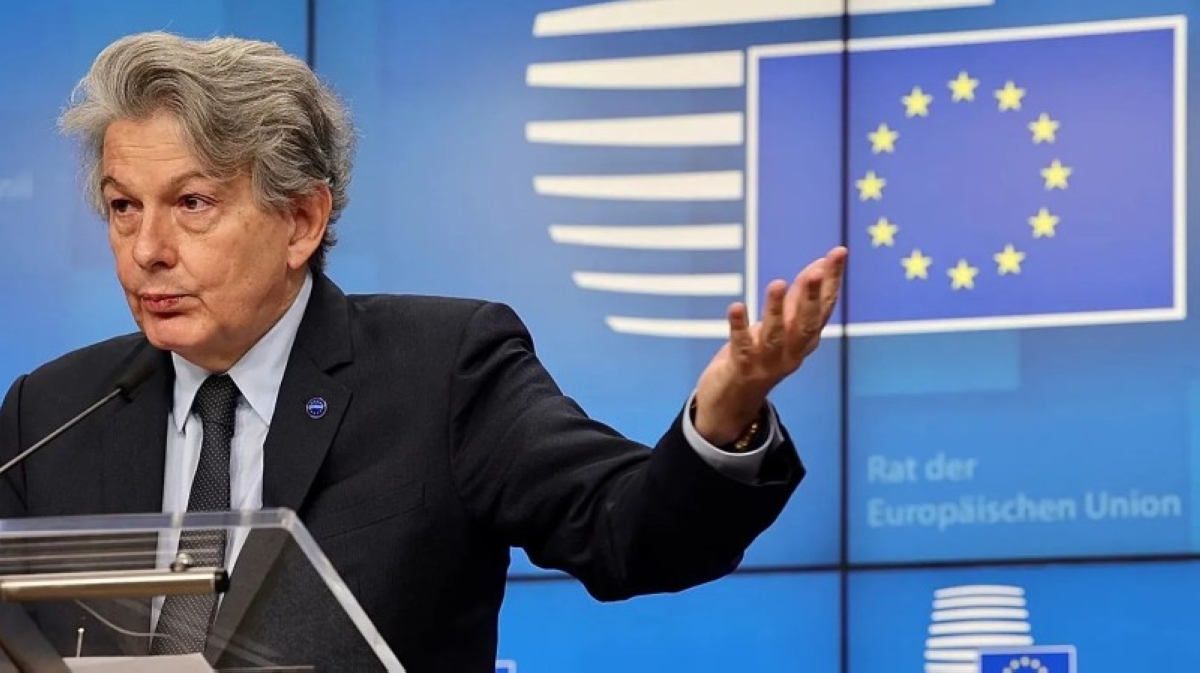
The most prominent figure facing restrictions is Thierry Breton, who served as European Commissioner for the Internal Market from 2019 to 2024. Under Secretary for Public Diplomacy Sarah Rogers specifically identified Breton as the “mastermind” behind the EU’s Digital Services Act (DSA), the comprehensive regulatory framework governing digital platforms operating in Europe.
The other individuals targeted by the visa bans include Anna-Lena von Hodenberg and Josephine Ballon of the German nonprofit HateAid, Clare Melford, co-founder of the UK-based Global Disinformation Index, and Imran Ahmed, the British chief executive of the U.S.-based Center for Countering Digital Hate.
Breton responded to the sanctions on X, formerly Twitter, by asking, “Is McCarthy’s witch hunt back?” He defended the DSA, noting that “90% of the European Parliament — our democratically elected body — and all 27 member states unanimously voted for the DSA.” He concluded with a pointed message: “To our American friends: ‘Censorship isn’t where you think it is.'”
The French government swiftly condemned the U.S. action. Foreign Minister Jean-Noël Barrot issued a statement asserting that Europe “cannot let the rules governing their digital space be imposed by others upon them.” Barrot emphasized that the DSA “was democratically adopted in Europe… it has absolutely no extraterritorial reach and in no way affects the United States.”
Rogers specifically cited a letter Breton sent to X owner Elon Musk in August 2024 ahead of Musk’s planned interview with then-presidential candidate Donald Trump. According to Rogers, Breton had “ominously reminded Musk of X’s legal obligations and ongoing ‘formal proceedings’ for alleged noncompliance with ‘illegal content’ and ‘disinformation’ requirements under the DSA.”
This diplomatic confrontation highlights growing transatlantic tensions over digital regulation. In February, U.S. Vice President JD Vance used one of his first major addresses at the Munich Security Conference to criticize what he described as censorship efforts in Europe, claiming European leaders had “threatened and bullied social media companies to censor so-called misinformation.”
The DSA, which came into full effect for large platforms in 2023, requires major tech companies to explain content moderation decisions, provide transparency to users, and ensure researchers can access data to understand issues like children’s exposure to harmful content.
The regulation has become a contentious issue for U.S. conservatives who view it as a mechanism to silence right-wing voices both in Europe and globally – an accusation European officials have repeatedly denied.
The European Commission previously dismissed American censorship allegations in August, calling them “nonsense” and “completely unfounded.” The dispute intensified earlier this month when the Commission found that Musk’s X platform had violated DSA rules on advertising transparency and verification methods, sparking further controversy in the United States.
This escalation represents the latest chapter in an increasingly fraught relationship between U.S. and European regulators over how digital platforms should be governed, reflecting deeper divergences in approaches to free speech, content moderation, and the responsibilities of tech companies in democratic societies.
Fact Checker
Verify the accuracy of this article using The Disinformation Commission analysis and real-time sources.

26 Comments
Production mix shifting toward Social Media might help margins if metals stay firm.
If AISC keeps dropping, this becomes investable for me.
If AISC keeps dropping, this becomes investable for me.
Good point. Watching costs and grades closely.
If AISC keeps dropping, this becomes investable for me.
Good point. Watching costs and grades closely.
Good point. Watching costs and grades closely.
Silver leverage is strong here; beta cuts both ways though.
Good point. Watching costs and grades closely.
Good point. Watching costs and grades closely.
Exploration results look promising, but permitting will be the key risk.
Good point. Watching costs and grades closely.
Good point. Watching costs and grades closely.
Uranium names keep pushing higher—supply still tight into 2026.
Good point. Watching costs and grades closely.
Good point. Watching costs and grades closely.
Exploration results look promising, but permitting will be the key risk.
Good point. Watching costs and grades closely.
Production mix shifting toward Social Media might help margins if metals stay firm.
Good point. Watching costs and grades closely.
Nice to see insider buying—usually a good signal in this space.
I like the balance sheet here—less leverage than peers.
Good point. Watching costs and grades closely.
Silver leverage is strong here; beta cuts both ways though.
Good point. Watching costs and grades closely.
Silver leverage is strong here; beta cuts both ways though.