


Listen to the article
In an era where digital platforms have transformed how we consume information, social media has evolved far beyond its original purpose of connecting individuals. It now serves as a primary news source for many Americans, raising critical questions about the reliability of shared information and the responsibility of users to verify content before sharing.
According to Kalle Lyytinen, a professor at Case Western Reserve University who has studied digital innovation for the past 15 years, the landscape of information dissemination has fundamentally changed. “The distribution of disinformation and scale and speed, which we didn’t have before,” Lyytinen explains, pointing to a stark contrast with traditional media.
“We had printed press, which operated daily, and that information was scarce, and it was actually pretty expensive to produce,” he notes. “You have digital technologies which enable you to produce all types of fake news, from video to audio to everything.”
This transformation has created fertile ground for misinformation to flourish. A recent Reuters Institute report identified TikTok and X (formerly Twitter) as the platforms where users have the most difficulty distinguishing between real and fake news. Facebook and Instagram were also flagged as problematic in this regard. The stakes are high, with Pew Research reporting that 54% of U.S. adults now rely on social media as their news source.
The economics of social media platforms exacerbate the problem. “Algorithms are driven by clicks,” Lyytinen points out. “Who is excited about that? That gets amplified, and typically, as I said, things which are false, but exciting or surprising, provocative to the people, negative news, typically.”
This engagement-driven model means sensational content—often misleading or entirely false—receives disproportionate visibility. Without proper media literacy training, users can easily fall prey to manipulation. “If people are not trained to understand what it is and that these are fake, it provides potential for all types of manipulation—political, social, economic manipulation,” warns Lyytinen.
Cornell University Library offers practical guidance for social media users to avoid spreading misinformation: investigate the full context behind posts, verify publication dates, cross-reference with other credible sources, exercise critical judgment, and research the credibility of authors and organizations before sharing content.
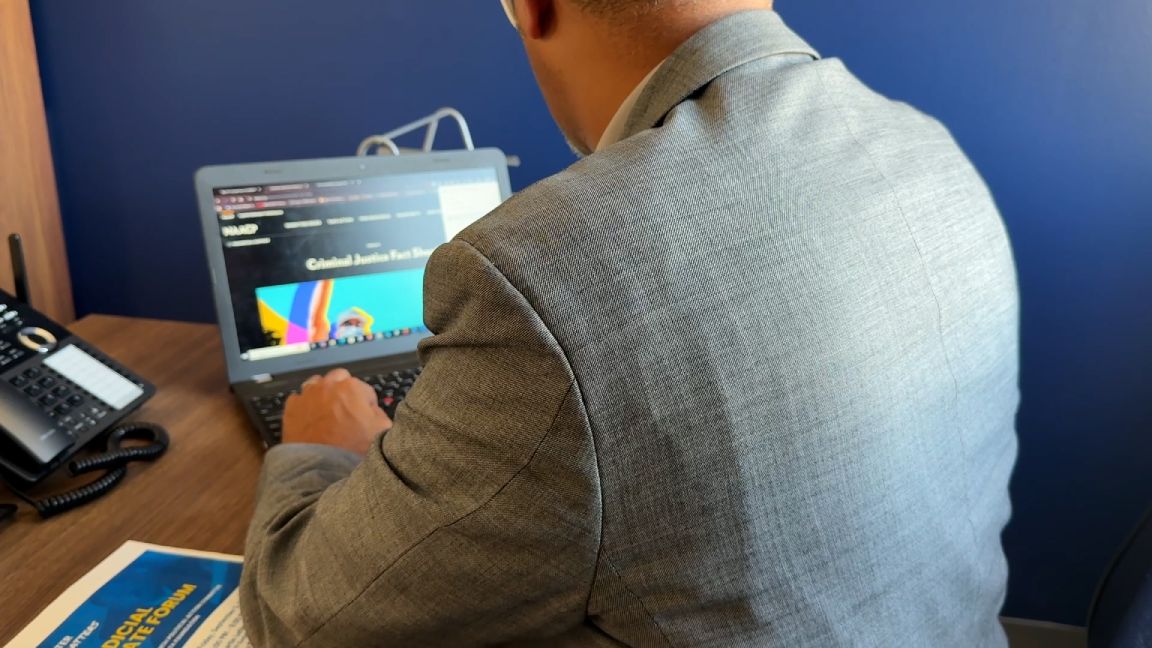
Established community organizations have recognized their role in countering misinformation. William Tarter Jr., president of the Cleveland branch NAACP, emphasizes his organization’s commitment to information integrity. “The NAACP positions itself as an organization that people can turn to for information on a variety of topics,” Tarter says.
The organization prioritizes accuracy in its communications about public health, elections, and other community concerns. “We want to make sure that the information that we share is factual and is cited where people can go and get more information about the things that we see and what we read,” Tarter adds.
While individual users bear responsibility for what they share, Lyytinen argues that social media platforms must also be held accountable. “Social media platforms, they know it, but they will not admit that they are responsible for it,” he asserts. “They could do things otherwise, but they have chosen not to.”
The regulatory environment has yet to catch up with this new reality. Currently, no specific regulations require social media companies to actively monitor and remove misinformation from their platforms, leaving a significant gap in accountability as false information continues to proliferate online.
As social media’s role in news distribution grows, the challenge of maintaining an informed citizenry becomes increasingly complex, requiring coordinated efforts from platforms, users, organizations, and potentially regulatory bodies to safeguard the integrity of our information ecosystem.
Fact Checker
Verify the accuracy of this article using The Disinformation Commission analysis and real-time sources.

21 Comments
The cost guidance is better than expected. If they deliver, the stock could rerate.
Good point. Watching costs and grades closely.
Good point. Watching costs and grades closely.
Silver leverage is strong here; beta cuts both ways though.
Good point. Watching costs and grades closely.
Production mix shifting toward Social Media might help margins if metals stay firm.
Exploration results look promising, but permitting will be the key risk.
Good point. Watching costs and grades closely.
Good point. Watching costs and grades closely.
I like the balance sheet here—less leverage than peers.
Good point. Watching costs and grades closely.
Good point. Watching costs and grades closely.
Production mix shifting toward Social Media might help margins if metals stay firm.
Good point. Watching costs and grades closely.
Interesting update on Detecting Falsehoods: A Guide to Identifying Social Media Misinformation. Curious how the grades will trend next quarter.
Good point. Watching costs and grades closely.
Nice to see insider buying—usually a good signal in this space.
Good point. Watching costs and grades closely.
Nice to see insider buying—usually a good signal in this space.
Good point. Watching costs and grades closely.
Good point. Watching costs and grades closely.