


Listen to the article
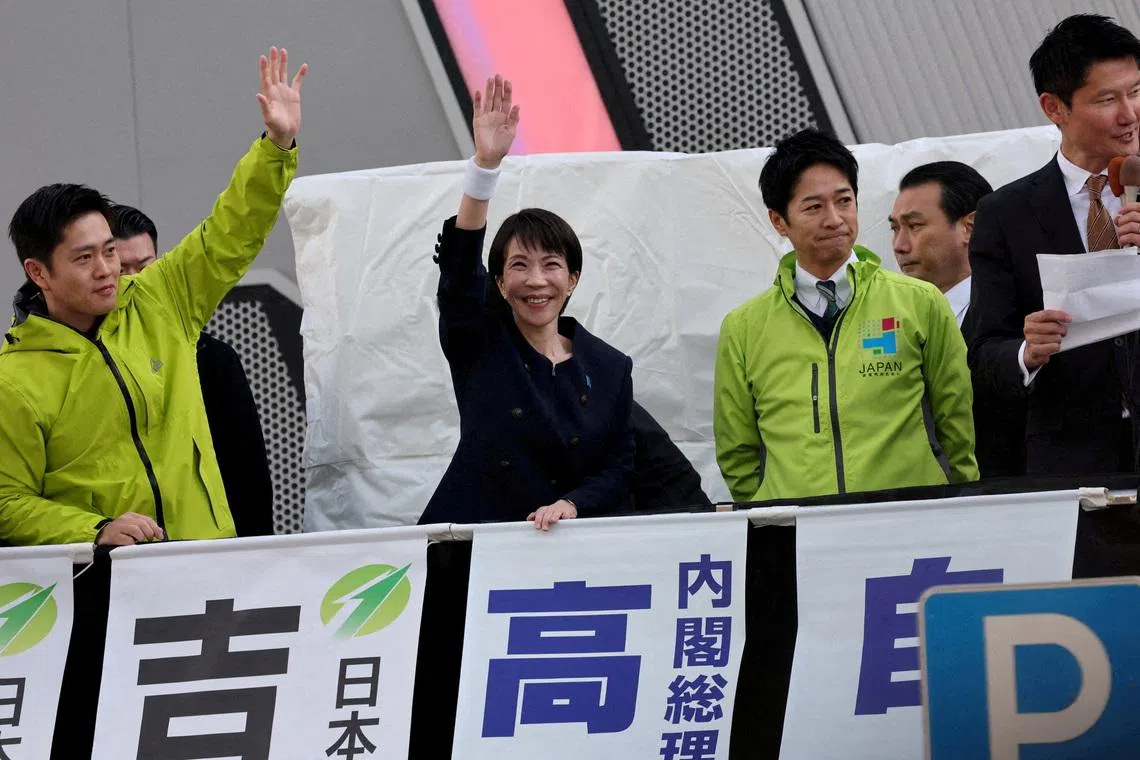
In the weeks surrounding Prime Minister Sanae Takaichi’s rise to power in Japan, a coordinated Chinese misinformation campaign targeted her through dozens of social media accounts, according to a U.S. research organization focused on national security.
The Foundation for Defense of Democracy’s (FDD) Center on Cyber and Technology Innovation identified 35 accounts on X and nine Tumblr channels that launched attacks against Takaichi, portraying her as an illegitimate, militaristic leader pushing Japan toward war. The accounts specifically characterized her as a “cult-backed” figure with reckless intentions, said Maria Riofrio, a researcher with the FDD.
These accounts are part of a larger network of at least 327 social media accounts that have been systematically targeting Beijing’s adversaries and promoting pro-China policy positions since at least December. The operation has extended beyond Japan to influence domestic politics in the United States, Philippines, and Latin America, while also attacking human rights organizations.
A spokesperson for Prime Minister Takaichi confirmed awareness of suspicious foreign social media accounts posting content related to Japan’s elections. “We consider this to be a national security threat that undermines the very foundations of democracy, including the fairness of elections and freedom of the press. We believe that countermeasures must be urgently prioritized,” the spokesperson stated.
The Chinese Embassy in Washington dismissed the FDD analysis as “groundless.” Embassy spokesperson Liu Pengyu said, “The Chinese government consistently opposes and combats the use of fake accounts and other tactics to manipulate public opinion or spread disinformation. We urge the relevant parties to stop making unfounded accusations and smearing others based on speculation.”
Riofrio identified the campaign as a distinct cluster based on coordinated messaging containing overlapping hashtags and similar content promoting pro-China narratives. The cluster is believed to be part of long-running Chinese information operations that cybersecurity experts have labeled “Spamouflage” or “Dragonbridge.”
While direct engagement with the content appears low, the material gains visibility in social media feeds through algorithmic manipulation. For example, one post accusing Takaichi of cult membership received just two likes but was viewed over 1,000 times.
“China has the political will to interfere in Japanese elections and internal affairs,” Riofrio noted, adding that similar operations target other countries, including the United States. Earlier this week, Japan’s Nikkei newspaper separately reported on suspected foreign-backed online operations targeting Japanese elections.
The FDD analysis revealed that nearly half of the 327 accounts attacked U.S. President Donald Trump, pushing narratives that his drug and border policies worsened America’s fentanyl crisis while deflecting blame from China. In early February, six accounts with fewer than 10 followers each generated hundreds of likes, retweets, and replies, accumulating nearly 18,000 views.
One account in the network, “FentanylFreeA,” appears designed to mimic the U.S. Drug Enforcement Agency’s legitimate Fentanyl Free America campaign, using similar naming and identical imagery while attacking both the U.S. and India as sources of fentanyl precursor drugs.
Cybersecurity experts indicate that Spamouflage/Dragonbridge operations have been active since at least 2017, repeatedly targeting audiences worldwide. A spokesperson for Google’s Threat Intelligence Group described Dragonbridge as “the most prolific pro-PRC information operations operator” they track based on “its massive scale and assertive narrative agenda.”
While maintaining focus on the U.S., overseas dissidents, government critics, and international NGOs, Dragonbridge has become increasingly aggressive in the Asia-Pacific region, targeting Japanese political leadership, Japan-Taiwan relations, Vietnam’s South China Sea activities, and the governments of India and the Philippines.
In February, OpenAI reported disrupting attempts by a Chinese law enforcement official to plan a multi-stage information attack on Takaichi in mid-October, further highlighting the ongoing nature of these operations.
Fact Checker
Verify the accuracy of this article using The Disinformation Commission analysis and real-time sources.

13 Comments
Interesting allegations of a Chinese disinformation campaign targeting political figures. I wonder what the motivations and intended effects are behind these coordinated social media attacks. It’s concerning to see foreign interference in domestic politics like this.
You raise a good point. Combating foreign disinformation campaigns is a complex challenge that democracies have to grapple with. Transparency and public awareness are crucial to mitigate the impact of such tactics.
This is a troubling development if confirmed. Undermining the democratic process through coordinated disinformation campaigns is a serious concern. Maintaining the integrity of elections and political discourse should be a top priority for governments and social media platforms.
This is concerning if true. China has a history of using social media to spread propaganda and undermine its geopolitical rivals. It will be important to closely examine the evidence behind these claims of a coordinated campaign.
I agree, verifying the claims is critical. Disinformation can be hard to counter, so a measured, fact-based approach is needed to address this issue.
The use of social media for political influence operations is a concerning global trend that requires a multifaceted response. Strengthening digital resilience, improving platform transparency, and fostering international cooperation will all be crucial in addressing this challenge.
The rise of social media has enabled new forms of foreign influence operations. While freedom of expression is important, we must also find ways to combat the malicious use of these platforms to sow discord and undermine democratic institutions.
While the details of this case are still emerging, it underscores the importance of media literacy and critical thinking when consuming information online. Identifying and countering coordinated disinformation campaigns should be a priority for both governments and social media companies.
Allegations of Chinese interference in domestic politics are not new, but this specific case highlights the evolving tactics used. Careful investigation and fact-checking will be crucial to understanding the scope and impact of this reported disinformation campaign.
The use of social media for political influence operations is an increasingly common tactic. While the details here are still emerging, it highlights the need for robust monitoring and response mechanisms to counter foreign interference in domestic affairs.
This is a concerning trend that goes beyond individual countries or political figures. The use of social media for coordinated disinformation campaigns is a global challenge that requires a unified, multilateral response to protect the integrity of democratic processes.
The reported Chinese disinformation campaign targeting Takaichi and Trump raises important questions about the vulnerabilities of social media platforms and the need for stronger safeguards against foreign interference in domestic affairs. Transparent and accountable oversight will be key.
This is a complex issue that highlights the need for a comprehensive and nuanced approach to combating foreign disinformation campaigns. Balancing free expression with the need to maintain the integrity of democratic processes will be an ongoing challenge for policymakers and tech companies.