


Listen to the article
In a significant move against Russian disinformation efforts, the European Union imposed sanctions on 12 individuals on December 15, including three Western former security professionals who have become prominent purveyors of pro-Kremlin narratives.
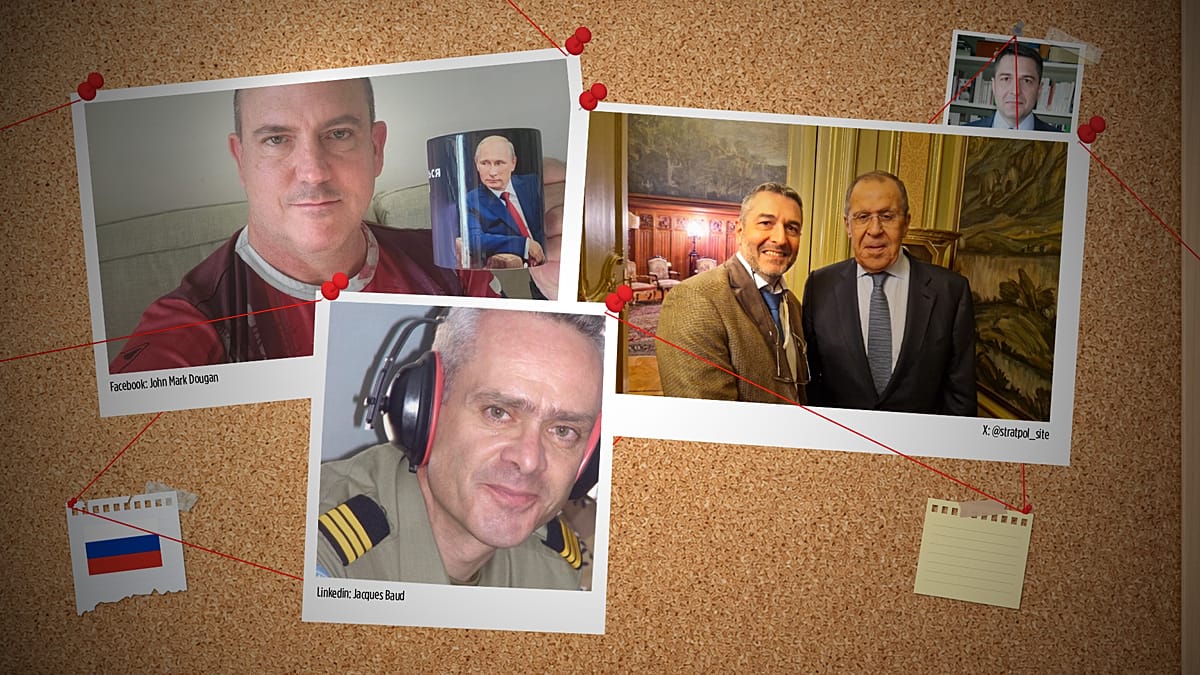
The sanctions, initiated by France, target individuals accused of participating in Russia’s ongoing hybrid warfare against EU member states and partners. Among those sanctioned are a former Florida sheriff, a French military veteran, and a Swiss intelligence officer who have leveraged their past careers to lend credibility to Russian propaganda.
“Their past careers in intelligence and the military conjure up ideas of secrecy, as well as the notion of the ‘deep state’ for the public,” explained Hervé Letoqueux, CEO of disinformation monitoring company Check First, in comments to Euronews’ fact-checking team. Letoqueux, who previously led France’s agency for foreign digital interference, added that their backgrounds provide “a form of authority, so they can say whatever they want” without needing to provide evidence.
Xavier Moreau, a French-born former military officer who has lived in Russia since 2000 and gained Russian citizenship in 2013, is described by French Foreign Minister Jean-Noël Barrot as a disseminator of “Kremlin propaganda” in Europe. Moreau has repeatedly spread debunked pro-Russian narratives, including claims that NATO orchestrated Moscow’s invasion of Ukraine and that Kyiv was responsible for downing Malaysian Airlines Flight 17 in 2014.
Moreau participated as a “foreign observer” in Russia’s internationally unrecognized referendums on annexing Crimea and later the Donbas region. In 2014, he launched a website called “Stratpol,” presenting himself as a “political and strategic analysis expert.” While initially appearing on mainstream French media outlets like Sud Radio and LCI, Moreau has increasingly been featured on Russian-backed media platforms including Sputnik and Russia Today France.
After YouTube banned him in 2022 for violating hate speech policies, Moreau shifted to alternative streaming platforms like Rumble and Odysee, where content moderation is less stringent.
Jacques Baud, a former Swiss army colonel and strategic analyst, is the second Swiss national sanctioned for Russian propaganda activities this year, following Swiss-Cameroonian influencer Nathalie Yamb in April. Baud regularly appears on pro-Russian media outlets, promoting narratives that Ukraine orchestrated its own invasion as part of a scheme to secure NATO membership.
“The sanctioned individuals, in a way, share a fascination with authoritarian power. Jacques Baud, for example, displayed sympathies for Bashar al-Assad, denying the abuses committed by his regime,” Letoqueux noted in his analysis.
According to Letoqueux, while Moreau and Baud’s direct influence may be limited to audiences already sympathetic to conspiracy theories and ultra-nationalist views, their appearances on mainstream media have allowed their narratives to reach less discerning audiences. This media exposure has been particularly problematic in France, where these individuals have had platforms to disseminate pro-Kremlin messaging to the broader public.
The third prominent figure sanctioned is John Mark Dougan, a former Florida deputy sheriff who fled to Moscow in 2016. Dougan has been instrumental in advancing pro-Kremlin disinformation campaigns throughout Europe, supporting activities of Storm-1516, a Russian propagandist operation aimed at discrediting Western nations and Ukraine.
Dougan has also been linked to the CopyCop network, which creates fake news websites that mimic legitimate news organizations using AI-generated content. As part of these efforts, he allegedly operated a network of more than 100 AI-powered websites targeting Germany’s snap federal elections earlier this year.
EU officials, Western intelligence reports, and investigative journalists have connected Dougan to Russia’s military intelligence agency and the Center for Geopolitical Expertise, a Moscow-based think tank involved in information manipulation campaigns targeting Western nations and Ukraine.
This latest round of sanctions highlights the EU’s growing concern about the role of Western individuals in promoting Russian disinformation and the sophisticated nature of Moscow’s information warfare operations across Europe.
Fact Checker
Verify the accuracy of this article using The Disinformation Commission analysis and real-time sources.

14 Comments
It’s encouraging to see the EU taking action against those involved in spreading Russian propaganda. Countering disinformation campaigns requires a multifaceted approach, and these sanctions could be an important part of that effort.
The EU’s move to sanction these individuals sends a strong message, but the real challenge will be in preventing the continued spread of these narratives. Disinformation can be persistent, even when the original sources are targeted.
Sanctions can be a useful tool, but their long-term effectiveness in curbing the spread of disinformation remains to be seen. Continued efforts to educate the public, fact-check claims, and address the underlying drivers of these narratives will likely be necessary.
I’m curious to learn more about the specific tactics and narratives these individuals have been pushing. It’s important to understand how they have been able to leverage their backgrounds to lend credibility to Russian propaganda.
Agreed, more details on their activities and the specific disinformation they have spread would be helpful in assessing the impact of these sanctions. Understanding their methods could inform future efforts to counter such threats.
The EU’s decision to sanction these individuals sends a strong signal, but it will be important to monitor the impact and whether it leads to a meaningful reduction in the spread of Russian disinformation. Sustained efforts on multiple fronts will likely be required.
This is a complex issue, and I’m curious to learn more about the specific strategies these individuals have employed to amplify Russian propaganda. Understanding their tactics could inform how we can best counter this threat in the future.
Sanctions can be a useful tool, but they are just one part of the solution. Addressing the broader challenge of disinformation will require a multifaceted approach, including public education, fact-checking, and efforts to limit the amplification of these narratives across various platforms.
The use of former security professionals to lend credibility to Russian propaganda is a concerning tactic. I hope these sanctions help limit the reach of these individuals, but ongoing vigilance will be crucial to addressing the broader disinformation challenge.
This is an interesting development. It’s concerning to see former security professionals spreading Russian propaganda, but sanctions could help counter these disinformation efforts. It’ll be important to monitor how this plays out.
I agree, the use of credible-sounding voices to amplify Russian narratives is a concerning tactic. Sanctions may help limit the reach of these individuals, but continued vigilance will be key.
Sanctions are a strong response, but it remains to be seen how effective they will be in curbing the spread of Russian propaganda. Disinformation can be difficult to combat, especially when it comes from figures with apparent authority.
You raise a good point. Disinformation is a complex issue, and sanctions alone may not be enough. Ongoing efforts to fact-check claims, educate the public, and limit the amplification of these narratives will likely be necessary as well.
The use of former security professionals to lend credibility to Russian propaganda is a concerning tactic. I hope these sanctions help to limit the influence of these individuals, but it will be important to continue monitoring the situation and adapting our strategies as needed.