


Listen to the article
Former MSNBC Host Warns Trump Could Transform U.S. Media into Government Propaganda Machine
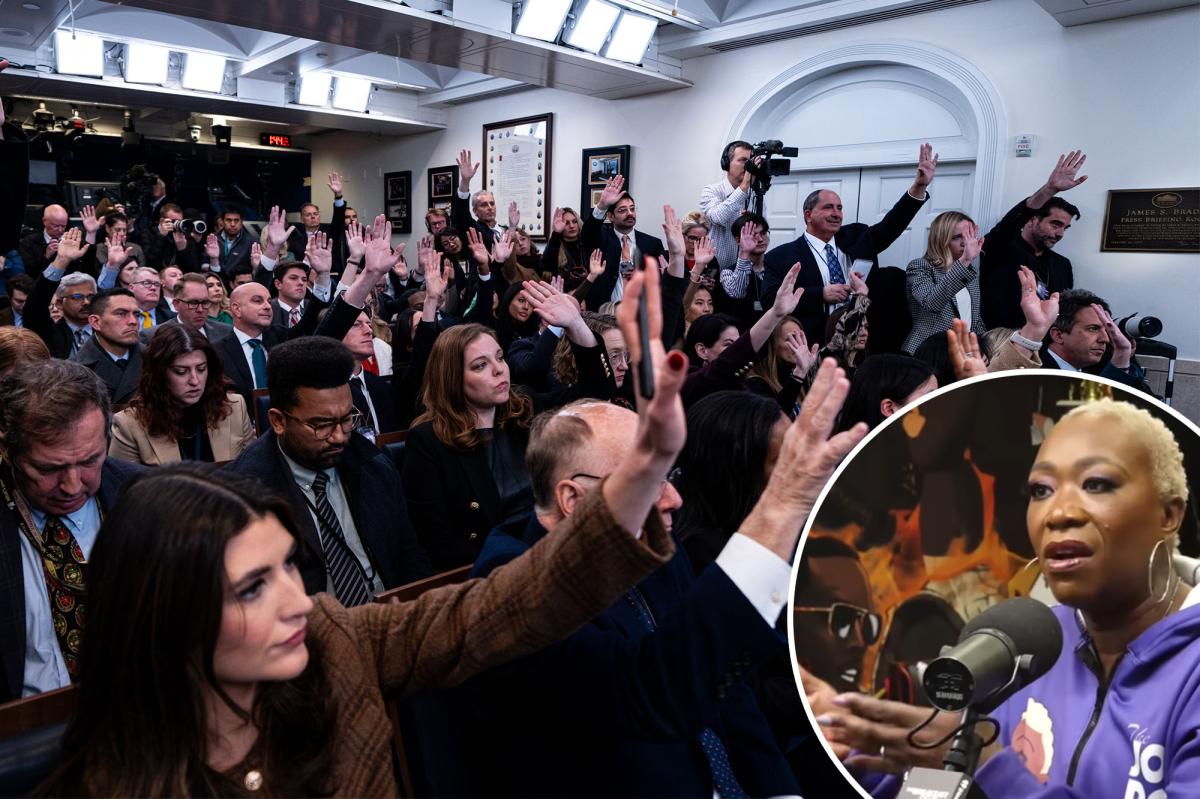
Former MSNBC host Joy Reid has issued a stark warning about what she perceives as President Donald Trump’s growing influence over American media, suggesting it could eventually lead to a North Korea-style system where all major outlets fall under government control.
Speaking on “The Breakfast Club” podcast released Tuesday, Reid, whose former network recently rebranded as MS NOW, expressed concerns about the potential for media consolidation under Trump’s administration.
“You get this one perspective that just happens to be the same perspective as the president of the United States. And now we’re North Korea because, where can you get any alternative view?” Reid cautioned during the discussion.
She drew parallels to Hungary’s media landscape under Prime Minister Viktor Orban, where critics argue independent journalism has been systematically dismantled. “That’s what Viktor Orban did in Hungary. Basically, all of the media is his perspective and only his perspective, and you can’t get an alternative. That’s a dangerous place, especially in this country – as diverse as this country is,” Reid said.
The media commentator pointed specifically to Trump’s recent involvement in the proposed merger between Netflix and Warner Bros. Discovery’s TV, film studios, and streaming division. Over the weekend, during the Kennedy Center Honors, Trump told reporters, “I’ll be involved in that decision,” and suggested the deal “could be a problem” due to the significant market share it would create.
Reid claimed this involvement stems partly from competing interests, noting that David Ellison, CEO of Paramount Skydance, has been seeking to acquire Warner Bros. Discovery for his own company. “The Netflix president had to go have a personal conversation with Trump to get him to approve the deal because the Ellisons were also wanting to buy Warner, and they’re still lobbying to try to undo that deal so they can buy it,” she explained.
The consolidation of media ownership represents a significant concern for Reid, who predicted a dramatic reduction in media diversity. “It’s like, in the end, we’re going to have like five media companies. They’re going to own everything and own everything from social media to regular media. This is not good because the public is not going to have anywhere to go,” she warned.
Reid further suggested this concentration of ownership could create a media landscape reminiscent of an earlier era but with troubling differences. “Back in the day there were three networks. There’ll be three networks again, but they’ll all be in line with the government,” she said.
This is not the first time Reid has voiced such concerns. Throughout the past year, she has repeatedly warned that media outlets might fall in line with government messaging if threatened with the loss of broadcasting licenses or other financial penalties that could harm their bottom line.
The media landscape in the United States has undergone significant transformation in recent years, with traditional networks facing unprecedented challenges from streaming services and digital platforms. This disruption has coincided with increasing political polarization and debates about media bias, creating a complex environment for journalism.
In response to Reid’s comments, White House spokeswoman Abigail Jackson dismissed the concerns, telling Fox News Digital, “Unfortunately, Joyless Reid has such little self-awareness that she hasn’t realized she is already a propagandist for the Democrat Party – and apparently an ineffective one because she was fired by MSDNC.”
Media experts have long debated the implications of media ownership concentration, with some arguing that diverse ownership is essential for maintaining a healthy range of perspectives in public discourse. The proposed Netflix-Warner Bros. Discovery deal represents one of several major media consolidations in recent years that have raised antitrust concerns among regulators and media watchdogs.
As the media landscape continues to evolve, the tension between corporate consolidation, government oversight, and journalistic independence remains a critical issue for American democracy.
Fact Checker
Verify the accuracy of this article using The Disinformation Commission analysis and real-time sources.

8 Comments
I like the balance sheet here—less leverage than peers.
Uranium names keep pushing higher—supply still tight into 2026.
Good point. Watching costs and grades closely.
Good point. Watching costs and grades closely.
I like the balance sheet here—less leverage than peers.
Good point. Watching costs and grades closely.
Uranium names keep pushing higher—supply still tight into 2026.
Uranium names keep pushing higher—supply still tight into 2026.