


Listen to the article
Former Afghan Attorney General Condemns Herat Civilian Shooting as Terrorism
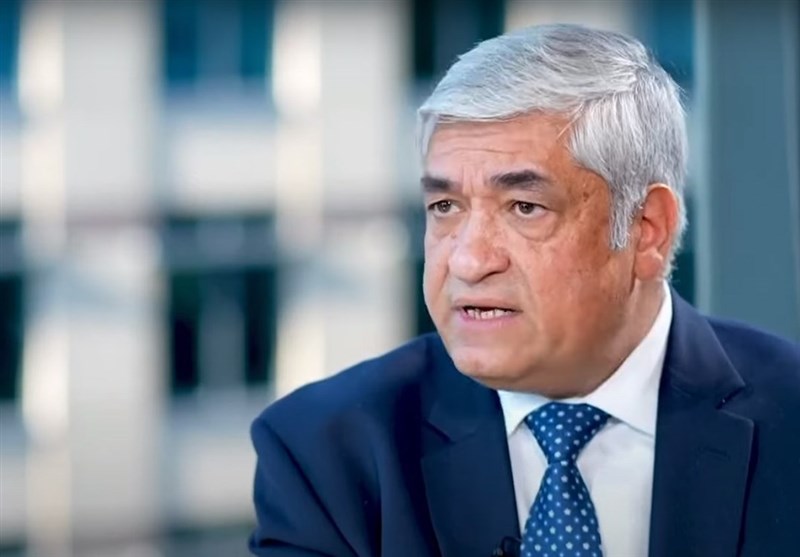
Former Afghan Attorney General Farid Hamidi has strongly condemned the recent shooting of civilians in Herat, attributing the attack to religious hatred propagated by Taliban-affiliated clerics. In a statement issued Saturday, Hamidi characterized the incident as “a clear act of terrorism against civilians on religious grounds.”
The attack occurred Friday at a recreational site in Herat, where motorcycle gunmen opened fire on civilians. While Taliban authorities reported seven deaths and thirteen injuries, local sources speaking to Hasht-e-Subh Daily suggest the casualty figures are substantially higher than officially acknowledged.
Hamidi, who served as Attorney General under the previous government before the Taliban takeover in August 2021, cited international law in his condemnation. He specifically referenced Article 7 of the Rome Statute of the International Criminal Court, stating that the attack constitutes “a clear case of crimes against humanity” under this framework.
The former top prosecutor drew connections between this incident and previous attacks targeting specific religious groups. “The failure to prevent such repeated attacks, similar to previous attacks against specific religious groups, and the open promotion of religious hostility and hatred against other faiths by officials and clerics affiliated with the Taliban regime and group, leads to the criminal responsibility of the group’s officials,” Hamidi stated.
Since taking power, the Taliban have faced numerous accusations of human rights violations, particularly regarding their treatment of religious minorities. International human rights organizations have documented increasing persecution of non-Muslim groups and Muslim minorities such as Hazaras, who predominantly follow Shia Islam.
The Herat attack highlights ongoing security challenges in Afghanistan, where violence continues despite Taliban claims of improved safety. The western province of Herat, bordering Iran, has historically been one of Afghanistan’s more stable regions but has experienced periodic violence since the Taliban’s return to power.
The discrepancy between official casualty figures and reports from independent sources reflects a growing concern about information control under Taliban rule. International media access remains restricted in many parts of Afghanistan, making independent verification of incidents difficult.
Security analysts note that the Taliban face complex challenges in maintaining order across the country. While they have successfully suppressed major opposition forces, they continue to struggle with controlling splinter militant groups, including the Islamic State Khorasan Province (ISKP), which has claimed responsibility for numerous attacks against civilians.
Human rights experts emphasize that the shooting in Herat demonstrates the deteriorating situation for religious freedoms in Afghanistan. “When leadership promotes religious intolerance, it creates an environment where violence against minorities becomes normalized,” explained one regional analyst who requested anonymity for security reasons.
The international community has repeatedly called on the Taliban to honor commitments to protect all Afghan citizens regardless of faith or ethnicity. However, Taliban governance continues to be shaped by strict interpretations of Islamic law that have raised concerns about fundamental rights and protections for minority groups.
As investigations into the Herat attack continue, human rights advocates urge transparent accounting of the incident and accountability for perpetrators. Meanwhile, Afghan citizens face ongoing uncertainty in a country where security incidents remain commonplace and the rule of law continues to be questioned by international observers.
Fact Checker
Verify the accuracy of this article using The Disinformation Commission analysis and real-time sources.

9 Comments
This is a concerning development. If the Taliban are indeed targeting civilians on religious grounds, that would be a clear violation of international law and human rights. We need more transparency and accountability around these types of incidents.
I agree, the former Attorney General raises valid points about this potentially being a crime against humanity. The Taliban need to be held responsible for any deliberate attacks on civilians.
It’s troubling to see reports of the Taliban engaging in religious-based violence against the civilian population. This type of sectarian hatred and intolerance is completely unacceptable. More investigation is needed to uncover the full truth of what happened in Herat.
You’re right, the Taliban’s track record on human rights and religious freedom is very concerning. This incident seems to fit a pattern of targeted attacks on minority groups.
This is a very concerning report. If the Taliban are indeed behind this attack on civilians in Herat, it would be a clear act of religious intolerance and a violation of international law. The international community needs to closely monitor the situation and ensure the Taliban are held accountable for any such crimes.
The former Attorney General’s statement is troubling. Civilians should never be targeted for their religious beliefs. If this incident is confirmed, it would be a clear example of the Taliban’s disregard for human rights and the rule of law. Thorough investigation is needed to uncover the full truth.
I agree, this seems to be part of a disturbing pattern. The international community must put pressure on the Taliban to respect religious freedom and protect all civilians, regardless of faith.
If these allegations are true, the Taliban’s actions in Herat would be a serious war crime. Attacking and killing civilians based on their faith is a flagrant violation of international law and basic human decency. The international community must condemn this in the strongest possible terms.
I share your outrage. The Taliban’s intolerance and use of violence against innocent people is absolutely unacceptable. They must be held to account for these atrocities.