


Listen to the article
South Korean Military Conducted 23 Leaflet Operations Against North Korea Last Year
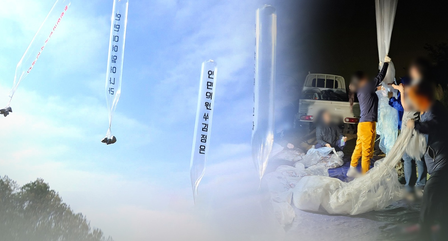
South Korean military forces dispatched propaganda leaflets into North Korea at least 23 times during 2023, according to information revealed Wednesday by lawmaker Choo Mi-ae’s office. The operations followed a National Security Council decision in October 2023 to resume the controversial practice after a six-year suspension.
The defense ministry probe, obtained by Rep. Choo of the ruling party, details how the leaflet campaigns were carried out between February and November 2023. This revelation comes amid serious allegations that former President Yoon Suk Yeol ordered drone deployments to North Korea specifically to provoke a response that could justify his declaration of martial law on December 3, 2023.
According to the investigation, the leaflet operations targeted 35 strategic areas across North Korea, including major population centers like Pyongyang and Wonsan, as well as various military installations. The resumption of these activities followed shortly after South Korea’s Constitutional Court struck down a law prohibiting such campaigns, ruling in September 2023 that the ban infringed upon freedom of expression.
The National Security Council meeting that authorized the resumption included then-Defense Minister Shin Won-sik and then-Unification Minister Kim Yung-ho, along with other high-ranking security officials. However, key details about the justification for resuming the operations remain classified, leaving questions about the full context of the decision.
Minister Shin reportedly conveyed the decision to military leadership in late 2023, after which the military’s dedicated propaganda warfare unit began implementing the operations. The leaflet campaigns represented a significant shift in South Korea’s approach, as such activities had been suspended since July 2017.
North Korea has historically responded with intense hostility to such propaganda efforts, viewing them as existential threats to regime stability. The isolated nation is particularly sensitive to outside information reaching its citizens, as it could undermine the government’s tight control over media and communication.
In an apparent response to South Korea’s renewed leaflet campaigns, North Korea resumed its own counter-operations in May 2023. Thousands of trash-filled balloons were sent across the border into South Korea, with Pyongyang explicitly claiming these actions were retaliatory measures against what they described as Seoul’s initial provocation.
The timing of these operations has raised serious concerns in light of a recent special counsel investigation. That probe concluded that former President Yoon had begun preparing for his declaration of martial law as early as October 2023—the same period when the leaflet operations were authorized—more than a year before the actual declaration on December 3, 2024.
The synchronicity between the resumption of provocative leaflet campaigns and apparent preparations for martial law has intensified scrutiny of the former administration’s actions. In response to these findings, the defense ministry has established a special investigative unit to examine potential military involvement in Yoon’s martial law plans.
Inter-Korean relations experts note that propaganda leaflet campaigns have historically been flashpoints for escalating tensions on the Korean Peninsula. Such operations are considered particularly sensitive due to the North Korean regime’s vulnerability to outside information and its pattern of responding with disproportionate military threats or actions when such campaigns occur.
The investigation continues as South Korean authorities attempt to determine whether these leaflet operations were legitimate defense activities or part of a coordinated effort to manufacture a crisis situation that could justify extraordinary domestic security measures.
Fact Checker
Verify the accuracy of this article using The Disinformation Commission analysis and real-time sources.

35 Comments
The cost guidance is better than expected. If they deliver, the stock could rerate.
23 leaflet operations is quite a lot. I’m curious to know the goals and intended impacts. Do they hope to undermine the North Korean regime or reach citizens directly? Either way, it’s a risky approach that could backfire.
You raise a good point. The efficacy and intended outcomes of these campaigns are unclear. Escalating tensions through unilateral propaganda efforts seems short-sighted. It would be better to pursue more constructive dialogue and engagement.
If AISC keeps dropping, this becomes investable for me.
Good point. Watching costs and grades closely.
I like the balance sheet here—less leverage than peers.
Good point. Watching costs and grades closely.
Uranium names keep pushing higher—supply still tight into 2026.
Good point. Watching costs and grades closely.
Good point. Watching costs and grades closely.
I’m skeptical that these leaflet drops will have any real impact beyond heightening tensions between the two Koreas. Seems like a symbolic gesture at best. Hard to know if the information actually reaches North Korean citizens given the regime’s tight control.
Uranium names keep pushing higher—supply still tight into 2026.
Good point. Watching costs and grades closely.
Silver leverage is strong here; beta cuts both ways though.
Good point. Watching costs and grades closely.
Good point. Watching costs and grades closely.
Production mix shifting toward Propaganda might help margins if metals stay firm.
Good point. Watching costs and grades closely.
Good point. Watching costs and grades closely.
If AISC keeps dropping, this becomes investable for me.
Good point. Watching costs and grades closely.
Nice to see insider buying—usually a good signal in this space.
Interesting update on South Korean Military Conducted 23 Propaganda Leaflet Operations Against North Korea Last Year. Curious how the grades will trend next quarter.
Good point. Watching costs and grades closely.
This is a delicate and complex situation. While freedom of expression is important, these propaganda campaigns could further escalate tensions. I hope both sides can find constructive ways to engage and improve relations.
Interesting to see South Korea resume these propaganda leaflet operations against the North. I wonder if they are effective at reaching the North Korean public or if they just antagonize the regime. Curious to see how North Korea responds.
Exploration results look promising, but permitting will be the key risk.
Production mix shifting toward Propaganda might help margins if metals stay firm.
Good point. Watching costs and grades closely.
Good point. Watching costs and grades closely.
If AISC keeps dropping, this becomes investable for me.
Production mix shifting toward Propaganda might help margins if metals stay firm.
Good point. Watching costs and grades closely.
Silver leverage is strong here; beta cuts both ways though.
Propaganda leaflet operations seem like an outdated tactic that’s unlikely to sway public opinion in North Korea. I wonder if there are more effective ways for South Korea to communicate with the North and its people.