


Listen to the article
Ukrainian Court Sentences Crimean Media Figure to 11 Years for War Propaganda
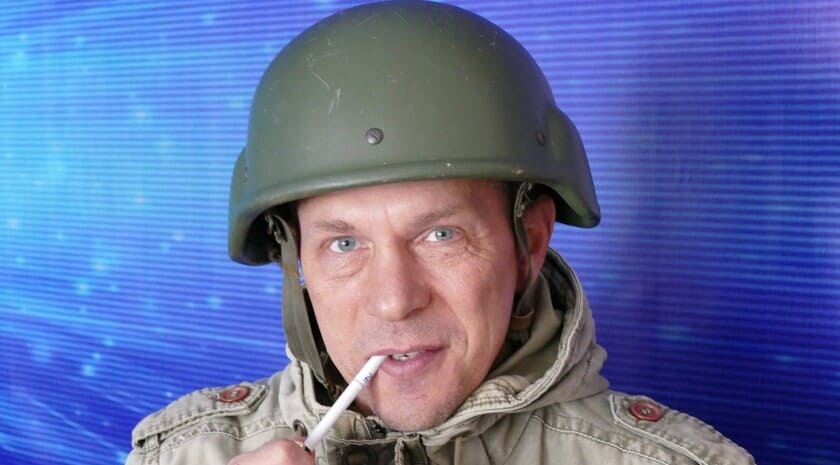
A Ukrainian court has delivered an in absentia verdict against a Crimean media worker for collaborating with Russian occupation authorities and publicly justifying Russia’s aggression against Ukraine.
According to Voice of Crimea, the court found Sergei Veselovsky guilty on February 6, 2026, under two articles of Ukraine’s Criminal Code: collaboration activities (Article 111-1(6)) and justification and recognition of Russia’s armed aggression using media platforms (Article 436-2(3)).
The sentence includes 11 years’ imprisonment with complete confiscation of property. Additionally, the court barred Veselovsky from holding certain positions and engaging in any media-related activities for 12 years following his sentence.
Court proceedings revealed that Veselovsky, while working as a presenter and self-described “political commentator” in occupied Crimea, deliberately used his media influence to advance Russian narratives. Prosecutors demonstrated that his content systematically promoted hostility toward Ukraine and characterized Russia’s invasion as a mission of “liberation from Nazism.”
The investigation compiled substantial evidence showing Veselovsky repeatedly referred to Russia’s full-scale invasion as a “liberation” campaign. He openly supported the occupation of Ukrainian territories and advocated for further Russian seizure of Ukrainian cities.
Born in Simferopol on January 31, 1967, Veselovsky had a varied career before his alignment with Russian occupiers. A civil engineer by training, he graduated from the Crimean Institute of Environmental and Cultural Construction. His previous professional experience included work in the Department for Combating Economic Crimes. Veselovsky was also politically active, serving as a member of local councils and even campaigning for the Verkhovna Rada (Ukrainian Parliament) in 2012.
The turning point in Veselovsky’s career came with Russia’s annexation of Crimea in 2014, when he openly aligned himself with the occupying forces. In the initial days of the occupation, he became a television presenter for propaganda programs titled “Crimean Front” and “South-Eastern Front.”
His pro-Russian media activities expanded significantly over time. In 2021, he launched his own YouTube channel called “SMERSH. Crimean Front” and secured a presenter position for the propaganda program “Politotdel” on the Russian-controlled television channel Krym 24 (Crimea 24).
This case highlights Ukraine’s ongoing efforts to hold accountable those who support and legitimize Russian aggression through media platforms. Since Russia’s annexation of Crimea in 2014 and the full-scale invasion in 2022, Ukrainian authorities have pursued legal action against individuals promoting Russian narratives and justifying military actions against Ukraine.
Media experts note that propaganda figures like Veselovsky play a critical role in Russia’s information warfare strategy, which combines military operations with coordinated media campaigns designed to undermine Ukrainian sovereignty and justify territorial expansion.
Ukraine’s prosecution of media figures supporting Russian aggression aligns with broader international efforts to combat disinformation and propaganda during armed conflicts. Legal experts point out that such prosecutions reflect growing recognition that information operations constitute a significant component of modern warfare.
While Veselovsky remains beyond the reach of Ukrainian authorities in Russian-occupied territory, the verdict sends a clear message about Ukraine’s stance on media collaboration with occupying forces and the legal consequences that await those who promote Russian war propaganda.
Fact Checker
Verify the accuracy of this article using The Disinformation Commission analysis and real-time sources.

8 Comments
This case highlights the ongoing struggle against Russian propaganda and disinformation. Journalists who spread falsehoods and justify aggression must be held accountable.
It’s concerning to see media figures used as tools of propaganda, twisting narratives to support Russia’s illegal occupation. Upholding press freedom while combating misinformation is a delicate balance.
You’re right, it’s a complex issue. Responsible journalism is crucial, but can’t be used to mask blatant propaganda.
An 11-year sentence seems harsh, but the charges of collaboration and justifying armed aggression are serious. Media outlets must remain independent and objective, not mouthpieces for invading forces.
I’m curious to learn more about the specifics of the case and the evidence presented. Were there clear instances of Veselovsky distorting facts or actively promoting Russian state narratives?
It’s good to see Ukraine taking a firm stance against those who would abuse their media platforms to undermine the country’s sovereignty and territorial integrity. Upholding the rule of law is vital.
While freedom of speech is important, it shouldn’t be used as a shield for blatant falsehoods and justifications of military aggression. Maintaining the integrity of information is crucial during times of conflict.
This ruling sends a strong message that there will be consequences for those who collaborate with foreign aggressors and spread propaganda. Media professionals must be held to high standards of ethical conduct.