


Listen to the article
Oscar-Nominated Documentary Exposes Russian School Indoctrination
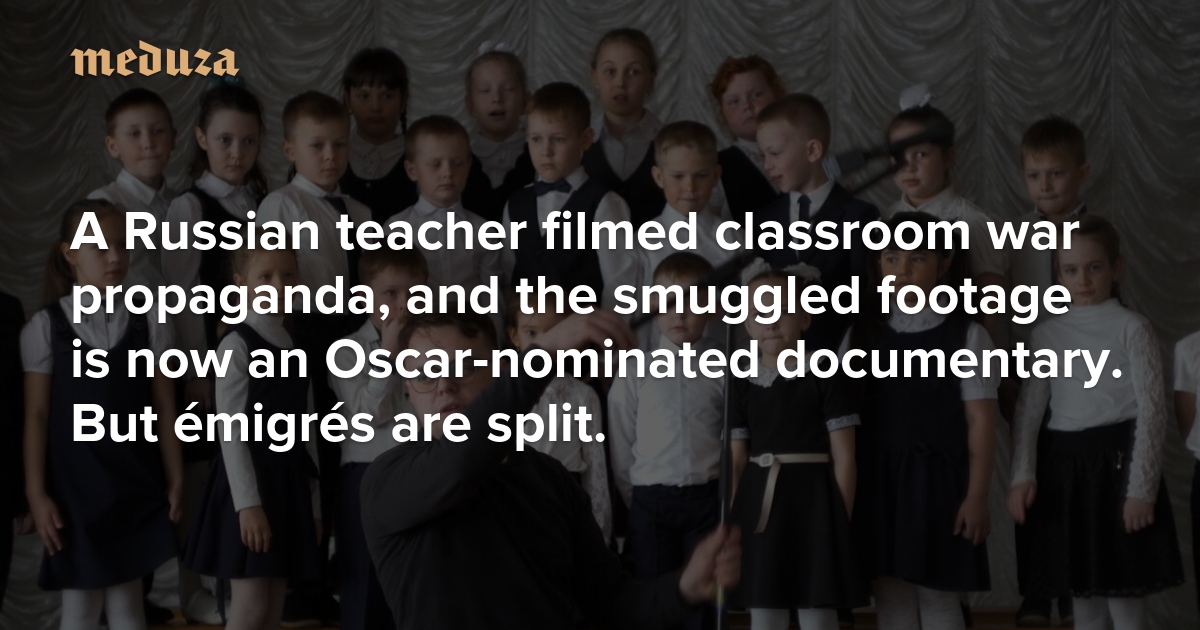
A controversial documentary smuggled out of Russia has become one of the most talked-about contenders for this year’s Academy Award for Best International Feature Film. “Mr. Nobody Against Putin,” created by Russian teacher and videographer Pavel Talankin, offers unprecedented access to state-sponsored indoctrination in a provincial Russian school.
The film, assembled from footage Talankin captured while working at a school near Chelyabinsk, documents how Russian children are being shaped by state propaganda. American documentarian David Borenstein edited the material into its final form after Talankin successfully smuggled it out of Russia in 2024.
Since premiering at the Sundance Film Festival last year, where it won a special jury prize, the documentary has generated intense debate among critics and audiences alike. The film’s Academy Award nomination has only amplified discussions about its methods, ethics, and message.
Critics acknowledge that much of the film’s acclaim stems from its daring premise rather than artistic excellence. Talankin’s monologues often feel scripted, and the intrusive musical score sometimes undermines rather than enhances the emotional impact of the footage.
However, the documentary’s raw power lies in its unfiltered portrayal of how indoctrination functions in Putin’s Russia. It captures teachers awkwardly explaining concepts like “demilitarization” and “denazification” to bewildered children, while high schoolers react with a mix of smirks and shrugs to propaganda-laden history lessons.
The film’s antagonist, history teacher Pavel Abdulmanov, openly admires Soviet secret police leaders and is rewarded with an apartment by local officials—not just for his loyalty but for his role in sending young men to fight in Ukraine. Many of these former students, shown wearing the same bewildered expressions they had in class, never return from the front.
“What matters isn’t the quality of the propaganda but its sheer volume and the absence of any alternative,” notes film critic Anton Dolin, comparing the educational system depicted to the meat grinder imagery from Pink Floyd’s “The Wall.”
The documentary raises difficult questions about the ethics of solitary protest in a country where collective anti-war action is banned. It follows in the footsteps of other recent Russian dissidents like Pavel Kushnir, a pianist who became the first political prisoner in modern Russia to die during a hunger strike in July 2024, and Sasha Skochilenko, who received a seven-year sentence for replacing supermarket price tags with information about Ukrainian civilian casualties.
Talankin’s approach has divided viewers, particularly within Russia. While some see him as a fearless activist, others—including anti-war intellectuals inside Russia—have criticized the film as dishonest and potentially harmful to his former colleagues and students. The filmmaker’s persona, described as that of an oddball outsider rather than a heroic fighter, may explain his ability to operate undetected by authorities for so long.
The film’s most compelling aspect may be its nuanced approach to patriotism, a concept many Russians have considered taboo since 2014. Rather than simply exposing his ideological opponents, Talankin acknowledges that many sincerely believe in the Kremlin’s actions, while others embrace opportunism from ignorance or despair.
Set in Karabash, a notoriously polluted industrial city, the documentary captures the landscape with unexpected poetic force. Talankin’s relationship with his hometown and his mother, a school librarian who dismisses her son’s subversive ideas, adds emotional complexity to the political narrative.
In summer 2024, Talankin left Russia and received asylum in the Czech Republic. Despite its flaws, “Mr. Nobody Against Putin” stands as an important historical document of wartime Russia and a testament to one man’s risky attempt to expose the machinery of state indoctrination.
As Oscar season approaches, the film continues to provoke debate not just about Russia’s educational system, but about the nature of resistance, the ethics of documentary filmmaking, and the power of individual action in authoritarian states.
Fact Checker
Verify the accuracy of this article using The Disinformation Commission analysis and real-time sources.

10 Comments
The fact that this footage was smuggled out of Russia adds to the intrigue and importance of this documentary. While the artistic merits may be debated, the insight it provides into state propaganda is truly remarkable.
This documentary’s Oscar nomination highlights the international interest in understanding the inner workings of the Russian education system. While the quality may be debated, the access it provides is undoubtedly valuable.
Agreed. Even with potential issues in the filmmaking, shining a light on this secretive indoctrination process is an important service to the global community.
Fascinating that a teacher was able to smuggle out this rare footage of state propaganda in Russian schools. It’s concerning to see the lengths the government goes to indoctrinate children, but important this documentary brings it to light.
I agree, this documentary must have taken immense courage and risk to create. Exposing these practices is crucial, even if the execution isn’t perfect.
This documentary seems to offer a rare and unsettling glimpse into the Russian government’s efforts to shape young minds through propaganda in schools. Even if the filmmaking is imperfect, the access it provides is invaluable.
Absolutely. The courage it took to capture and smuggle out this footage is commendable, regardless of the final product’s artistic quality.
This documentary sounds like a stark and eye-opening look at the Russian education system. While the artistic merits may be debated, the access it provides to this secretive world is invaluable.
You raise a good point. The importance of the content may outweigh any technical shortcomings in the filmmaking. Getting this footage out of Russia is an impressive feat in itself.
It’s concerning to hear about the state’s efforts to shape young minds through propaganda in Russian schools. This documentary seems to offer an unprecedented glimpse into that process, even if the execution is flawed.