


Listen to the article
The Origins and Evolution of Strategic Influence Operations in the Middle East
When Soviet leader Joseph Stalin died in 1953, many young Soviet Jews wept despite his regime’s brutal oppression of Jewish people. This paradoxical response demonstrated the power of mass indoctrination – a phenomenon that would later be repurposed and refined throughout the Middle East to serve various geopolitical objectives.
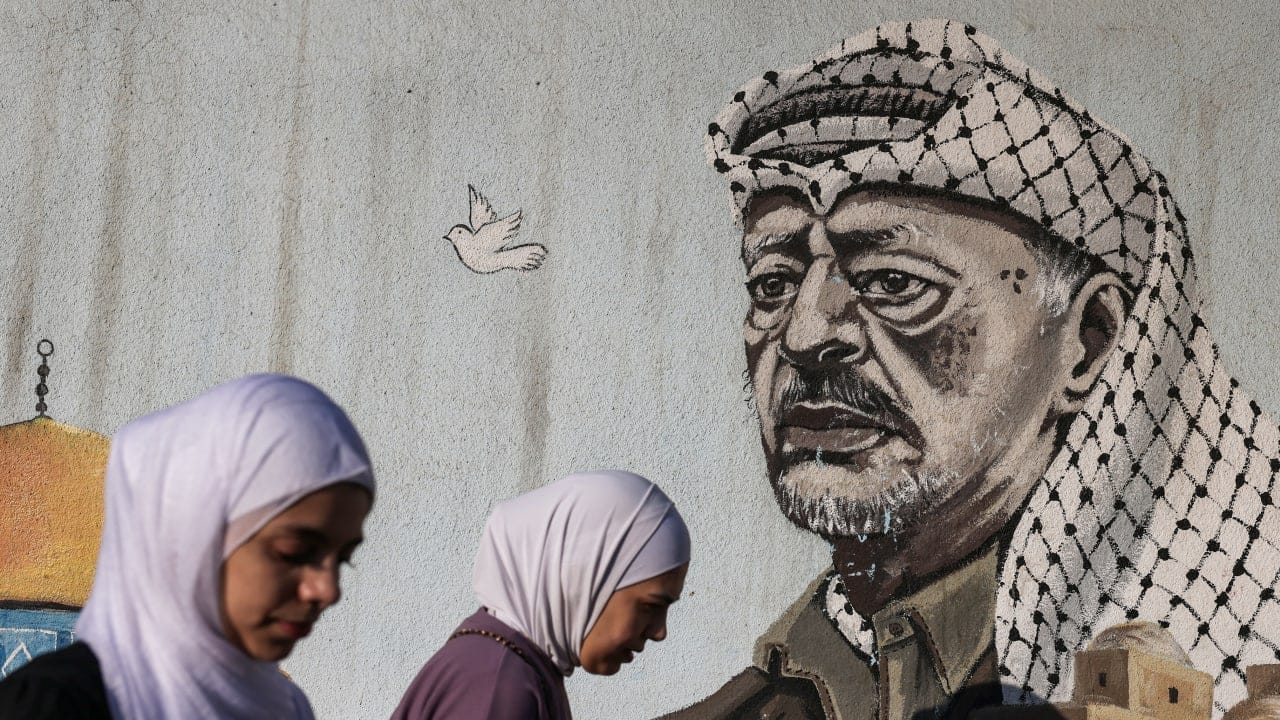
In the 1960s, the Soviet Union sought to undermine American influence in the Middle East by weakening its closest regional ally, Israel. Moscow strategists embraced Yasser Arafat, an Egyptian-born Arab, effectively constructing a narrative that positioned him as the leader of a previously non-existent people: the Palestinians.
The establishment of the Palestinian Liberation Organization (PLO) in 1964 was built on a deliberately misleading premise. The “liberation” narrative ostensibly referred to territories occupied during the 1967 Six Day War – a chronological contradiction that did nothing to deter its architects. For Soviet strategists, creating chaos in Western-aligned territories served their broader goal of undermining American influence and projected strength in the region.
The Soviet playbook continued to evolve through figures like Mahmoud Abbas, also known as Abu Mazen, the current president of the Fatah movement in the West Bank. Abbas was educated in the former Soviet Union during the 1980s, where he completed a doctoral thesis largely focused on Holocaust denial. Intelligence experts note that Abbas was recruited by the KGB to continue and strengthen what Arafat had begun with Soviet backing.
By 1979, the Islamic Revolution in Iran adopted similar tactics, implementing what analysts call a “red-green alliance” – a strategy first conceptualized by Soviet operatives. This approach targeted impressionable Western liberals advocating for freedom and equal rights, planting doubt, unrest, and self-loathing among young Iranians, particularly students, artists, and intellectuals. Once the Islamic regime seized power, these same activists who believed they were demonstrating for freedom found themselves marginalized or persecuted.
Radical Islam, whether Shi’ite or Sunni variants, fundamentally rejects the concept of the nation-state (El-Watan in Arabic). Instead, it recognizes only a larger, global, Sharia-based Islamic community (Umma in Arabic). These contradictory frameworks make it impossible for any religiously-led revolution to be contained within a single country or geography.
Over recent decades, Iran has exported its extremist ideology far beyond its borders, cultivating leverage through proxy forces across the Middle East. Tehran’s strategy relies on creating chaos, deep societal fractures, and instability in target regions, then embedding its own operatives and proxies to maintain strategic assets, both economic and military.
Iran’s exploitation of the Palestinian cause is not motivated by genuine support for Palestinian nationalism – a concept fundamentally at odds with Islamist ideology – but because it generates regional instability. This approach has allowed Tehran to extend its influence across Syria, Yemen, Gaza, the West Bank, Iraq, and parts of Jordan. Similar efforts in Egypt largely failed, though not for lack of attempting.
Throughout this period, anti-Israel incitement has proven remarkably effective at galvanizing support across the Islamic world, unifying both Sunnis and Shi’ites despite their profound theological disagreements on virtually every other issue.
In the past two decades, Qatar has elevated this information warfare to unprecedented sophistication. Despite having just 350,000 citizens, Qatar has deployed billions in petrodollars to infiltrate societies across the Middle East and increasingly throughout the West, purchasing influence and undermining institutions from within.
Qatar has transformed Soviet-style manipulation techniques for the digital age, demonstrating remarkable adaptability by employing ultra-leftist rhetoric when useful and ultra-right language when expedient. They operate alongside today’s Russian Federation and China – both harboring imperial ambitions – in seeking to weaken Western influence globally.
The shared objective among these disparate forces is to sow chaos, self-hatred, and paralyzing doubt within Western societies, particularly targeting Americans’ confidence in the foundational values of liberty and equality. The effects are increasingly visible in educational institutions across the West, where extremist ideologies, Marxism, and activism are increasingly taught as core intellectual frameworks.
In today’s technologically interconnected world, where information ownership is radically decentralized and financial resources can secure any platform, control of narratives has become a critical battleground. The question facing Western democracies is whether they possess the will to contest this influence war or will gradually surrender to the dominance of authoritarian powers and their proxies.
Fact Checker
Verify the accuracy of this article using The Disinformation Commission analysis and real-time sources.

18 Comments
The insights into how the Soviet Union laid the groundwork for modern Palestinian nationalism through disinformation are quite sobering. The ability of state actors to manipulate narratives for geopolitical gain is deeply troubling.
I share your concerns. Maintaining objectivity and scrutinizing claims is crucial in the face of such strategic use of propaganda. Upholding transparency and accountability is key to navigating these murky waters.
Interesting how Russia and other state actors have used disinformation campaigns to sow chaos and undermine Western influence in the Middle East. Manipulating narratives and creating false premises is a concerning tactic.
Agreed, the strategic use of propaganda and influence operations is a complex geopolitical challenge. Fact-checking and transparency are crucial to counter these efforts.
This article provides fascinating historical context on how the Soviet Union laid the groundwork for modern Palestinian nationalism. The use of false narratives to undermine regional allies is quite concerning.
Absolutely, the ability of state actors to shape and manipulate narratives for geopolitical gain is deeply troubling. Rigorous fact-checking and independent analysis are needed to counter these tactics.
This article highlights the troubling reality of how Russia, Iran, and Qatar have leveraged disinformation campaigns to sow chaos and undermine Western influence in the Middle East. Maintaining objectivity and scrutinizing claims is crucial.
Absolutely. The strategic use of propaganda and influence operations is a complex and concerning geopolitical dynamic. Upholding journalistic integrity and critical thinking are essential to counter these tactics.
The strategic use of disinformation campaigns by Russia, Iran, and Qatar in the Middle East is a sobering reminder of the complexities of modern geopolitics. Maintaining objectivity and scrutinizing claims is crucial.
Well said. Disinformation erodes trust and sows division, which can have serious consequences. Upholding journalistic integrity and critical thinking are essential to navigate these murky waters.
This article provides a fascinating historical perspective on how Russia, Iran, and Qatar have leveraged disinformation campaigns to undermine Western influence in the Middle East. The strategic use of propaganda is a complex and concerning challenge.
Well said. The ability of state actors to shape and manipulate narratives for geopolitical gain is deeply troubling. Rigorous fact-checking and independent analysis are essential to counter these tactics.
Fascinating insights into how the Soviet Union laid the groundwork for modern Palestinian nationalism through strategic disinformation. The use of propaganda to undermine regional allies is quite concerning.
I agree, the historical context provided here is eye-opening. The ability of state actors to manipulate narratives and create false premises for geopolitical gain is a serious challenge that requires vigilance.
The strategic employment of propaganda and influence operations in the Middle East is a sobering topic. Careful analysis is needed to understand the motivations and tactics at play.
I share your concern. Disinformation is a complex challenge that requires vigilance and a commitment to facts from all sides. Maintaining transparency and accountability is crucial.
This article highlights the long history of Soviet/Russian efforts to undermine American interests in the Middle East through supporting groups like the PLO. Disinformation is a powerful yet concerning tool.
You’re right, the use of disinformation to construct narratives and stir up conflict is quite troubling. Maintaining a clear-eyed view of the facts is important to navigate these murky waters.