


Listen to the article
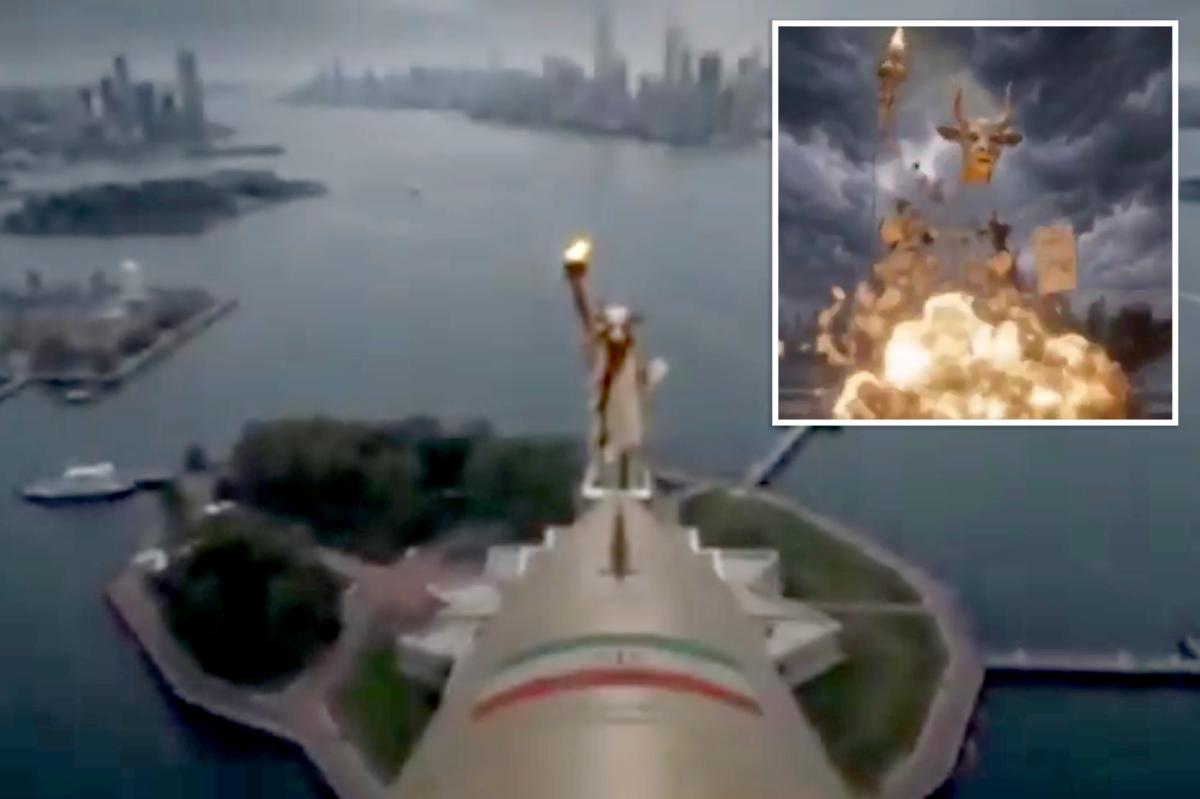
Russian state media has circulated a controversial Iranian-made AI video depicting a missile destroying the Statue of Liberty, escalating tensions in an already volatile media landscape between Iran, Russia, and the West.
The provocative minute-long propaganda clip, originally attributed to Iranian state broadcaster IRIB and later distributed by Russian outlet RT, concludes with the ominous message “One vengeance for all.” The video portrays the United States as a global aggressor through a montage of historical events including Native American displacement, the atomic bombings of Japan, the Vietnam War, and recent Middle Eastern conflicts.
In its most striking sequence, the video shows a missile decorated with Iranian colors entering New York Harbor before striking the Statue of Liberty, whose head has been replaced with that of Baal, a biblical false idol. The symbolic replacement appears designed to characterize America as worshipping false values, a narrative frequently employed in anti-Western propaganda.
This video emerges amid escalating tensions between Iran and the United States, particularly following recent developments in the Middle East. International relations experts note that the sharing of such provocative content by Russian state media underscores the deepening alliance between Moscow and Tehran in their opposition to Western influence.
“This represents a concerning trend in state-sponsored propaganda using advanced AI technology,” said Dr. Alexandra Mitchell, an international security analyst at the Wilson Center. “These videos can be produced quickly and distributed widely, potentially inflaming tensions between nations already at odds.”
The use of artificial intelligence to create inflammatory propaganda marks a troubling evolution in information warfare. AI-generated content allows state actors to produce sophisticated visual material that can bypass traditional fact-checking mechanisms while appealing to emotional responses.
This is not an isolated incident in the emerging landscape of AI-generated state propaganda. Just last week, Chinese state television outlet CCTV broadcast an unusual AI-created video depicting its perspective on the Strait of Hormuz crisis. That five-minute production featured Persian cats engaged in martial arts representing Iran, while the United States was portrayed as a human with an eagle’s head.
Media watchdog organizations have expressed concern about the increasing sophistication of such propaganda. “These videos blend entertainment with disinformation in ways that can be particularly effective at reaching audiences that might otherwise ignore traditional propaganda,” noted Marcus Kolb of the Digital Media Monitoring Initiative.
The circulation of the video comes as diplomatic relations between the United States and Iran remain strained, with ongoing disputes over nuclear capabilities, regional influence, and economic sanctions. Russia’s amplification of Iranian content reflects its own deteriorating relationship with Western powers.
Defense analysts suggest that while such videos don’t represent actual military threats, they contribute to a hostile information environment that could complicate diplomatic efforts and potentially influence public opinion in regions where anti-American sentiment already exists.
The Pentagon has declined to comment specifically on the video, but State Department officials have previously condemned similar propaganda efforts as “irresponsible provocations that do nothing to advance peace and stability in the region.”
As artificial intelligence technology becomes more accessible and sophisticated, security experts predict an increase in such content, presenting new challenges for governments and social media platforms attempting to counter disinformation while respecting free speech principles.
Fact Checker
Verify the accuracy of this article using The Disinformation Commission analysis and real-time sources.

10 Comments
This video is clearly designed to provoke and inflame tensions through inflammatory imagery and biased historical references. While free speech is important, I worry such propaganda could further destabilize an already fragile geopolitical situation.
I’m troubled by how this video distorts history and symbolism to cast the US in an exclusively negative light. While critiquing US actions is valid, this one-sided portrayal feels more like an attempt to demonize than engage in genuine dialogue.
This video is a troubling example of how information can be weaponized to serve political agendas. While I appreciate the desire to challenge perceived injustices, the use of such inflammatory symbolism and biased historical references is concerning.
This video is a concerning escalation of the information war between Iran, Russia, and the West. Spreading such provocative content, regardless of its origin, does little to improve understanding or de-escalate tensions. A more measured and thoughtful approach would be preferable.
While I understand the desire to challenge perceived injustices, this video’s aggressive tone and apocalyptic imagery seem counterproductive. Surely there are more constructive ways to address complex geopolitical issues without resorting to such inflammatory propaganda.
The juxtaposition of the Statue of Liberty and the false idol Baal is a striking and unsettling image. However, I worry this video will only serve to further polarize opinions rather than foster meaningful discussion about the complex issues it references.
While I respect the right to free expression, this video seems to prioritize sensationalism over nuance. Stoking fears through such dramatic and provocative imagery is unlikely to lead to constructive solutions to the real-world challenges it references.
I agree. Spreading inflammatory propaganda, regardless of its source, is counterproductive and risks escalating tensions rather than promoting mutual understanding. A more measured and constructive approach would be preferable.
The symbolism of destroying the Statue of Liberty is a powerful and unsettling message. However, I question the motives behind this video and whether it will achieve anything productive beyond further dividing nations and stoking fears.
I agree, this video seems more calculated to incite outrage than promote meaningful dialogue. Resorting to such dramatic and provocative tactics often backfires and undermines constructive diplomacy.