


Listen to the article
Roman propaganda has distorted our view of Cleopatra for centuries, according to leading historians who argue that the Egyptian queen’s actual accomplishments continue to be overshadowed by a smear campaign orchestrated more than 2,000 years ago.
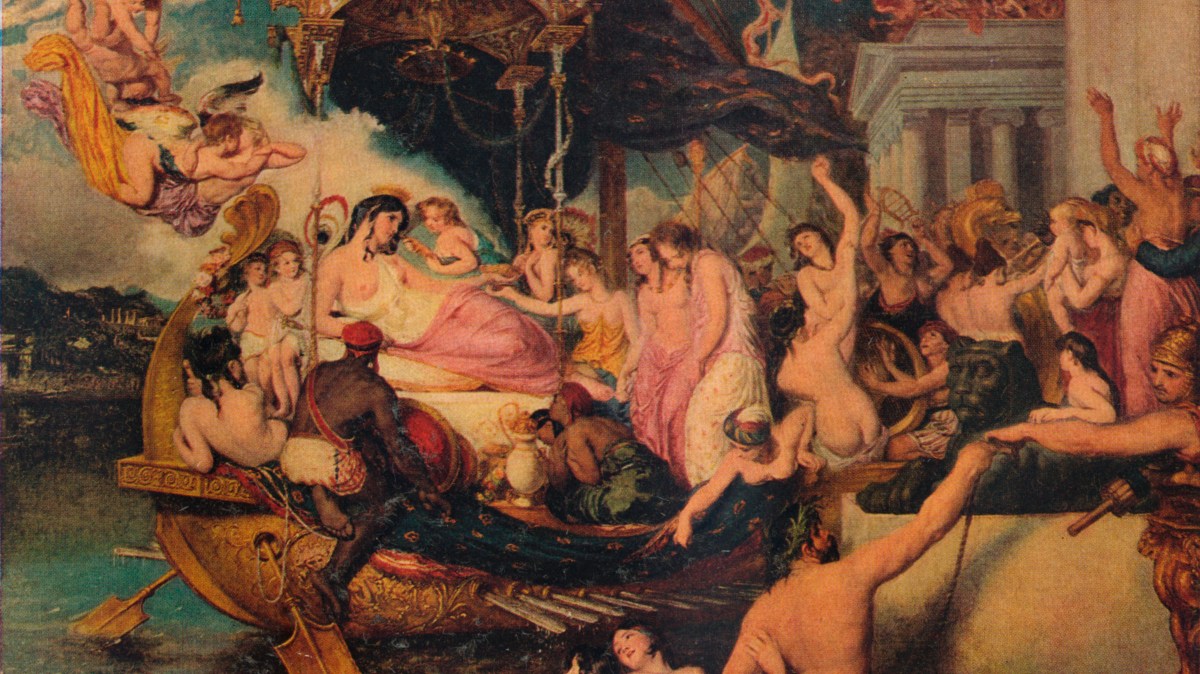
Cleopatra VII, who ruled Egypt from 51-30 BCE, remains one of history’s most misunderstood figures. The narrative that has persisted—depicting her primarily as a seductress who used her feminine wiles to ensnare powerful Roman men—originated with Emperor Augustus’s propaganda machine after her death, experts say.
“The Romans effectively rewrote history to serve their imperial agenda,” explains Dr. Sarah Thompson, professor of ancient Mediterranean history at Oxford University. “Augustus needed to justify his war against Mark Antony and Cleopatra, so he portrayed her as a foreign temptress who corrupted a noble Roman. This characterization has proven remarkably durable, persisting even in modern representations.”
Recent archaeological findings and scholarly reassessments paint a dramatically different picture of the last pharaoh of ancient Egypt. Far from being merely a beautiful manipulator, Cleopatra was a shrewd political strategist, accomplished diplomat, and intellectual who spoke at least nine languages. She effectively managed Egypt during a period of tremendous regional instability.
Cleopatra’s economic policies helped maintain Egypt’s prosperity during her reign. She stabilized the currency, reformed tax collection, and managed grain distribution throughout the Mediterranean during periods of famine. These achievements rarely feature prominently in popular accounts of her life.
“We have substantial evidence that Cleopatra was revered by her Egyptian subjects,” notes Dr. Miguel Alvarez, curator of Egyptian antiquities at the British Museum. “Contemporary Egyptian sources describe her as a competent ruler who identified strongly with Egyptian cultural traditions, presenting herself as the living embodiment of the goddess Isis.”
Her political alliances with Julius Caesar and later Mark Antony were strategic maneuvers to preserve Egyptian independence in the face of Roman expansion—not simply romantic entanglements. Cleopatra recognized that Egypt’s continued autonomy depended on maintaining favorable relations with Rome, the dominant Mediterranean power of the era.
The persistent focus on her relationships with Roman men reflects both ancient and modern sexism, according to Dr. Elena Petrova, author of “Reframing Cleopatra: Gender Politics in Ancient History.”
“History has routinely diminished female rulers by focusing on their appearance and sexual relationships rather than their governance,” Petrova argues. “Cleopatra suffered this fate more than most. The fact that we still discuss her primarily through her connections to Caesar and Antony, rather than her two decades of effective rule, demonstrates how thoroughly Roman propaganda has shaped our historical lens.”
Hollywood has played a significant role in perpetuating the Roman narrative. From Elizabeth Taylor’s portrayal in the 1963 epic to numerous other film and television adaptations, entertainment media has largely reinforced the image of Cleopatra as exotic temptress rather than capable monarch.
The announced upcoming film starring Gal Gadot has already sparked debate among historians who hope for a more nuanced portrayal. Some are cautiously optimistic that modern scholarship might finally influence popular representations of the queen.
The erasure of Cleopatra’s achievements parallels a broader pattern in how history has treated female leadership, experts note. Throughout history, successful women rulers have often been subject to character assassination focusing on their personal lives rather than their political accomplishments.
Dr. Thompson adds, “When we examine the historical record critically, we find that Cleopatra maintained Egyptian independence longer than would have otherwise been possible. She navigated the treacherous politics of a Mediterranean world dominated by Roman civil wars while preserving Egyptian cultural and religious traditions.”
Historians emphasize that reconsidering Cleopatra’s legacy is not simply about correcting the historical record but about understanding how propaganda shapes our perception of the past and present.
“The Roman disinformation campaign against Cleopatra might be the most successful in history,” concludes Alvarez. “After more than two millennia, we’re still working to disentangle fact from politically motivated fiction.”
Fact Checker
Verify the accuracy of this article using The Disinformation Commission analysis and real-time sources.

13 Comments
Fascinating how Roman propaganda has shaped our view of Cleopatra for centuries. It’s important to examine historical sources critically and not accept the dominant narrative at face value.
Agreed, the recent scholarship paints a much more nuanced picture of Cleopatra as a skilled political strategist rather than just a seductress. Eager to learn more about her actual accomplishments.
The article raises important questions about the reliability of historical sources, especially when they’re shaped by the agendas of those in power. Glad to see ongoing efforts to uncover the true legacy of Cleopatra.
Agreed. It’s crucial that we approach historical narratives with a critical eye and are open to new scholarly perspectives that challenge long-held beliefs.
The article highlights an important lesson about the need to approach historical sources with a critical eye. Propaganda can have a lasting impact, even centuries later.
I’m curious to learn more about the archaeological findings and scholarly work that is shedding new light on Cleopatra’s actual accomplishments. It’s fascinating how pervasive the Roman propaganda has been.
Cleopatra’s story is a prime example of how powerful political forces can manipulate historical accounts for their own gain. It’s important to continuously re-evaluate our understanding of the past.
Cleopatra’s legacy is a prime example of how those in power can distort historical narratives to suit their agenda. It’s a good reminder to be wary of propaganda, even centuries later.
Absolutely. The article highlights the importance of ongoing scholarly reassessment to challenge long-held biases and uncover the truth about historical figures like Cleopatra.
This is a really fascinating look at how the victors of history can shape our understanding of the past. I’m eager to learn more about the recent scholarship that’s challenging the traditional depiction of Cleopatra.
Absolutely. It’s a good reminder that we should always seek out multiple perspectives and not just accept the dominant narrative, no matter how entrenched it may be.
As someone with an interest in ancient history, I find this article really thought-provoking. It’s a great example of how dominant narratives can overshadow the complexities of the past.
Agreed. Challenging long-held assumptions about historical figures is crucial for gaining a more accurate understanding of the past. Looking forward to seeing further research on Cleopatra’s true legacy.