


Listen to the article
A new understanding of ancient Egypt’s most famous queen is emerging as historians work to separate fact from the Roman propaganda that has clouded Cleopatra’s legacy for more than two millennia.
Cleopatra VII, the last active ruler of the Ptolemaic Kingdom of Egypt, has long been portrayed through the lens of her Roman enemies – as a seductress who used feminine wiles rather than political acumen to maintain power. This characterization, experts now emphasize, deliberately undermined her considerable achievements as a ruler.
“The Romans systematically destroyed Cleopatra’s reputation after her death,” explains Dr. Sarah Thompson, professor of Ancient Mediterranean Studies at Oxford University. “What we’re seeing now is a concerted effort to reconstruct a more accurate portrait based on archaeological evidence and critical readings of Roman sources.”
Recent archaeological discoveries have helped researchers piece together a more nuanced understanding of the Egyptian queen. Excavations at Alexandria and other sites across Egypt have unearthed administrative records suggesting Cleopatra was a skilled economist who stabilized Egypt’s currency during turbulent times and expanded trade relationships throughout the Mediterranean.
Cleopatra was remarkably educated, reportedly speaking nine languages and serving as the first Ptolemaic ruler to learn Egyptian alongside her native Greek. This linguistic prowess allowed her to communicate directly with her subjects without translators, a political advantage her predecessors lacked.
“We now understand that Cleopatra’s famous relationships with Julius Caesar and Mark Antony were as much about strategic political alliances as they were personal connections,” notes Dr. Miguel Fernandez, curator of Egyptian antiquities at the British Museum. “She was fighting for Egypt’s survival as an independent kingdom in an expanding Roman world.”
The propaganda campaign against Cleopatra intensified after her death in 30 BCE, when Octavian (later Emperor Augustus) consolidated power in Rome. His portrayal of Cleopatra as a foreign temptress who corrupted Mark Antony helped justify his war against her and Egypt’s subsequent annexation as a Roman province.
Roman poets like Virgil and Horace, working under Augustus’s patronage, further embedded this narrative in literature. Their depictions of Cleopatra as an exotic, morally corrupt foreigner threatening Roman virtue became the foundation for centuries of similar portrayals.
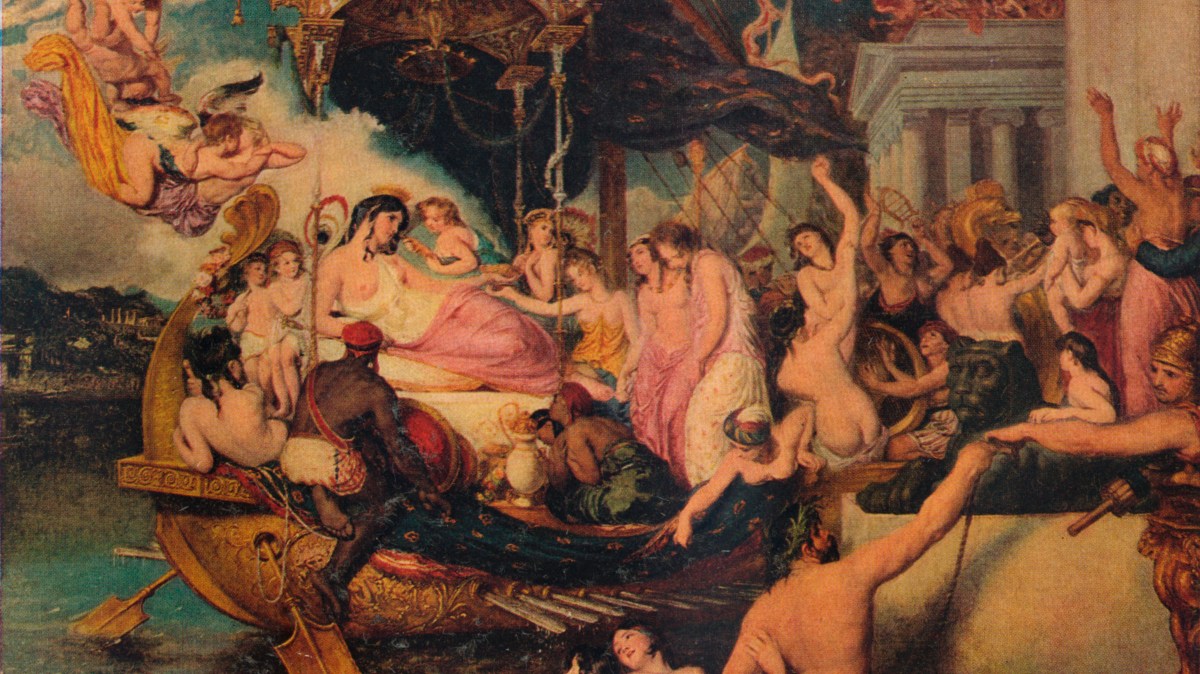
The damage to Cleopatra’s historical reputation was so thorough that even Renaissance and Enlightenment scholars, generally skeptical of ancient sources, largely accepted the Roman characterization. This distorted image reached its apex in popular culture with Shakespeare’s “Antony and Cleopatra” and countless film adaptations, most notably the 1963 epic starring Elizabeth Taylor.
Modern historians point to the political motivations behind these portrayals. “The Romans used Cleopatra as a symbol of everything they claimed to oppose – a powerful woman, a foreigner, and someone who challenged traditional gender roles,” says Dr. Jennifer Williams, author of “Reclaiming Cleopatra: Gender and Power in Ancient Egypt.”
The reassessment of Cleopatra comes amid broader efforts to decolonize historical narratives and examine how ancient sources have shaped our understanding of the past. Scholars are increasingly questioning how much of what we “know” about ancient figures comes from their enemies rather than objective sources.
Archaeological evidence suggests Cleopatra prioritized domestic infrastructure projects, religious tolerance, and agricultural reforms during her 21-year reign. Inscriptions found throughout Egypt portray her as a traditional pharaoh who maintained Egyptian religious traditions while navigating complex diplomatic relationships with Rome.
“We need to recognize that Cleopatra was not just reacting to men around her – she was implementing her own vision for Egypt’s future,” explains Dr. Aisha Mahmoud of Cairo University’s Department of Egyptology. “Her political strategies were sophisticated responses to the geopolitical realities of her time.”
Museums worldwide are updating their exhibitions to reflect this more balanced understanding of the Egyptian queen. A major traveling exhibition, “Cleopatra: Beyond the Myth,” is scheduled to open next year, featuring recently discovered artifacts alongside critical examinations of how Roman propaganda shaped her image.
As researchers continue to unravel the complex legacy of ancient Egypt’s last pharaoh, one thing becomes increasingly clear: the Cleopatra who emerges from this scholarly reassessment is far more interesting than the caricature handed down through Roman propaganda – a multilingual diplomat, strategic leader, and cultural innovator whose reign marked the end of an independent Egypt that had existed for thousands of years.
Fact Checker
Verify the accuracy of this article using The Disinformation Commission analysis and real-time sources.

15 Comments
I’m curious to learn more about Cleopatra’s economic policies and how she stabilized Egypt’s currency. It sounds like she was a skilled administrator as well as a savvy political operator.
Yes, the excavation of administrative records is shedding new light on Cleopatra’s competence as a ruler. It’s a good reminder not to dismiss powerful women in history as mere puppets of their male counterparts.
This article highlights the value of interdisciplinary research in uncovering the truth about the past. The combination of archaeological evidence and critical analysis of Roman sources is shedding new light on Cleopatra’s legacy.
The archaeological evidence paints a very different picture of Cleopatra than the Roman caricature of a seductive femme fatale. It’s important to critically examine historical sources and not take them at face value.
Absolutely. Separating fact from fiction is crucial when studying ancient history, especially when dealing with figures who were demonized by their political enemies.
It’s fascinating to see how Cleopatra’s reputation has evolved over time, from Roman propaganda to a more nuanced understanding based on modern scholarship. I look forward to learning more about her achievements as a ruler.
This article is a great example of how new archaeological discoveries and interdisciplinary research can challenge long-held historical narratives. I’m impressed by Cleopatra’s skills as an economist and ruler, and I look forward to learning more.
This article highlights the importance of challenging historical narratives that are shaped by the biases and agendas of the victors. I’m glad to see a more nuanced portrait of Cleopatra emerging.
This article is a great example of how critical analysis of primary sources and new archaeological discoveries can help us revise our understanding of the past. I’m impressed by Cleopatra’s skills as an economist and ruler.
Agreed. It’s important to constantly re-examine historical narratives and not take them at face value, especially when dealing with figures who have been demonized by their political enemies.
It’s fascinating to see how Roman propaganda has distorted Cleopatra’s legacy for centuries. I’m glad historians are working to uncover the truth about her political acumen and achievements as a ruler.
It’s fascinating to see how archaeological evidence can help uncover the truth about historical figures like Cleopatra, whose legacies have been distorted by propaganda. I look forward to learning more about her real achievements.
The article’s emphasis on separating fact from fiction when studying ancient history is a valuable lesson. I’m glad to see researchers working to reconstruct a more accurate portrait of Cleopatra’s legacy.
Absolutely. It’s crucial to approach historical sources with a critical eye and not take them at face value, especially when dealing with figures who were demonized by their political enemies.
The Roman propaganda against Cleopatra is a sobering reminder of how the victors can shape the historical record. I’m glad to see efforts to reconstruct a more accurate portrait of this influential ruler.