


Listen to the article
Within hours of the first military exchanges between Iran and Israel, social media platforms were flooded with dramatic videos allegedly showing fighter jets being shot down and cities reduced to rubble. Many of these clips were quickly exposed as fabrications, highlighting a growing challenge in modern conflict reporting.
Digital forensics specialists identified several viral videos as footage from video games or AI-generated imagery. One widely shared clip, purportedly showing a U.S. warship shooting down an Iranian aircraft, was later revealed to be footage from the video game “War Thunder.” The video had already accumulated millions of views and was even shared by Texas Governor Greg Abbott before being debunked. Observers noted that the weapons visible in the footage were obsolete World War II-era systems, confirming its fictional nature.
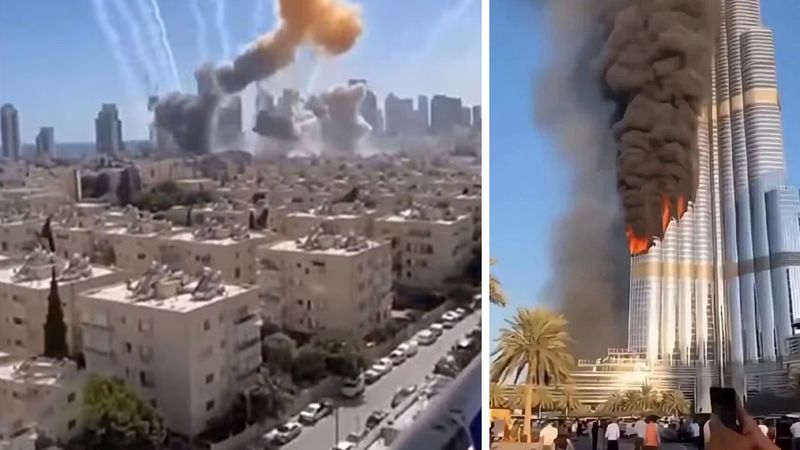
In another case, a viral video appearing to show Tel Aviv devastated by Iranian missile strikes was identified by analysts as AI-generated imagery. By the time this manipulation was exposed, millions had already viewed and shared the content, demonstrating how rapidly misinformation can spread during international crises.
The phenomenon illustrates a critical problem in contemporary war coverage. Early battlefield claims are often unreliable, yet in the digital age, they can reach global audiences before journalists have an opportunity to verify them. The challenge is compounded by speculative reporting and unsubstantiated claims presented as factual information across broadcast media.
More than a century ago, American senator Hiram Johnson observed: “The first casualty when war comes is truth.” The torrent of unverified claims surrounding the Iran-Israel conflict suggests this observation remains as relevant as ever.
The Iran-Israel confrontation is being reported notably differently compared to other contemporary conflicts. During Russia’s invasion of Ukraine, Western news organizations deployed large teams of correspondents near the front lines, enabling journalists to test official claims against on-the-ground observations. The Iran-Israel situation presents different challenges, with few Western reporters operating inside Iran and Israeli military censorship restricting the reporting of certain operational details.
As a result, much of the information about missile strikes, casualties, and military damage comes not from independent reporters but from government statements, military spokespeople, and social media posts. Regional broadcasters like Al Jazeera now often provide more comprehensive coverage than many Western outlets, whose foreign bureaus across the Middle East have steadily diminished over the past two decades.
Casualty figures present particular verification challenges. Iranian officials report significant civilian losses from Israeli strikes, while Israeli authorities emphasize the elimination of senior Iranian commanders and damage to military facilities. Independent verification remains scarce, as Iran has periodically restricted internet access during the conflict, while Israel maintains tight military censorship over some operational details.
Historical precedents suggest caution when evaluating wartime claims. Before the 2003 Iraq War, Western governments confidently asserted that Saddam Hussein possessed active weapons of mass destruction programs—claims that were widely repeated across global media but proved inaccurate after the invasion. During the 1991 Gulf War, television viewers were shown footage of “smart bombs” striking Iraqi targets with apparent precision, creating an impression of perfect accuracy, though later studies revealed only a minority of munitions used were precision-guided.
Meanwhile, governments continue to shape their narratives. Iranian state media emphasizes resilience and military success, while Israeli officials highlight the precision and effectiveness of their operations. Western leaders frequently describe strikes as “decisive” even when long-term strategic consequences remain unclear.
Veteran media historian Philip Knightley, whose influential book “The First Casualty” examined the history of propaganda in war reporting, argued that governments have always sought to manage information during conflicts. What has changed is the weakening of the system that once challenged official narratives.
For much of the twentieth century, major newspapers maintained networks of foreign correspondents across the Middle East who could challenge official statements with direct observations. Today, many of those bureaus have disappeared, with coverage increasingly emerging from studio discussions, social media feeds, and official briefings rather than firsthand reporting.
The result is paradoxical: while unprecedented amounts of information about conflicts are available in real-time, determining what is actually happening has become increasingly difficult. For countries like India, which maintains strategic relationships with Iran, Israel, and Arab Gulf states simultaneously, this information fog complicates both journalistic reporting and policy decisions.
When speculation, digital fabrication, and official messaging converge, the boundary between fact and narrative becomes dangerously blurred—making Senator Johnson’s century-old warning about truth being war’s first casualty more relevant than ever.
Fact Checker
Verify the accuracy of this article using The Disinformation Commission analysis and real-time sources.

8 Comments
This article is a sobering look at the power of propaganda and the challenges of maintaining truth in the digital age. It’s a wake-up call for all of us to be more discerning consumers of online content and to seek out authoritative and credible sources of information.
Interesting article on the challenges of navigating propaganda and misinformation during modern conflicts. It’s concerning how quickly fake videos and images can spread on social media, even when shared by public figures. Verifying the authenticity of online content is crucial.
The use of video game footage and AI-generated imagery to create false narratives is truly alarming. It’s a stark reminder that we must be extremely cautious about what we see and share online, particularly during times of heightened tension and conflict.
This highlights the importance of critical thinking and fact-checking, especially when it comes to sensitive geopolitical events. Social media platforms need to do more to combat the spread of misinformation and deepfakes. Reliable, independent journalism is essential for cutting through the fog of war.
The spread of misinformation during international crises is a serious problem that deserves more attention. We need to find ways to combat the proliferation of fake news and deepfakes, while also strengthening the role of independent journalism in reporting on these events.
Agreed. Fact-checking and media literacy education will be crucial in this effort.
This article is a timely reminder of the importance of media literacy and critical thinking when it comes to consuming information, especially during times of conflict. The ability to discern truth from fiction is essential in the digital age.
Well said. We must all be more vigilant and discerning in our online consumption.