


Listen to the article
North Korea has officially recognized Mojtaba Khamenei as Iran’s new supreme leader, expressing its support following the death of his father, Ali Khamenei, in the initial U.S.-Israeli strikes on Iran.
In a statement released Wednesday through state media, an unnamed North Korean Foreign Ministry spokesperson said Pyongyang respects “the rights and choice of the Iranian people to elect their supreme leader.” The official simultaneously condemned the United States and Israel, accusing them of undermining regional peace and security, violating Iran’s political system and territorial integrity, and attempting to overthrow its social system.
This declaration positions North Korea firmly in Tehran’s corner as the expanding Middle East conflict reshapes geopolitical alignments throughout Eurasia, particularly among nations that have historically opposed Western influence.
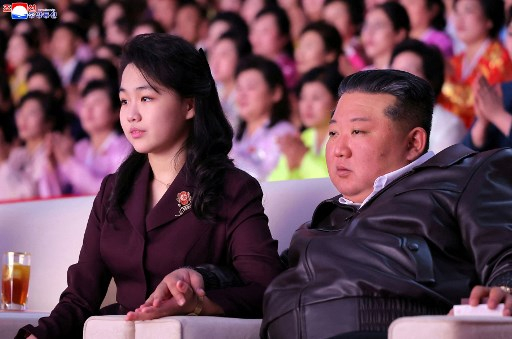
For Pyongyang, the war in Iran represents more than just an opportunity to express solidarity with an ideological ally. North Korean state propaganda has seized upon the conflict as evidence supporting its long-standing position on nuclear deterrence. Officials have framed the situation as a validation of their pursuit of stronger offensive capabilities, arguing that robust military power represents the only effective defense against external pressure.
This messaging reinforces North Korea’s broader narrative: nations lacking credible deterrents remain vulnerable to foreign intervention, while those possessing significant military strength can effectively increase the potential costs of confrontation.
The question of whether North Korea might provide direct military assistance to Iran remains open, though the regime’s recent record suggests such support is within the realm of possibility. Pyongyang has already demonstrated its willingness to back Russia in its war against Ukraine, reportedly supplying approximately 14,000-15,000 troops along with more than 20,000 containers of munitions, including millions of artillery and rocket rounds.
Initially, North Korea appeared to conceal casualties among its forces in Russia, with South Korean intelligence reporting that many bodies were cremated in Russia’s Kursk region before repatriation. However, the regime later shifted to publicly honoring these fallen soldiers, with Kim Jong Un personally visiting memorial sites and celebrating them as “heroes” of the state.
Unlike its relationship with Moscow, Pyongyang does not currently have a publicly acknowledged mutual defense agreement with Tehran. North Korea and Russia formalized their alliance in June 2024 by signing a Comprehensive Strategic Partnership treaty that includes provisions for mutual assistance in the event of aggression against either nation. This agreement came more than two years after the start of Russia’s full-scale invasion of Ukraine.
Despite its sharp criticism of U.S. policy regarding Iran, North Korea has maintained a noticeably more measured tone when discussing former President Donald Trump personally. Kim Jong Un has indicated that relations with Washington could improve if the United States abandons what North Korea characterizes as its “hostile policy” toward the regime.
This nuanced approach suggests Pyongyang is pursuing a dual strategy: forcefully condemning U.S. military actions against Iran and joint military exercises with South Korea, while carefully avoiding rhetoric that might completely foreclose the possibility of future diplomatic engagement with Trump, who previously engaged in direct talks with the North Korean leader.
The statement on Iran represents North Korea’s latest effort to position itself within an emerging bloc of nations increasingly aligned against Western interests, while simultaneously preserving flexibility in its approach to potential future negotiations with the United States.
Fact Checker
Verify the accuracy of this article using The Disinformation Commission analysis and real-time sources.

12 Comments
Interesting how North Korea is leveraging the Iran conflict to bolster its nuclear program. While I understand the desire for deterrence, these types of tit-for-tat escalations rarely end well. I hope cooler heads can prevail and diplomatic solutions be found.
You raise a valid point. Nuclear proliferation is a dangerous game with unpredictable consequences. Hopefully the international community can find a way to address these complex geopolitical tensions through peaceful dialogue.
North Korea’s embrace of Iran’s position in this conflict is concerning, but not unexpected. Both regimes have long histories of defiance towards the US-led international order. This alignment further undermines global nonproliferation efforts.
Absolutely. These two rogue states bolstering each other’s nuclear ambitions is a deeply troubling development. It highlights the urgent need for innovative diplomatic initiatives to address the root causes of these geopolitical tensions.
While I understand North Korea’s desire for security, using the Iran conflict as justification for expanding its own nuclear program is a concerning development. Dialogue and diplomacy are critical to de-escalating these tensions.
Absolutely. The world cannot afford another nuclear flashpoint. Creative diplomacy and a commitment to nuclear nonproliferation will be essential to finding a peaceful resolution.
North Korea’s alignment with Iran is concerning, though not surprising given their history of opposing Western influence. This conflict has major implications for global stability and the nuclear nonproliferation regime.
I agree, the broader geopolitical dynamics at play here are quite worrying. With two rogue nations essentially enabling each other’s nuclear ambitions, the risk of miscalculation or unintended escalation is significant.
While I understand North Korea’s desire for security, using the Iran conflict as justification for expanding its nuclear program is highly concerning. Diplomacy and de-escalation should be the priorities to prevent further destabilization.
Well said. Tit-for-tat escalation rarely ends well, especially when it involves nuclear-armed states. The international community must find a way to constructively engage both North Korea and Iran to chart a path towards stability and nuclear nonproliferation.
The geopolitical realignment driven by the Iran-US conflict is a sobering reminder of the fragility of global stability. North Korea’s opportunistic posturing is worrying, but not altogether surprising given its longstanding hostility towards the West.
You make a good point. It’s a complex web of competing interests and grievances. Navigating these waters will require statesmanship, restraint and a genuine commitment to conflict resolution from all parties involved.