


Listen to the article
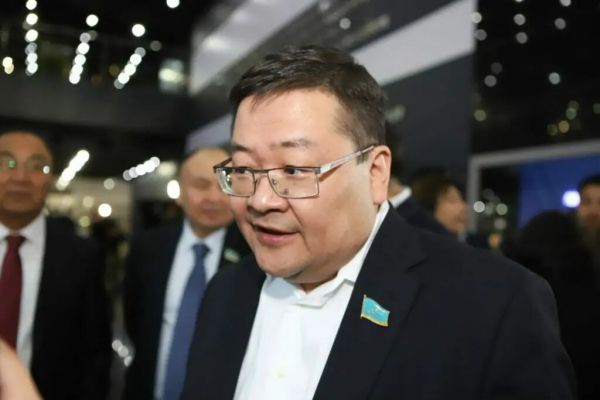
In a forceful address to Kazakhstan’s parliament on December 17, lawmaker Aidos Sarym called for investigations into social media posts by citizens who allegedly support or approve of Ukrainian attacks on the Caspian Pipeline Consortium (CPC), a critical piece of Kazakhstan’s energy infrastructure.
The nationalist MP demanded authorities examine these publications and curtail what he described as “Ukrainian propaganda” circulating within the country. Sarym argued that such expressions exceed constitutional free speech protections and directly threaten Kazakhstan’s national security interests.
“There are publications on social networks by citizens openly approving and supporting attacks on this infrastructure that is critical for the state and our citizens,” Sarym stated during the parliamentary session. “Such actions clearly go beyond the constitutional right of citizens to freedom of speech and cause direct damage to the national interests of Kazakhstan.”
The CPC pipeline represents a vital economic lifeline for Kazakhstan, transporting approximately 1.2 million barrels of Kazakh crude oil per day from the country’s western oil fields to Russia’s Black Sea port of Novorossiysk. As Kazakhstan’s primary oil export route, any disruption to the pipeline could severely impact the nation’s economy, which relies heavily on energy exports.
Sarym suggested these social media expressions could potentially fall under serious criminal offenses, specifically citing Article 256 of Kazakhstan’s Criminal Code covering “Propaganda of terrorism or public calls to commit an act of terrorism” and Article 175 addressing “High treason.” These charges carry severe penalties in Kazakhstan’s legal system, including lengthy prison sentences.
The parliamentary statement has sparked debate within Kazakhstan’s political circles. Political analyst Nikita Mendkovich, who heads the Eurasian Analytical Club, characterized the situation as revealing deeper divisions among Kazakhstan’s western-aligned politicians. In comments shared via his Telegram channel, Mendkovich suggested the dispute represented systemic discord among what he termed “Kazakhstani Westerners” regarding pipeline security.
“The Ukrainians in Kazakhstan are really arrogant, it’s hard to argue with that,” Mendkovich wrote, while noting that one of Sarym’s apparent targets was fellow MP Yermurat Bapi. Mendkovich implied both politicians receive funding from Western sources despite their opposing positions on this issue.
Sarym himself has a complex political profile in Kazakhstan. While known for nationalist positions, he has also been characterized as opposing closer ties with neighboring Russia, Kazakhstan’s traditional ally and economic partner. This stance places him in a delicate position regarding regional geopolitics, particularly as Kazakhstan attempts to balance relationships with Russia, China, and Western nations.
The controversy unfolds against the backdrop of the ongoing Russia-Ukraine conflict, which has created diplomatic challenges for Kazakhstan. The Central Asian nation has attempted to maintain neutrality while preserving critical economic relationships with both Russia and Western nations that have imposed sanctions on Moscow.
Energy security remains paramount for Kazakhstan, whose economy depends heavily on uninterrupted oil and gas exports. The CPC pipeline transports approximately 80% of Kazakhstan’s oil exports, making it an irreplaceable piece of national infrastructure. Any threats to this system—whether physical or rhetorical—trigger serious national security concerns for Kazakh authorities.
The parliamentary discussion highlights Kazakhstan’s ongoing struggle to navigate complex regional tensions while maintaining domestic stability and protecting vital economic interests in an increasingly polarized geopolitical environment.
Fact Checker
Verify the accuracy of this article using The Disinformation Commission analysis and real-time sources.

5 Comments
Interesting to see the Kazakh government taking steps to address ‘Ukrainian propaganda’ within the country. As a major energy exporter, Kazakhstan must be cautious about potential threats to its critical infrastructure like the CPC pipeline.
I’m curious to see how Kazakhstan navigates this situation. Shutting down online discourse could backfire, but the government appears concerned about the impact on its vital energy exports. It’s a tricky balance they’re trying to strike.
The CPC pipeline is a key asset for Kazakhstan, so the government is right to take steps to safeguard it. However, restricting free speech raises concerns about civil liberties. Hopefully they can find a middle ground that addresses security needs without overly curtailing public debate.
Kazakhstan’s energy industry is critical to its economy, so the government’s reaction is understandable. But cracking down on online speech sets a concerning precedent. Transparent investigations and proportionate responses would be a better approach to handle this situation.
This highlights the complex geopolitical dynamics in the region, with Kazakhstan balancing relations between Russia and Ukraine. Curbing alleged pro-Ukrainian speech seems like a heavy-handed approach, but the government may view it as necessary to protect its national interests.