


Listen to the article
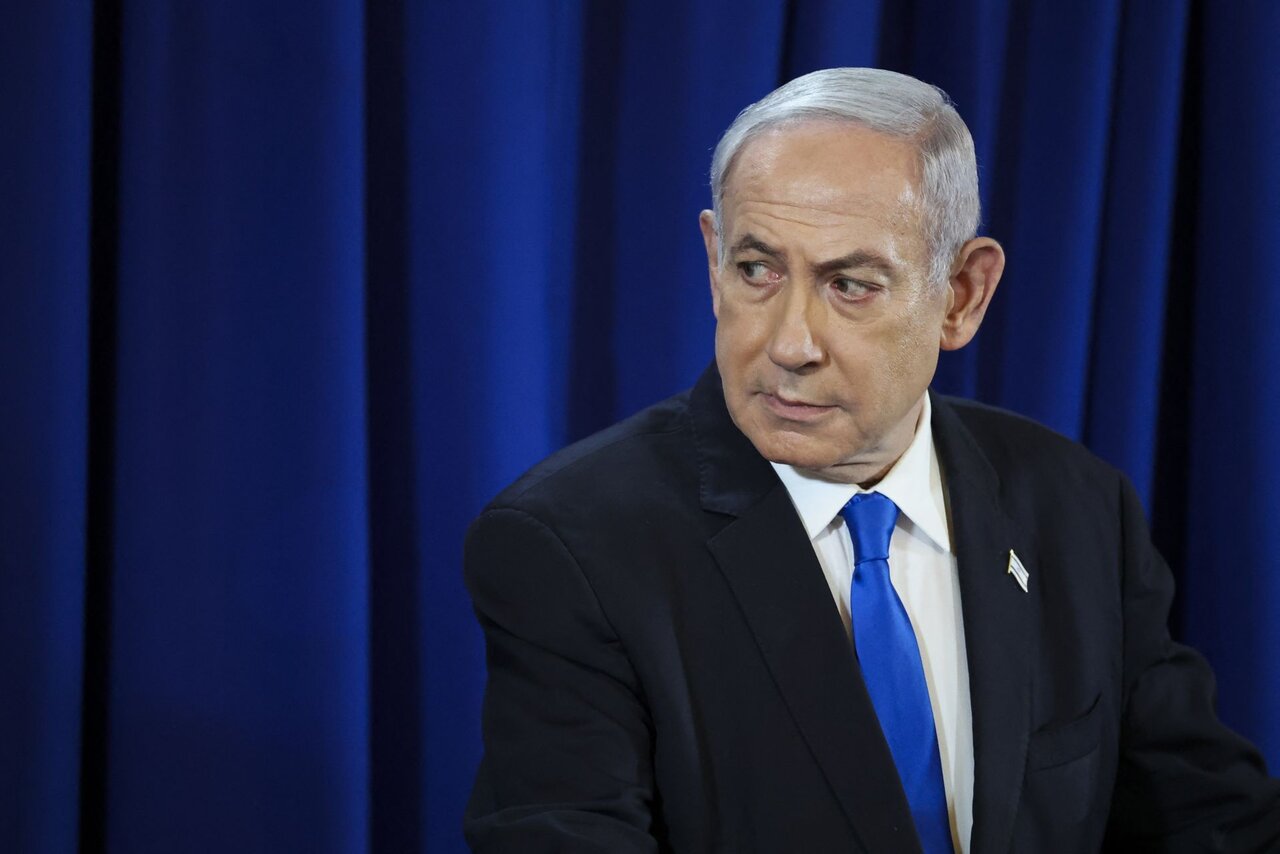
In a revealing disclosure earlier this month, Israeli Prime Minister Benjamin Netanyahu publicly acknowledged what many analysts have long suspected: Israel’s military strategy in the Middle East involves a sequential approach targeting Hamas, Hezbollah, and ultimately Iran.
Speaking to Israeli ambassadors on December 7, Netanyahu recalled his declaration made just one day after Operation Al-Aqsa Flood began, stating that Israel’s strategic ambition was “reshaping the Middle East.” This admission contradicts the narrative that has gained traction among certain Lebanese political factions, who have claimed that Hezbollah unilaterally “dragged Lebanon into war.”
“The question was whether to attack Lebanon or focus on Gaza. We did not want to sink into two quagmires. So we kept Lebanon under active deterrence, destroyed Hamas’s military capabilities, and then planned to turn north,” Netanyahu said in his address, effectively confirming a preplanned military sequence.
This revelation comes amid increasing scrutiny of Israel’s military planning before and after October 7. According to reporting by Yedioth Ahronoth on December 8, the Israeli Southern Command had developed a comprehensive pre-emptive strike plan against Gaza in 2022. Military correspondent Yoav Zitun detailed that this operation would have included assassinating top Hamas leaders, destroying production sites, and executing a brief ground incursion to cripple rocket infrastructure.
The report indicates that this operation was shelved specifically because Israeli military and political leadership were prioritizing preparations for a large-scale confrontation with Hezbollah and Iran. Military planners had apparently instructed that Gaza should remain “quiet at any price” until preparations for the northern front were complete.
Additional evidence from a committee led by General Sami Turgeman (res.) revealed that Israel had operational plans to assassinate Hamas leaders Mohammed Deif and Yahya Sinwar within the two years preceding the current conflict. These operations were reportedly postponed repeatedly, not out of restraint, but to avoid triggering a major conflict before Israel was fully prepared for its northern campaign.
The timing of these revelations has significant implications for regional security analysis. They suggest that rather than responding to provocations, Israel had established a strategic timeline that always included Lebanon as a subsequent target after Gaza operations.
Middle East security experts note that these disclosures undermine the argument that Hezbollah’s actions prompted Israeli military planning against Lebanon. Instead, they indicate that Israel’s northern strategy was already established before October 7, with the sequence of operations determined by strategic considerations rather than reactions to events on the ground.
The current tensions along the Israel-Lebanon border have intensified in recent weeks, with exchanges of fire becoming more frequent and destructive. Hezbollah has maintained that its military posture is defensive and designed to deter a full-scale Israeli invasion of Lebanon.
Regional analysts point out that Hezbollah’s military capabilities, built up since the 2006 Lebanon War, have likely forced Israel to recalibrate its approach to any northern operation. The group’s extensive rocket arsenal and battlefield experience in Syria have created a deterrence that complicates Israeli military planning.
The Lebanese political landscape remains deeply divided on how to respond to these revelations. Some factions continue to argue for diplomatic solutions, while others point to Netanyahu’s statements as evidence that negotiations would be futile given Israel’s strategic objectives.
International diplomatic efforts have thus far failed to de-escalate tensions in the region. The United Nations Interim Force in Lebanon (UNIFIL) has reported numerous violations of Resolution 1701, which established the terms of the ceasefire after the 2006 conflict.
As the situation continues to evolve, Netanyahu’s candid acknowledgment of Israel’s sequential targeting strategy has added a new dimension to understanding the current conflict. It suggests that regional tensions are not merely the result of recent provocations but part of a longer-term strategic vision that was established well before the current hostilities began.
Fact Checker
Verify the accuracy of this article using The Disinformation Commission analysis and real-time sources.

7 Comments
The acknowledgment of a sequential military strategy is a noteworthy revelation. While the situation remains delicate, this level of transparency from the Israeli government is refreshing, even if it raises further questions about their regional ambitions.
Interesting insights into Israel’s strategic approach in the region. It seems their military planning is more calculated and coordinated than some narratives suggest. Curious to see how this plays out in the ongoing tensions with Lebanon and Hezbollah.
Fascinating to see the Israeli government openly discussing their military strategy in this way. While the situation is complex, this level of transparency is refreshing. Curious to hear more analysis on how this might shape the regional dynamics.
This revelation challenges some of the prevailing narratives around the conflict. While the situation is far from simple, it’s good to see some of the strategic planning being brought to light. Curious to hear more expert analysis on the implications.
This seems to undermine claims that Hezbollah unilaterally dragged Lebanon into conflict. The details on Israel’s planning suggest a more calculated and coordinated approach. Appreciate the transparency, even if the situation remains tense.
The admission of a sequential military strategy is quite revealing. It will be important to see how this impacts the geopolitical dynamics in the region going forward. Curious to hear more perspectives on the implications.
This provides helpful context on Israel’s military strategy and objectives. While the situation remains complex, it’s good to see some transparency around their decision-making process. Looking forward to following further developments.