


Listen to the article
Israel’s 3D Propaganda: When Visual Fiction Passes as Reality
Israeli military has deployed a sophisticated new form of propaganda in its wars in Gaza and Lebanon, using 3D images blended with real drone footage to justify military operations. An investigation by Swiss public television SRF has revealed these seemingly factual visualizations contain fabricated elements designed to sway public opinion.
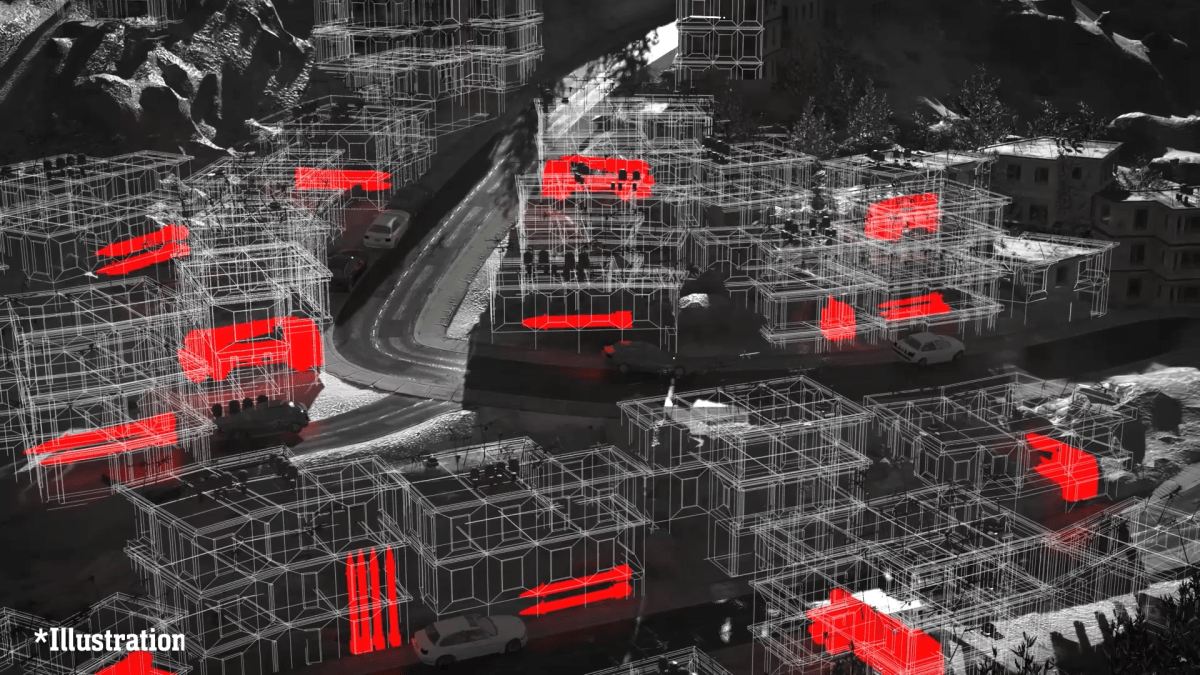
For the past two years, audiences worldwide have seen detailed 3D renderings of hospitals and residential buildings allegedly concealing Hamas command centers or Hezbollah weapons depots. Although labeled as “illustrations,” these videos create an impression of authenticity and factual reporting that has influenced global media coverage of the conflict.
The investigation identified 43 videos produced by Israeli army graphic designers over the last two years. While the videos begin with satellite imagery that lends credibility, they transition to 3D visuals interspersed with actual drone footage of airstrikes, creating a seamless but misleading narrative.
“I really hope people don’t think it looks exactly like that,” admitted one of four young IDF soldiers who described in a TikTok video how they received orders from intelligence services to visualize military targets weeks before actual operations.
Recycled Models and Web Shop Assets
Researchers discovered many 3D elements in these videos aren’t based on intelligence findings but come from commercially available digital asset packages typically used in video games or advertising. For instance, the investigation found identical command room models used to illustrate both an alleged Hamas bunker under al-Shifa Hospital and an earlier claimed bunker under a UNRWA school in Tel al Hawa.
Another video purports to show a heavily armed village in southern Lebanon, depicting buildings filled with weapons from basement to roof. SRF researchers visited the location and confirmed the street shown in the video doesn’t actually exist.
The investigation further revealed that many objects appearing in these visualizations came from public platforms like Sketchfab. Some elements, including a workbench and cabinets, were originally uploaded by the Scottish Maritime Museum for entirely different purposes.
Propaganda in Action: The Iran Strike Case
This propaganda technique was prominently deployed during Israel’s attack on Iranian nuclear facilities in June 2025. The IDF released detailed 3D visualizations just hours after “Operation Rising Lion” began, giving the impression of rapid reconstruction of the attack when in fact the videos had been prepared weeks earlier.
These videos went viral globally, picked up by major news outlets including The Telegraph, The Daily Mail, and Forbes, often presented without critical analysis despite containing numerous inaccuracies.
The Battle Over Perception
When contacted by researchers, the IDF twice refused requests for interviews. In a statement, they defended their visualizations, claiming “accusations of inaccuracies or the use of ‘exaggerated’ elements do not correspond to reality” and that all content “is based on verified information from various sources.”
Moran Yarchi, professor of digital influence at Israel’s Reichman University, describes these videos as part of a broader “battle over perception” rather than simply propaganda. However, ETH Zurich military expert Roland Popp argues that democratic states must hold themselves to higher standards: “Even with good intentions behind it, they must not manipulate their own information, because then they simply cease to be democratic.”
Elizabeth Breiner, program director at Forensic Architecture, called the videos “harmful,” noting that Israel is “flooding the news channels with images that mimic our visual language.” She emphasized the lasting impact of such imagery: “Even if it can be proven that these animations are false, the images cannot be removed from people’s minds.”
As conflicts increasingly play out in both physical and information spaces, this case highlights the dangerous blurring between fact and fiction in modern warfare propaganda, undermining public trust and complicating efforts to establish truth in already contested environments.
Fact Checker
Verify the accuracy of this article using The Disinformation Commission analysis and real-time sources.

10 Comments
This investigation raises important questions about the role of technology in modern warfare and the responsibility of governments to provide truthful, verifiable information to the public. Careful scrutiny of visual media is essential to prevent the spread of misinformation.
While military operations require some level of operational security, the Israeli army’s use of fabricated 3D visualizations crosses an ethical line. This undermines public trust and the principles of transparent and accountable governance.
Exactly. The blending of fantasy and reality in these videos is deeply concerning and calls for greater regulation and oversight of how militaries present information to the public.
This report highlights the need for greater scrutiny and media literacy when it comes to evaluating visual information, especially from state actors involved in conflicts. 3D graphics can be powerful but must be used responsibly, not as propaganda tools.
This is a concerning revelation about the use of sophisticated visual propaganda techniques by the Israeli military. While realistic 3D visualizations can be useful for operational planning, blending them with actual footage to mislead the public is deeply troubling.
While the use of 3D graphics and simulations can be a valuable tool for military planning and communication, the Israeli army’s apparent misuse of this technology to spread disinformation is deeply concerning. Public trust is essential, and this revelation undermines it.
I agree. The blending of real and fabricated elements in these videos is a clear attempt to manipulate public perception. Maintaining the integrity of information, especially in conflict zones, should be a top priority for governments.
The revelation that the Israeli military has been using misleading 3D visuals to justify its operations is a troubling development. Transparency and accountability should be the cornerstones of military communication, not deceptive propaganda tactics.
The Israeli government’s reliance on this type of ‘digital deception’ to sway global media coverage and public opinion is alarming. Transparent and factual reporting, even on sensitive military operations, is crucial for an informed public discourse.
I agree. The public deserves to see unbiased, verifiable information, not manipulated visuals designed to justify military actions.