


Listen to the article
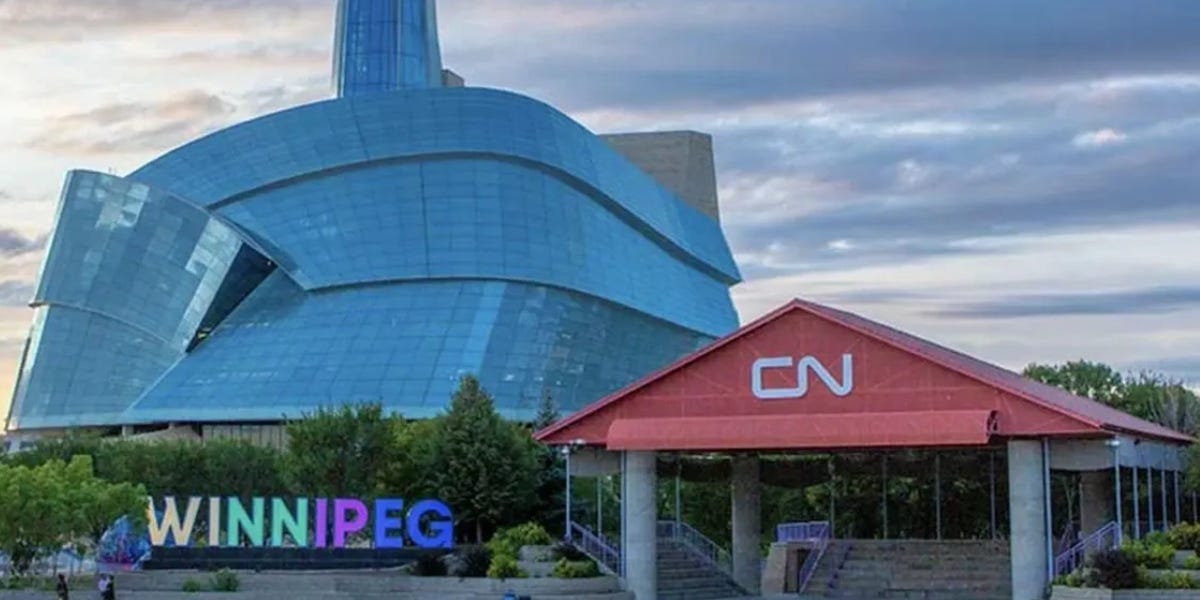
In a move sparking significant controversy, the Canadian Museum for Human Rights in Winnipeg has announced plans to unveil “Palestine Uprooted: Nakba, Past and Present,” a new exhibition scheduled to open in June 2026.
The exhibit will examine the Nakba, a period beginning in 1948 when hundreds of thousands of Arabs were displaced from territories that now constitute Israel, the West Bank, and the Gaza Strip during the war surrounding Israel’s establishment. Museum CEO Isha Khan noted that a team of researchers, academics, interpretive planners, and designers has been working for several years on the project, which will utilize various media including videos, static art, written materials, and interactive presentations.
The announcement has generated polarized reactions across Canadian society. While some advocacy groups have praised the museum’s decision to spotlight this historical period, others have voiced strong opposition through petitions and public appeals.
Among the most vocal critics is the Jewish Heritage Centre of Western Canada, which has announced it will relocate its annual Holocaust Remembrance Day ceremony in response. In a public statement, the Centre expressed being “tremendously concerned” that the exhibit “will lack balanced scholarly research and will ignore key issues of the historical and current geopolitical reality.”
The Centre raised specific concerns that the exhibit might overlook non-Jewish minorities who are Israeli citizens—including Muslim and Christian Arabs, Druze, Circassians, and Samaritans—who hold positions throughout Israeli society and enjoy equal rights under Israeli law, a reality they believe complicates conventional narratives of the Nakba.
Gustavo Zentner, Vice President for Manitoba and Saskatchewan at the Centre for Israel and Jewish Affairs (CIJA), echoed these concerns. In a statement posted on social media, Zentner noted that CIJA had immediately engaged with museum leadership upon learning of the planned exhibit and offered to help ensure a balanced presentation that would include the experiences of all refugees, including more than 850,000 Jews forcibly displaced from established communities across the Middle East and North Africa during the same period.
“Recent reports regarding [the exhibit] have heightened our concerns, particularly because our community has not been consulted,” Zentner stated.
However, some observers consider the negative reaction premature. Globe and Mail journalist Marsha Lederman, herself the daughter of Jewish Holocaust survivors, characterized the backlash as “not only premature, but preposterous.” She defended the museum’s right to install an exhibition about the mass displacement of at least 750,000 people in 1948 and expressed confidence in the museum’s professionalism.
The controversy highlights complex questions about representation, historical context, and balanced narrative in cultural institutions. Critics argue the exhibit risks presenting a one-sided view that might omit crucial context, including that the United Nations sanctioned Israel’s creation through a partition plan intended to establish two states—one Jewish and one Arab—a proposal still rejected by some Arab states and organizations.
For the museum, which operates with federal funding and oversight, the challenge will be navigating these competing perspectives while fulfilling its mandate to educate about human rights issues. The exhibit remains in development, with content still being finalized ahead of its 2026 opening.
The debate occurs against the backdrop of ongoing tensions in the Middle East and rising concerns about antisemitism and Islamophobia in Canada. It underscores the difficulties cultural institutions face when addressing contested historical narratives, particularly those connected to contemporary conflicts.
As development continues, both supporters and critics will be watching closely to see how the museum balances its educational mission with the responsibility to present complex historical events in their full context.
Fact Checker
Verify the accuracy of this article using The Disinformation Commission analysis and real-time sources.

15 Comments
While the Nakba is a deeply painful chapter in Palestinian history, the museum’s decision to feature it is bound to be divisive. I hope they can find a way to present it objectively and without inflaming tensions.
This is a laudable effort by the museum to shine a light on an important but often overlooked historical event. However, the potential for controversy is high, and they’ll need to tread carefully.
Agreed. Navigating the sensitivities around the Nakba will require great skill and diplomacy from the museum’s team.
Exploring the Nakba through this exhibit is a noble goal, but the museum will need to be extremely careful in its approach. Maintaining balance and avoiding political agendas will be crucial.
The Nakba is a crucial part of the Israeli-Palestinian conflict’s history, but presenting it fairly and avoiding bias will be a significant challenge for the museum. I hope they can rise to the occasion.
The Nakba is a complex and emotive topic, and the museum’s decision to spotlight it is sure to be met with strong reactions. I hope they can find a way to educate the public while respecting the sensitivities involved.
This is a complex and sensitive issue. While the Nakba was a tragic event, the museum’s decision to spotlight it is controversial. It will be important to approach the exhibit with nuance and balance.
Memorializing historical events like the Nakba is important, but the museum must be cautious not to inflame tensions or take partisan stances. A balanced, scholarly treatment is needed.
You raise a good point. Sensitivity and nuance will be essential to presenting this material in a way that promotes understanding rather than division.
I’m interested to see how the museum plans to approach this exhibit. Handling the complexities of the Nakba and Israel’s establishment will require meticulous research and a commitment to impartiality.
This is a highly politicized issue, and the museum’s decision is likely to be met with strong reactions on all sides. Careful curation and thoughtful dialogue will be key to the exhibit’s success.
This is a bold and potentially controversial move by the museum. Presenting the Nakba in a fair and nuanced way will be a significant challenge, but an important one if we are to improve understanding of this history.
Well said. Navigating this topic with care and objectivity will be critical to the exhibit’s success and impact.
The Nakba and the creation of Israel are deeply intertwined historical events. I’m curious to see how the museum plans to present this contentious period in a fair and educational way.
Agreed, navigating this topic will require great care and diplomacy. Maintaining an objective, fact-based approach will be crucial.