


Listen to the article
Iran’s Hypersonic Missile Claims Face Scrutiny Amid Ongoing Middle East Tensions
As Israel continues to face bombardment from multiple fronts in the Middle East, Iranian claims about its advanced missile capabilities have come under intense scrutiny from military experts and intelligence analysts. Particularly controversial is Tehran’s alleged Fattah-2 hypersonic missile, which has become the subject of misinformation campaigns on social media despite significant doubts about its operational status.
On April 4, approximately 40 missiles reportedly targeted the greater Tel Aviv area in what marked the 17th wave of attacks against Israel. The Israeli Magen David Adom rescue service reported that while this particular barrage resulted in no initial casualties, at least 45 people had been injured in rocket attacks the previous day.
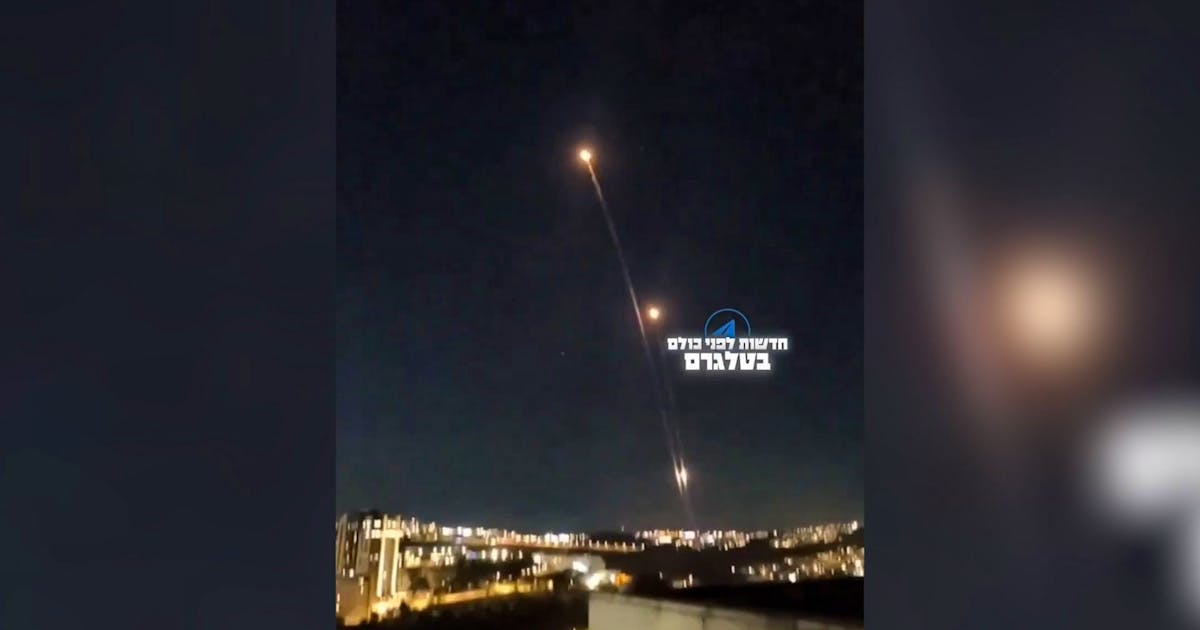
Against this backdrop of ongoing conflict, social media has been flooded with purported footage showing Iran’s Fattah-2 hypersonic missile striking Jerusalem. These videos typically depict numerous Israeli interceptor missiles failing to stop a fast-moving projectile before it crashes into the ground. The footage has gained significant traction, particularly in Indian media outlets.
However, Western and Israeli news sources have not corroborated these alleged hypersonic strikes, raising serious questions about the authenticity of these claims.
Iran first announced the development of the Fattah-2 on November 10, 2023, describing it as an advancement over its predecessor, the Fattah-1 medium-range missile. According to Iranian military statements, the Fattah-2 features hypersonic glide vehicle technology allowing it to maneuver at speeds exceeding Mach 5 (approximately 3,836 mph), with maximum velocity claims of up to Mach 15 (11,509 mph).
With a purported range of 1,500 kilometers (932 miles), the missile would theoretically be capable of reaching any target within Israel from Iranian territory, while allegedly being able to evade advanced air defense systems like Israel’s Iron Dome.
Defense experts, however, have expressed significant skepticism about Iran’s capabilities in this arena. The Foundation for Defense of Democracies noted that Iran has presented the Fattah-2 as operational despite the fact that “the Fattah-1 has not even proven that it is operational or works.”
Jack Watling from the London-based Royal United Services Institute elaborated on the technical challenges facing Iranian missile developers in comments to PBS: “Because of the high speeds between Mach 15 and Mach 5, extremely resistant material is required. This is an extremely complicated task. The Iranians don’t have the capacity to produce it.”
The development of functional hypersonic missiles requires sophisticated materials engineering to withstand the extreme temperatures generated at such velocities, as well as advanced guidance systems capable of making split-second adjustments. These technological hurdles have proven challenging even for nations with far more advanced defense industries than Iran.
Military analysts suggest that Tehran’s hypersonic missile claims may serve strategic purposes beyond their actual capabilities, creating psychological pressure on adversaries and projecting an image of technological advancement to domestic and regional audiences.
The circulation of AI-generated or manipulated videos purporting to show successful Fattah-2 strikes represents a concerning dimension of information warfare accompanying the physical conflict. Such visual misinformation can shape public perception and potentially influence decision-making processes during times of heightened tensions.
As the conflict between Israel and Iran continues to evolve, the gap between theoretical weapons capabilities and operational reality remains a critical factor in assessing the true strategic balance in the region.
Fact Checker
Verify the accuracy of this article using The Disinformation Commission analysis and real-time sources.

14 Comments
The use of social media to spread misinformation and propaganda around military technology is concerning. I hope responsible media and analysts can provide a balanced, evidence-based assessment of Iran’s actual capabilities.
Absolutely. Fact-based reporting and expert analysis will be crucial to understanding the reality behind these claims, rather than getting caught up in the social media frenzy.
The spread of misinformation and fake videos about Iran’s missile capabilities is troubling. I hope the international community can work to address this challenge and arrive at a clear, factual assessment.
Agreed. Distinguishing truth from propaganda will be key to understanding the actual state of Iran’s military technology and capabilities.
The spread of misinformation around Iran’s military technology is a serious issue that deserves careful scrutiny. I hope the international community can work to separate fact from fiction and provide the public with an accurate assessment.
While hypersonic missiles are certainly a concerning development, we need to be cautious about unverified claims, especially when they seem designed to inflame tensions. Careful analysis of the evidence is required.
The spread of misinformation and propaganda around sensitive military issues like this is deeply concerning. I hope the relevant authorities can provide the public with a clear, evidence-based assessment of Iran’s actual capabilities.
Interesting claims about Iran’s hypersonic missile capabilities. However, the concerns over fake videos and propaganda are valid. We need to be cautious about unverified claims, especially in the context of ongoing regional tensions.
Agreed. It’s critical to rely on authoritative sources and fact-checking when it comes to sensitive military developments, rather than social media misinformation.
Propaganda and misinformation around sensitive military issues like this can be very dangerous. I hope the relevant authorities are working to counter the spread of false claims and provide the public with accurate information.
Concerns over fake videos and propaganda around Iran’s alleged hypersonic missile capabilities are well-founded. We need to be very cautious about unverified claims, especially in the context of ongoing regional tensions.
Agreed. Responsible, fact-based reporting and expert analysis will be essential to understanding the true state of Iran’s military technology, rather than relying on social media sensationalism.
While the alleged hypersonic missile claims are concerning, the prevalence of fake videos and propaganda around this issue is equally worrying. We need to be very cautious about unverified reports.
Absolutely. Relying on authoritative sources and expert analysis will be crucial to understanding the true state of Iran’s missile capabilities, rather than getting swept up in social media hype.