


Listen to the article
French Graphic Novel Sparks Controversy on Social Media
A celebrated French-Iranian graphic novel has become the center of a heated debate on social media after a French television channel announced plans to broadcast its film adaptation.
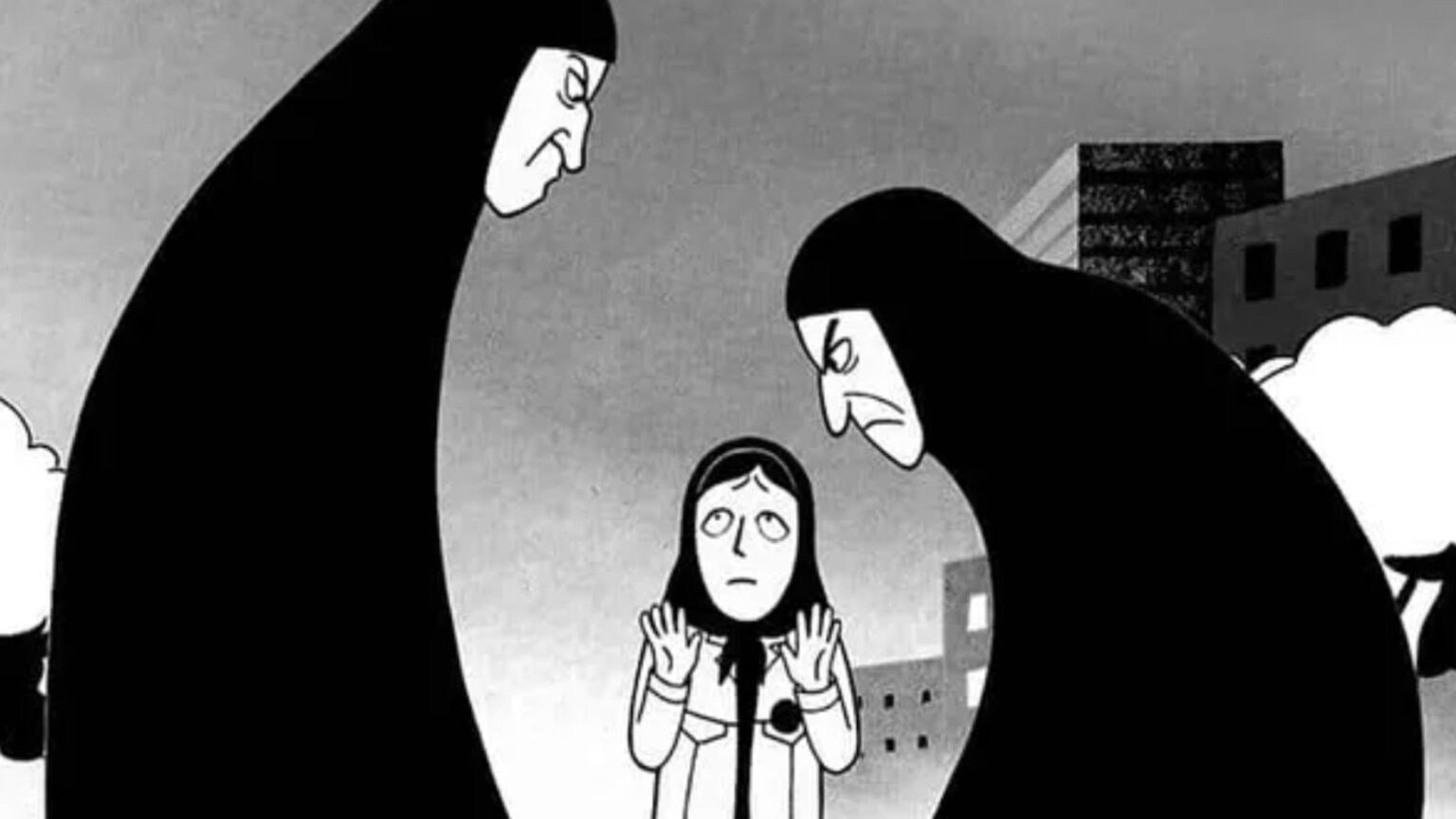
The autobiographical comic “Persepolis,” created by Marjane Satrapi in 2000, chronicles her childhood experiences growing up in post-revolutionary Iran under the Islamic Republic. The critically acclaimed work provides a stark portrayal of the challenges faced by women living under a theocratic regime.
Through her protagonist Marji, Satrapi depicts the harsh realities of growing up female in Iran – from witnessing the traumatic aftermath of bombing raids to the execution of her uncle Anouche. The narrative explores how even mundane teenage activities became fraught with danger, with Marji risking trouble with authorities for wearing makeup or holding hands with boys.
Earlier this month, French TV channel France 4 announced on social media platform X its intention to broadcast the animated film adaptation of “Persepolis,” citing its relevance to current events in the Middle East. The 2007 film, co-directed by Satrapi herself, had won the Jury Prize at the Cannes Film Festival.
The announcement immediately triggered an intense backlash online from what observers describe as a coalition of progressive activists and Islamic hardliners. Critics accused the film of Islamophobia, with some commenters demanding that programming about Palestinian experiences should be prioritized instead. Others went further, labeling the work “pro-US propaganda.”
This reaction mirrors criticism from official Iranian sources when the film was first released. In 2008, then-Iranian President Mahmoud Ahmadinejad condemned “Persepolis” as both “Islamophobic” and “anti-Iranian,” pressuring allies to ban its screening.
Media analysts note that the controversy highlights growing tensions in Western liberal democracies about how to address criticism of religious fundamentalism while avoiding cultural insensitivity. The backlash against Satrapi’s work raises questions about whose voices are prioritized in discussions about religious repression and women’s rights.
Satrapi, who moved to France later in life, has been outspoken about her intentions in creating “Persepolis.” She has stated that she wanted to make Iranian youth feel seen in their struggles while also explaining the reality of life under theocratic rule to non-Iranian audiences.
“If they kill you and the whole world doesn’t care, how is that?” Satrapi once said, emphasizing the importance of bringing global attention to human rights issues in Iran.
The artist has also cautioned against overgeneralizing about any cultural or religious group. “It is dangerous when you start calling people from one part of the world terrorists or fanatics,” she warned. “You reduce them to some abstract notion… If evil has a geographical place, and if the evil has a name, that is the beginning of fascism. Real life is not this way. You have fanatics and narrow-minded people everywhere.”
The controversy surrounding “Persepolis” comes at a time of heightened global tensions regarding the Middle East and religious fundamentalism. It also coincides with renewed concerns about women’s rights in Iran following the 2022 protests sparked by the death of Mahsa Amini while in the custody of Iran’s morality police.
The debate illustrates the complex intersection of artistic freedom, cultural sensitivity, and political activism in contemporary media discussions. While some view Satrapi’s work as essential testimony about religious repression, others criticize it as potentially reinforcing negative stereotypes about Islam.
As France 4 moves forward with its plans to broadcast the film, the controversy surrounding “Persepolis” serves as a reminder of art’s power to challenge, provoke, and illuminate difficult truths – even when those truths become uncomfortable for audiences across the political spectrum.
Fact Checker
Verify the accuracy of this article using The Disinformation Commission analysis and real-time sources.

9 Comments
Persepolis sounds like a powerful work that sheds light on the challenges facing women under theocratic regimes. Sharing personal narratives can be an effective way to raise awareness.
Yes, personal stories can humanize political realities in a compelling way. Exploring diverse perspectives is crucial for gaining a more complete picture.
Interesting that this graphic novel has sparked debate. While it may provide a personal perspective, it’s important to consider diverse viewpoints on such complex sociopolitical issues.
That’s a fair point. Autobiographical works can offer important insights, but should be balanced with other sources to gain a more nuanced understanding.
As a work of autobiographical fiction, Persepolis seems to offer a personal window into the lived experiences of its author. Evaluating its portrayal of events and themes with care is prudent.
That’s a thoughtful approach. Maintaining objectivity while acknowledging the subjective nature of personal narratives is important when assessing their sociopolitical impact.
The decision to broadcast the Persepolis film adaptation seems timely given current events in the Middle East. Providing platforms for diverse perspectives can foster greater understanding, if done responsibly.
I’m curious to learn more about the specific criticisms of Islamophobia leveled against this graphic novel. It’s important to approach such claims with nuance and objectivity.
Agreed. Accusations of bias require careful examination of the content and intent. A balanced analysis would be helpful to understand the nature of the debate.