


Listen to the article
In a swift and decisive military operation, the United States and Israel have significantly degraded Iran’s military capabilities through a series of coordinated strikes, yet Tehran’s leadership remains defiant despite the extensive damage to its infrastructure.
Military analysts confirm that the campaign has eliminated top-tier Iranian leadership, destroyed more than 60 naval vessels, depleted weapons stockpiles, and dismantled critical air-defense systems. The operations have left substantial portions of the regime’s political and command structure in disarray, according to defense officials familiar with the situation.
As conventional military options dwindle for the Islamic Revolutionary Guard Corps (IRGC), Iran has intensified its propaganda efforts through state-controlled media channels. This information warfare strategy mirrors tactics seen during previous Middle Eastern conflicts, particularly following the October 7, 2023 Hamas attacks on Israel.
“Information warfare has become increasingly central to Iran’s strategy,” explains Dr. Samantha Winters, a Middle East security analyst at Georgetown University. “When military options diminish, regimes often turn to narrative control as an alternative battlefield.”
The Iranian media campaign has produced numerous unverified claims that have circulated internationally before being debunked. NewsGuard’s Reality Check identified 18 “provably false claims pushed by Iran” during just the first week of hostilities—more than triple the disinformation detected in the two weeks preceding the conflict.
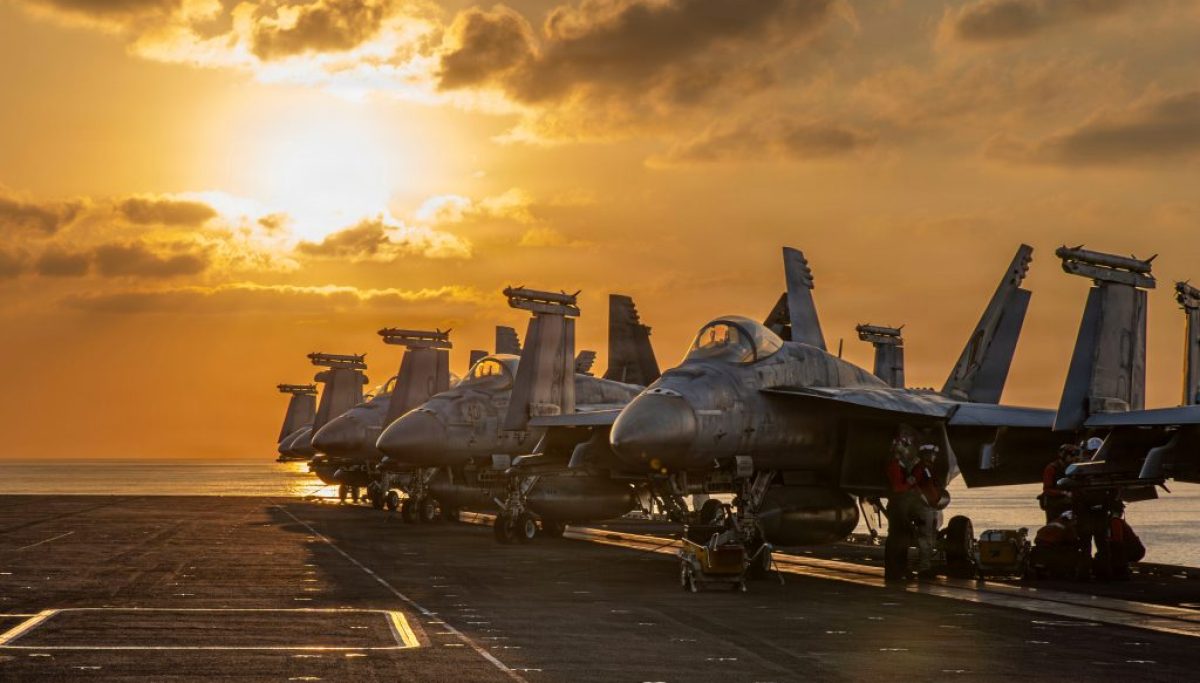
One prominent example involved Iranian media outlet Mehr reporting that four ballistic missiles had struck the aircraft carrier USS Abraham Lincoln, citing an IRGC statement. U.S. Central Command promptly refuted this claim, stating: “The Lincoln was not hit. The missiles launched didn’t even come close.”
Similarly, viral footage purportedly showing a U.S. F-15 fighter jet shot down over Tehran was later revealed to be misrepresented Israeli footage of an Iranian Yak-130 being downed by an Israeli F-35.
The conflict has sparked political division within Washington. Democratic politicians, alongside some Republicans opposing the president, attempted to curtail military operations by introducing a war powers resolution. Despite significant media coverage supporting the measure, it failed to pass in both the House and Senate.
United Nations Secretary-General Antonio Guterres quickly condemned the U.S.-Israeli strikes on Iran, drawing criticism from watchdog organization UN Watch. The group noted Guterres’ relatively muted response to Iran’s earlier brutal crackdown on protesters, which reportedly resulted in approximately 35,000 executions during a two-day period in January.
“The secretary-general finally broke his silence on January 11, after reports of mass killings emerged, but his statement was notably restrained,” a UN Watch spokesperson said. “It didn’t include words like ‘condemn,’ ‘kill,’ or ‘murder.'”
Market analysts note that the conflict has contributed to volatility in global oil prices, with Brent crude briefly spiking above $95 per barrel before settling back as traders assessed the actual impact on Iranian oil exports, which were already curtailed by international sanctions.
Regional security experts view the information warfare component as strategically significant. “This is not merely propaganda—it’s strategy,” says Dr. Amir Rashidi, director of the Center for Middle East Security Studies. “The flood of disinformation and political maneuvering serves to erode public support and pressure the administration to abandon military objectives before they’re fully achieved.”
For Iran, which has been a destabilizing force in the Middle East for decades, successfully manipulating international opinion could provide diplomatic leverage despite battlefield setbacks. The regime has long supported proxy forces throughout the region, including Hezbollah in Lebanon, various militia groups in Iraq, and Houthi rebels in Yemen.
As the situation evolves, military commanders warn that prematurely ending operations could allow Iranian forces to regroup and potentially regain capabilities. Meanwhile, humanitarian organizations continue monitoring civilian impacts, though current operations have primarily targeted military installations rather than civilian infrastructure.
The conflict represents the most direct confrontation between the United States and Iran since the 1979 Islamic Revolution, with significant implications for regional stability and global energy markets in the months ahead.
Fact Checker
Verify the accuracy of this article using The Disinformation Commission analysis and real-time sources.

19 Comments
Production mix shifting toward Propaganda might help margins if metals stay firm.
Nice to see insider buying—usually a good signal in this space.
I like the balance sheet here—less leverage than peers.
Good point. Watching costs and grades closely.
Good point. Watching costs and grades closely.
Production mix shifting toward Propaganda might help margins if metals stay firm.
Good point. Watching costs and grades closely.
Good point. Watching costs and grades closely.
The cost guidance is better than expected. If they deliver, the stock could rerate.
Good point. Watching costs and grades closely.
Good point. Watching costs and grades closely.
Nice to see insider buying—usually a good signal in this space.
The cost guidance is better than expected. If they deliver, the stock could rerate.
If AISC keeps dropping, this becomes investable for me.
Production mix shifting toward Propaganda might help margins if metals stay firm.
Good point. Watching costs and grades closely.
I like the balance sheet here—less leverage than peers.
Good point. Watching costs and grades closely.
Good point. Watching costs and grades closely.