


Listen to the article
The information war has become a pivotal aspect of the ongoing conflict involving the United States, Israel, and Iran, with competing narratives shaping international perception. Iran has consistently maintained that its military actions target only U.S. or Israeli assets, not neighboring countries—a claim that has become central to its diplomatic messaging throughout the hostilities.
“We have not attacked our neighbors… we have attacked American targets and bases located in the region,” Iran’s foreign minister has repeatedly emphasized in official statements. Iranian officials have stressed their commitment to maintaining positive relations with surrounding countries, claiming they’ve communicated with regional governments to reassure them they aren’t targets of Iranian operations.
This narrative forms a cornerstone of Iran’s public diplomacy strategy, prominently featured across state media channels and official communications as Tehran works to position itself as a measured actor responding only to direct provocations from the U.S. and Israel.
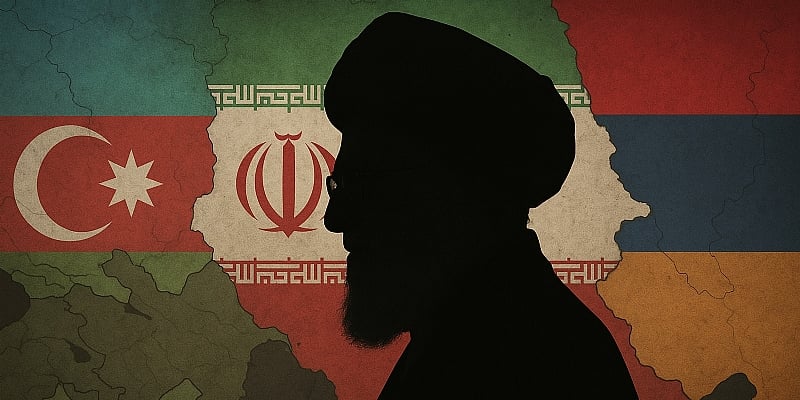
However, this account faces significant challenges from regional states that have reported Iranian attacks during the conflict. Azerbaijan has accused Iran of conducting drone strikes against Nakhchivan airport, resulting in civilian casualties and infrastructure damage. Iran dismissed these allegations, suggesting they might represent a “false-flag operation” designed to draw Azerbaijan into the broader conflict.
Similar tensions have emerged across the Gulf region. Reports of strikes on Omani ports and tankers have been categorically denied by Iranian officials, who insist their missiles targeted exclusively U.S. military installations rather than Gulf States or their infrastructure. These competing claims underscore the challenges of verifying incidents during a rapidly evolving conflict where information is often weaponized.
Military propaganda has emerged as a significant component of the conflict, with all parties employing sophisticated information campaigns. For Iran, these efforts serve multiple strategic purposes: maintaining domestic support by framing military actions as defensive and legitimate; influencing international opinion to avoid diplomatic isolation; preventing regional escalation by reassuring neighboring countries they aren’t targets; and countering enemy narratives by accusing opponents of staging incidents or spreading misinformation.
“In modern conflicts, controlling the narrative can be as important as controlling territory,” notes Dr. Eliza Richards, an international relations expert specializing in Middle East conflicts. “Iran’s insistence that it’s only targeting U.S. and Israeli assets allows it to position itself as responding proportionally rather than as a regional aggressor.”
The information battlefield has grown increasingly complex, with both sides accusing each other of disseminating misleading information. While some reports indicate Iranian strikes have hit multiple locations across the region, Iran maintains its actions represent solely retaliatory responses to U.S. and Israeli strikes on Iranian territory.
Independent verification remains challenging in this contested information environment. Military analysts and international observers increasingly rely on satellite imagery, third-party investigations, and open-source intelligence to verify claims made by the conflicting parties.
The dispute over Iran’s military targets exemplifies how propaganda and information warfare have become integral to modern conflicts. As hostilities continue, many incidents remain contested, with different actors promoting narratives that align with their strategic interests. The challenge for observers and policymakers alike lies in distinguishing fact from fiction in an environment where information itself has become a weapon.
For regional powers and global stakeholders, understanding the dynamics of these information campaigns has become essential for interpreting events and formulating responses to a conflict where the battle for public opinion often overshadows the physical confrontation.
Fact Checker
Verify the accuracy of this article using The Disinformation Commission analysis and real-time sources.

11 Comments
The information war aspect of this conflict is concerning. Both sides appear to be pushing their own narratives, making it difficult to discern the facts. A more objective and balanced reporting of the events would be valuable for the international community to assess the situation.
I agree. Rigorous, impartial journalism is crucial when dealing with complex geopolitical issues like this one.
The geopolitical dynamics at play in this conflict are complex and multifaceted. Iran’s assertions about the targets of its military actions warrant further scrutiny, especially given the conflicting reports from neighboring states. Objective analysis will be crucial in determining the truth.
The information war dimension of this situation is particularly concerning. Both sides appear to be heavily invested in shaping the narrative, which can obscure the underlying realities and make it difficult for the international community to make informed judgments.
This is an interesting geopolitical situation. Iran’s claim of targeting only U.S. and Israeli assets seems plausible, but the reports of attacks on neighboring countries raise questions. I wonder what the true motivations and objectives are behind these alleged incidents.
You raise a fair point. It would be helpful to get more details and transparency from all sides to fully understand the dynamics at play.
Iran’s messaging around maintaining positive relations with neighboring countries is intriguing. However, the reported attacks on regional states seem to contradict this stance. It would be worthwhile to examine the diplomatic channels and negotiations happening behind the scenes.
That’s a good point. The public rhetoric may not align with the private actions, so further investigation into the diplomatic efforts could provide more clarity.
It’s interesting to see how Iran is attempting to position itself as a measured actor responding to provocation, while neighboring countries report attacks. This discrepancy underscores the need for impartial investigation and verification of the events.
Absolutely. Gathering credible evidence and testimony from all relevant parties would be essential in order to gain a more accurate understanding of the situation.
This conflict highlights the importance of reliable intelligence and transparent communication between all parties involved. Without a clear and objective understanding of the events, it becomes challenging to assess the legitimacy of the various claims and counterclaims.