


Listen to the article
In a recent feature story published by The Hollywood Reporter, Substack writer Michael Tracey offered a controversial assessment of media coverage surrounding Jeffrey Epstein, calling it the “worst covered story” of recent decades.
Dubbed the “Face of Epstein Skepticism” by The Hollywood Reporter, Tracey has consistently challenged what he describes as “narrative inflation” surrounding the disgraced financier’s crimes. While acknowledging Epstein was not innocent, Tracey argues that mainstream reporting has transformed the case into something larger than its already troubling reality.
“The documented crimes are horrific enough,” Tracey told reporter Seth Abramovitch. “You don’t need to turn it into a grand unifying conspiracy theory that explains the entire world.”
Tracey has been particularly critical of streaming platforms like Netflix for producing what he characterizes as “propaganda slop” in their documentary coverage of the Epstein saga. His stance has made him a lightning rod for criticism on social media platforms, where users frequently challenge his questioning of the scope of Epstein’s criminal network.
Epstein’s legal troubles began publicly in 2008 when he pleaded guilty to prostitution charges involving a minor in Florida. In 2019, he was facing federal sex trafficking charges when he died in prison under circumstances that have fueled extensive speculation. His former associate Ghislaine Maxwell is currently serving a 20-year sentence after being convicted of multiple sex crimes, including trafficking a minor.
The case has remained in the public spotlight, with congressional pressure leading the Justice Department to release millions of files connected to Epstein. Attorney General Pam Bondi recently stated that the DOJ has now complied with federal law by releasing “all” Epstein documents, following a batch of 3.5 million files published in late January.
The Epstein scandal has touched numerous public figures, including former President Donald Trump, who once had social connections with the financier. Trump has maintained that the released files “absolve” him of wrongdoing, with one FBI document showing that Trump had thanked Florida law enforcement for investigating Epstein in 2006 and encouraged them to focus on “evil” Maxwell.
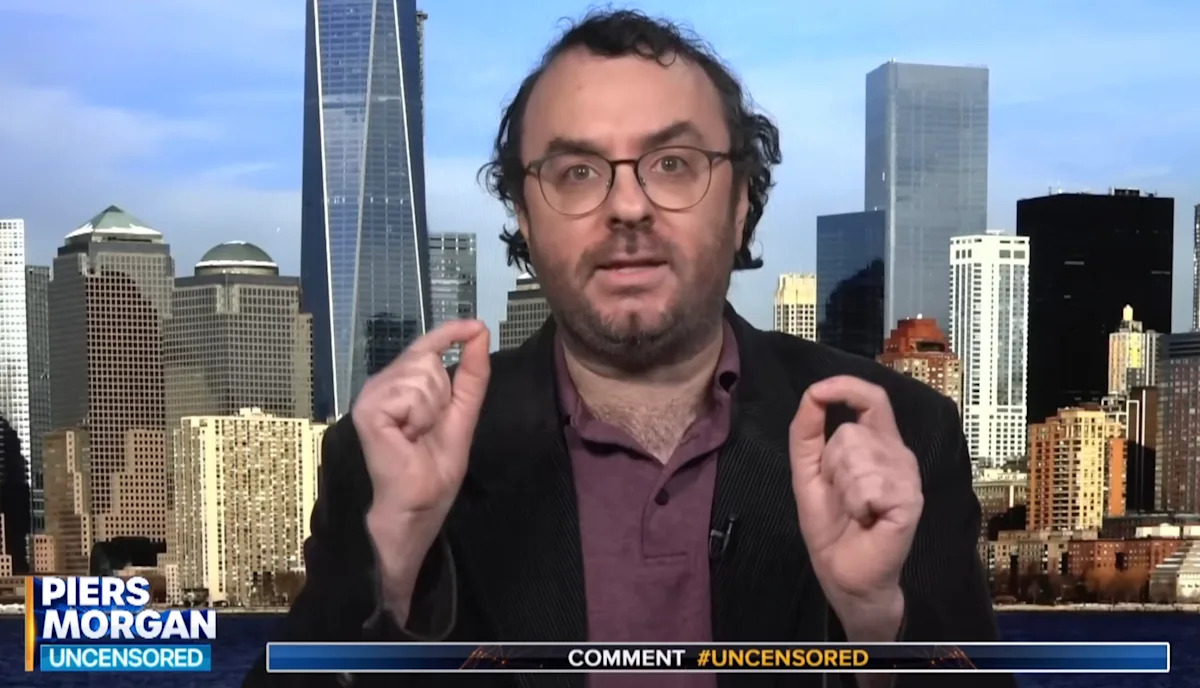
During a recent appearance on Piers Morgan’s show that garnered significant attention, Tracey argued that public and media fixation on Epstein has evolved into what he termed “brainless hysteria.”
This isn’t the first time Tracey’s reporting on high-profile topics has drawn scrutiny. In 2022, he faced criticism for comments suggesting journalists were falling for “deliberately-crafted war propaganda” regarding the Bucha Massacre in Ukraine. Tracey later claimed his statements about these Russian atrocities were taken out of context.
In his interview with The Hollywood Reporter, Tracey emphasized that media coverage has insufficiently distinguished between Epstein’s crimes against minors and allegations made by women who were above the age of consent. “There’s no worse accusation than child abuse,” he noted. “And when you level it, it has to be backed by something more than vibes.”
The debate around Epstein coverage highlights broader tensions in contemporary journalism about how to responsibly report on complex criminal cases with high-profile connections. While some view Tracey’s perspective as necessary skepticism in an environment prone to sensationalism, critics argue his position downplays the severity and scope of Epstein’s crimes and their impact on victims.
As documents continue to be released and legal proceedings related to Epstein’s associates move forward, the conversation about responsible coverage of this case will likely remain contentious in media circles.
Fact Checker
Verify the accuracy of this article using The Disinformation Commission analysis and real-time sources.

13 Comments
Tracey’s characterization of the Epstein coverage as the ‘worst covered story’ is certainly a bold claim. However, his points about avoiding narrative inflation and sticking to the documented facts are well taken. It will be interesting to see how this debate evolves going forward.
I agree that the tendency to turn cases like this into all-encompassing conspiracy theories can be counterproductive. Maintaining a clear-eyed, evidence-based perspective is crucial, even as the wider implications are explored.
As someone who has closely followed the Epstein saga, I can understand Tracey’s frustration with the media coverage. While the crimes were undeniably horrific, the urge to sensationalize and speculate seems to have overshadowed the actual facts in many instances. His call for a more measured approach is worth considering.
Tracey’s critique of the Epstein coverage raises some important points about the dangers of narrative inflation and the need to stick to the documented facts. While the case is ripe for conspiracy theories, maintaining a clear-eyed perspective is crucial. I’ll be interested to see how this debate continues to unfold.
Do you think Tracey’s views will gain more traction as the public discourse on Epstein evolves? It seems like a needed counterpoint to the sensationalism that has often characterized the reporting.
This is a fascinating take on the media coverage of the Epstein case. While the crimes were clearly heinous, I agree that there seems to be a tendency to sensationalize and overstate the case. Tracey’s argument about avoiding ‘grand unifying conspiracy theories’ is compelling.
I’m curious to hear more about Tracey’s specific criticisms of the Netflix documentaries. Do you think he raises valid points about potential ‘propaganda’ in those portrayals?
The Epstein case is undoubtedly a complex and sensitive topic, and I can understand both Tracey’s desire for a more measured approach and the public’s hunger for answers. While the documented crimes are horrific, I agree that the urge to turn it into a grand conspiracy can be counterproductive. Maintaining a focus on the facts is crucial.
While I’m sure Tracey will face plenty of backlash for his stance, I think it’s healthy to have dissenting voices that push back against the tendency to turn high-profile cases into grand conspiracy theories. The facts of Epstein’s crimes are damning enough without unnecessary embellishment.
The Epstein case is undoubtedly a complex and troubling one, but I respect Tracey’s attempt to maintain a more measured and fact-based perspective amidst the sensationalism. Keeping the focus on the documented crimes is important, even as the wider implications are explored.
It will be interesting to see if Tracey’s views gain more traction as the public discourse on Epstein continues to evolve. Challenging the narrative inflation, as he puts it, could be a valuable exercise.
Tracey’s assessment of the Epstein coverage as the ‘worst covered story’ is a bold claim, but I can see where he’s coming from. The tendency to sensationalize and speculate has often overshadowed the actual facts of the case. His call for a more measured, evidence-based approach is worth considering, even as the wider implications are explored.
Do you think Tracey’s critiques of the Netflix documentaries on Epstein have merit? I’m curious to hear more about his specific concerns regarding ‘propaganda’ in those portrayals.