


Listen to the article
India Debunks Fake Rafale Letter Circulated by Pakistani Social Media Account
India has firmly rejected claims made by a Pakistani propaganda social media account regarding an alleged leaked letter from External Affairs Minister S. Jaishankar to France. The Ministry of External Affairs (MEA) has categorically stated that the letter, which purportedly discussed communications related to Rafale fighter jet deliveries, is completely fabricated.
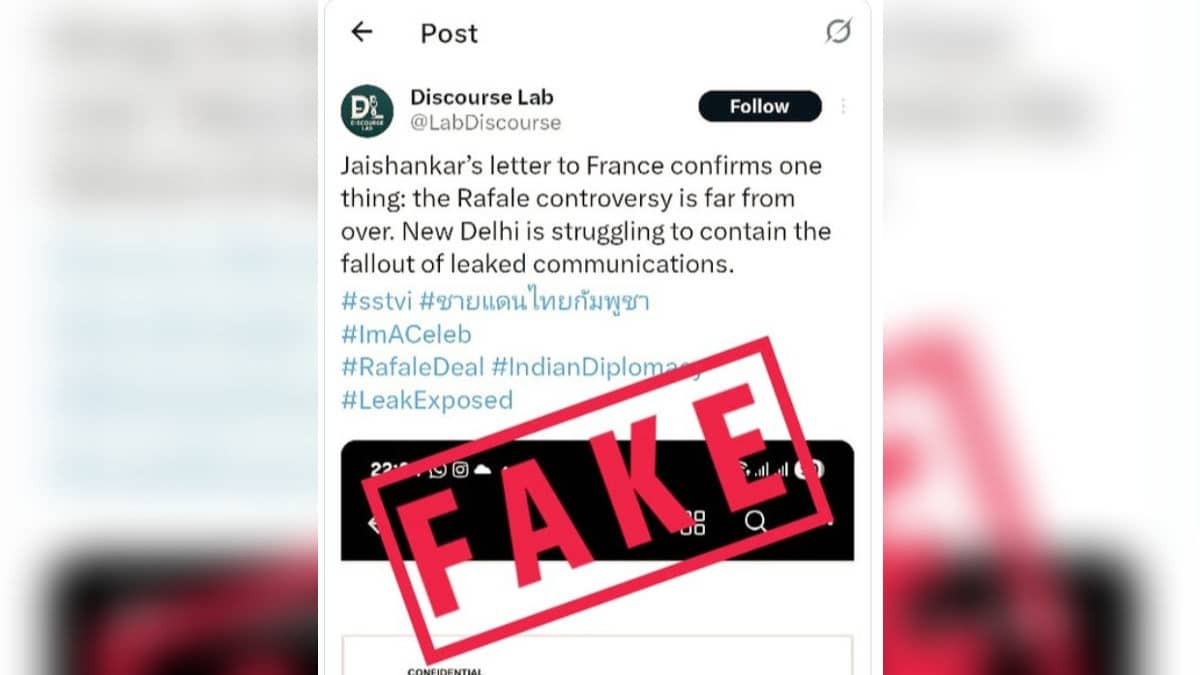
The MEA’s dedicated Fact Check unit took to social media platform X (formerly Twitter) to address the false information. “The letter being referred to in this post is fake. Always stay alert against disinformation,” the unit stated, while sharing screenshots of the malicious posts circulating the fabricated content.
The counterfeit letter was initially shared by an account named “Discourse Lab,” which attempted to suggest that a controversy surrounding India’s Rafale fighter jet acquisition from France was “far from over.” The account posted what it claimed was a confidential communication from External Affairs Minister S. Jaishankar to the French Ambassador, but Indian authorities quickly identified and exposed the document as fraudulent.
This incident represents the latest in a series of disinformation attempts aimed at straining India-France relations, particularly around the high-profile Rafale deal. The $8.7 billion agreement, signed in 2016, involves the purchase of 36 Rafale fighter jets manufactured by French company Dassault Aviation. The acquisition has significantly enhanced India’s air defense capabilities amid regional security challenges.
Diplomatic and defense analysts note that the spread of such disinformation appears strategically timed, as India continues to strengthen its military partnerships with Western nations. The Rafale jets have been gradually inducted into the Indian Air Force since July 2020, with the final deliveries completed last year.
“This is a classic example of information warfare,” said a senior security analyst who requested anonymity. “Creating fictional diplomatic communications is designed to sow doubt about legitimate international agreements and partnerships.”
The MEA’s swift response highlights India’s growing vigilance against cross-border disinformation campaigns. In recent years, India has established dedicated units to monitor and counter false narratives targeting the country’s foreign policy, defense acquisitions, and diplomatic relations.
Defense experts point out that India’s Rafale acquisition has been a particular target for disinformation, given its strategic importance in modernizing India’s air combat capabilities. The multi-role aircraft significantly enhances India’s tactical advantage in the region with advanced weapons systems and superior avionics.
This is not an isolated incident, as Indian authorities have repeatedly exposed similar attempts by Pakistan-linked accounts to spread misleading information about India’s diplomatic and defense matters. Despite being repeatedly discredited, such campaigns persist as part of what security experts describe as a coordinated effort to undermine India’s international standing.
The Indian government has urged citizens to verify information through official channels and remain skeptical of unverified claims, particularly those related to sensitive diplomatic and defense matters. The MEA Fact Check unit regularly monitors social media platforms to identify and debunk false claims about India’s foreign policy.
France remains one of India’s key strategic partners, with cooperation extending beyond defense to areas including nuclear energy, space technology, and counterterrorism. The relationship has strengthened considerably in recent years, with regular high-level exchanges and joint military exercises.
As digital disinformation continues to pose challenges to international relations, diplomatic sources indicate that India and France are working to enhance cooperation in cybersecurity and counter-disinformation strategies as part of their comprehensive strategic partnership.
Fact Checker
Verify the accuracy of this article using The Disinformation Commission analysis and real-time sources.

8 Comments
India rightly dismissed Pakistan’s claims as baseless propaganda. Fabricating official communications is a worrying tactic that erodes public trust. Fact-checking is crucial in this digital age.
This incident highlights the need for robust fact-checking mechanisms to combat the rise of online disinformation. India’s proactive stance in addressing the fake letter is a positive example.
It’s disturbing to see such blatant attempts at disinformation. The Indian government’s swift response to identify and debunk the fake Rafale letter is commendable. Maintaining transparency is key.
Agreed. Exposing these fabrications is an important step to counter the spread of misleading narratives. Rigorous fact-checking is vital for upholding accountability in international affairs.
Disappointing to see this ongoing propaganda from Pakistan. India was right to swiftly debunk the fake Rafale letter – disinformation like this undermines regional stability and trust.
Agreed, transparency and honesty are crucial when it comes to major defense acquisitions. Glad the Indian government acted quickly to address this fabricated content.
The MEA’s fact-checking efforts are commendable. Spreading false documents is a serious issue that should be condemned. Maintaining accuracy in reporting on defense matters is paramount.
Absolutely. Responsible journalism and government communication are essential to prevent the proliferation of harmful misinformation, especially around sensitive geopolitical topics.