


Listen to the article
The evolution of Santa Claus as we know him today can be largely credited to a single 19th-century artist whose political illustrations helped shape American iconography during one of the nation’s most divisive periods.
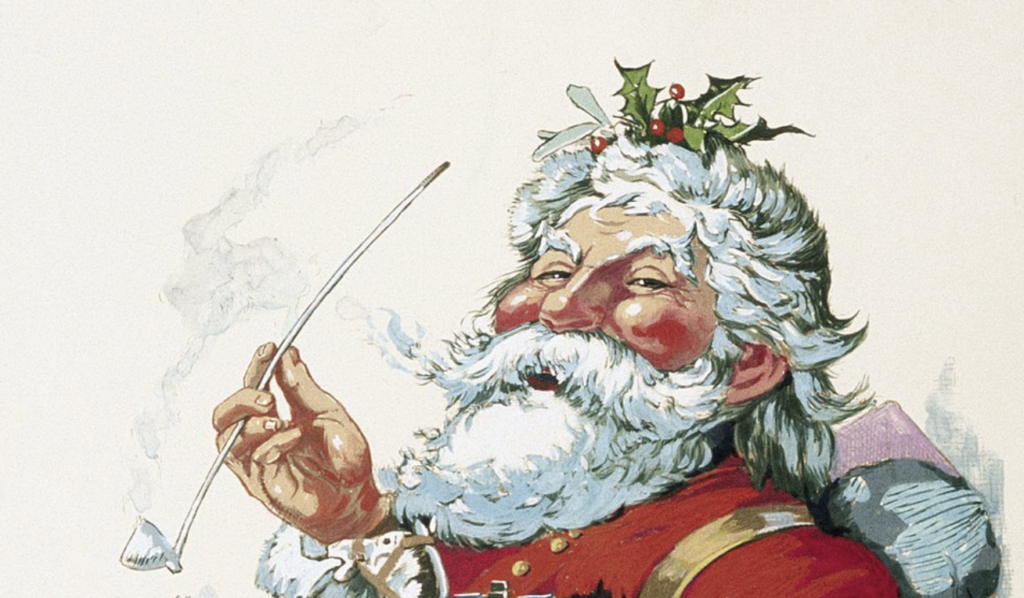
Thomas Nast, a Bavarian immigrant and illustrator for Harper’s Weekly, created what many historians consider the definitive visual representation of Santa Claus during the American Civil War. His first depiction of the Christmas figure appeared in the magazine’s 1862 Christmas issue, showing Santa distributing gifts to Union soldiers in “Santa Claus in Camp”—a clear indication of where jolly old St. Nick’s political sympathies lay during the conflict.
While many associate Santa’s modern image with Norman Rockwell illustrations or Coca-Cola’s advertising campaigns, it was Nast who established the fundamental visual elements that persist in our collective imagination. His contributions to American visual culture extended beyond Santa Claus—Nast is also credited with creating the donkey as the symbol for the Democratic Party and the elephant for the Republican Party.
The history of Santa Claus traces back to Saint Nicholas, a 3rd-4th century bishop from what is now Turkey, renowned for his generosity toward children. The name “Santa Claus” evolved from “Sinterklaas,” the Dutch version of Saint Nicholas. Early portraits of the saint from the 13th century would be unrecognizable to modern eyes, bearing little resemblance to the jolly, round figure we know today.
Over centuries, the image of Saint Nicholas merged with elements from Germanic and Norse mythology, particularly those associated with winter and flight. The modern American version of Santa began to take shape in 1822 when Clement Moore published his poem “A Visit from St. Nicholas,” better known as “‘Twas the Night Before Christmas.” Moore’s verses introduced many now-familiar characteristics—the rosy cheeks, white beard, bundle of toys, and belly “that shook when he laughed, like a bowl full of jelly.”
Nast recognized both the popular appeal of Moore’s description and the propaganda value of Santa Claus during the Civil War. His earliest renditions appeared in the upper corners of an 1862 Harper’s Weekly illustration showing a praying wife and her Union soldier husband, symbolically connecting the Northern cause with holiday goodwill.
Nearly two decades later, Nast’s 1881 cartoon “Merry Old Santa Claus” presented a figure immediately recognizable to modern viewers. Though created to advocate for higher military wages—a political context now largely forgotten—the illustration cemented Santa’s visual identity in popular culture.
Throughout the 20th century, Santa Claus continued to serve as a patriotic symbol, particularly during World Wars I and II. Norman Rockwell further refined the image during this period, helping to cement Santa as a distinctly American cultural icon despite his European origins.
Adam Gopnik of The New Yorker has described this transformation aptly, calling Santa Claus “the symbol of our empire, as much as Apollo was of the Hellenic one.” What began as a foreign saint transformed through cultural evolution, artistic interpretation, and political utilization into one of America’s most recognizable and exported cultural symbols.
This process of transformation—from Turkish saint to Dutch Sinterklaas to American Santa—reflects the broader patterns of cultural assimilation and adaptation that have shaped much of American iconography. In Nast’s hands, Santa became not just a bearer of gifts but a symbol of Union values during a pivotal moment in American history, forever linking the character with American national identity in ways that continue to resonate today.
Fact Checker
Verify the accuracy of this article using The Disinformation Commission analysis and real-time sources.

12 Comments
It’s interesting to see how political cartoonists can shape national symbols and imagery. I didn’t realize the donkey and elephant party symbols also originated from Nast’s illustrations.
Yes, Nast was a highly influential illustrator who left a lasting mark on American political iconography.
Wow, I had no idea the Santa Claus we know today was essentially invented by a political cartoonist during the Civil War. That provides a whole new perspective on the character.
Agreed, it really puts the Santa Claus tradition in a different light. It’s amazing how enduring that imagery has become.
This is a fascinating bit of history. I wonder how Nast’s Santa Claus depictions might have been received in the Confederacy at the time, given the clear Union sympathies.
That’s a great question. The partisan nature of Nast’s Santa Claus would likely have been controversial in the South during the Civil War era.
Fascinating how the Santa Claus image we know today was shaped by propaganda during the Civil War. I wonder how that political association impacted the holiday’s meaning and traditions over time.
Good point. Santa Claus branding became a way to rally patriotic support, which likely influenced his evolution as a cultural icon.
I wonder if the Union-leaning Santa Claus depiction ever caused any backlash or controversy in the Confederacy during the Civil War? It seems like a politically charged image for the time.
That’s a good question. The partisan nature of Nast’s Santa Claus illustrations likely generated some pushback, especially in the South.
It’s fascinating how the modern Santa Claus mythos has its roots in 19th century propaganda and political cartoons. I’d love to learn more about how this imagery evolved over time.
Yes, the cultural legacy of Nast’s Santa Claus is quite remarkable. It’s a great example of how visual media can shape national symbols and traditions.