


Listen to the article
Fiji’s Referendum Bill Sparks Freedom of Expression Concerns
Fiji’s government has introduced the country’s first legal framework for conducting referendums, but the legislation has quickly drawn criticism from lawyers and civil society groups who warn it could severely restrict freedom of expression.
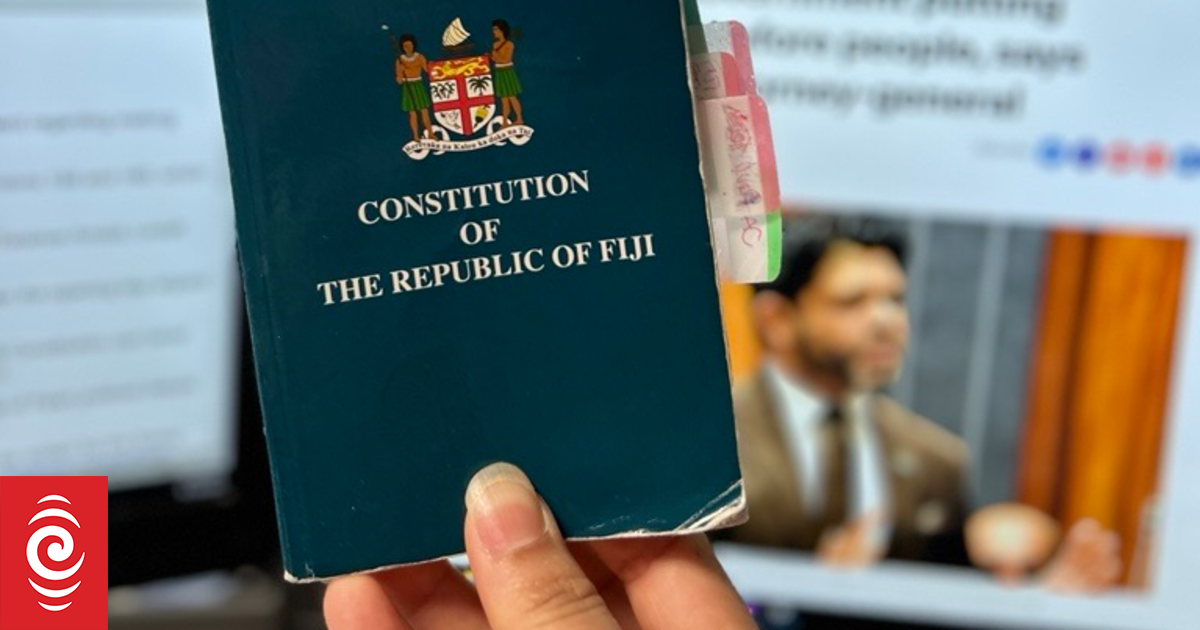
The National Referendum Bill 2025, tabled in parliament on December 4, establishes processes for constitutional amendments after the government recently secured a pathway to change the 2013 Constitution – a document that was previously nearly impossible to modify.
A Supreme Court opinion issued in August created this opportunity by declaring that referendums would only require a simple majority of voters, rather than the previous three-quarters of all registered voters. This judicial interpretation addressed what the court called a “democratic deficit” in the 2013 Constitution, which “was imposed on the people, not chosen by them.”
However, the proposed legislation contains provisions that civil society groups find alarming. Section 22 prohibits the creation and distribution of campaign materials like badges and symbols, while Section 23 criminalizes doorstep canvassing and broader communication about how or whether to vote during referendums. Violations could result in one-year prison sentences.
“We have to raise our voices around what we see as against our fundamental rights and freedoms… and these two clauses are of concern,” said Nalini Singh of the Fiji Women’s Rights Movement. She emphasized that women, youth, and marginalized groups rely on grassroots organizing and community discussions to participate in democratic processes.
Singh added that the restrictions ignore Fiji’s social and geographic realities: “We [are] a society that thrives on discussion and talanoa, they’re very visual people, our geography is such that we have rural maritime areas… how are we going to control this?”
Acting Attorney-General Siromi Turaga defended the bill in parliament, stating it “fills that gap by establishing clear, transparent and accountable processes that will ensure that any national referendum will be carried out with integrity.” The government claims the provisions “are intended solely to ensure the orderly, transparent, and impartial conduct of referendums.”
Prominent attorney Richard Naidu described the bill’s drafting as “careless,” suggesting it inappropriately extends the concept of an electoral “blackout period” to cover an entire referendum campaign. “I think all that’s really happened is that, we have to hear from the government on what is intended, and I know the matter is going to a standing committee so it will get the scrutiny it deserves,” he said.
Another attorney, Janet Mason, characterized the bill as a government attempt to control public debate. “Obviously, they don’t want anybody to embark on a campaign of misinformation… but who’s going to put out the material? Is the government going to put out its own material, and isn’t that just blatant propaganda?”
Dialogue Fiji offered perhaps the strongest criticism, describing the bill as containing “some of the most far-reaching and undemocratic restrictions on free expression ever proposed in Fiji.” The organization’s executive director, Nilesh Lal, said the legislation “goes far beyond anything ever imposed by FijiFirst. In fact, it is significantly worse than the restrictions or anything that we saw under the previous government.”
Fiji has struggled with constitutional stability since independence. The current constitution, implemented under former Prime Minister Frank Bainarama in 2013, replaced the 1997 Constitution and established formidable barriers to amendment. Under the original Section 160, amendments required approval from three-quarters of parliament followed by three-quarters of all registered voters – an almost impossible threshold when considering voter turnout.
Prime Minister Sitiveni Rabuka’s government attempted to change these provisions earlier this year through the Constitution (Amendment) Bill, which failed. This forced a strategy shift toward challenging the legitimacy of the 2013 constitution in court.
The Supreme Court’s subsequent opinion enabled a more achievable amendment process: a two-thirds parliamentary majority followed by a simple majority referendum. In Fiji’s 55-seat parliament, the government holds 29 seats but needs 37 votes for an amendment.
With elections due by February 2027 at the latest, Naidu suggested the bill’s drafting appears rushed. “It probably would have been more sensible to just shop the bill around first, with a few key stakeholders, before introducing it to parliament,” he said.
The bill now moves to committee stage, where it will face further scrutiny as the government continues its push for constitutional reform.
Fact Checker
Verify the accuracy of this article using The Disinformation Commission analysis and real-time sources.

18 Comments
The Fiji government’s proposed referendum bill is deeply concerning. Criminalizing basic campaign activities is a heavy-handed attempt to manipulate the democratic process and limit public scrutiny.
Absolutely. Any referendum should be accompanied by robust public discourse, not repressive measures that undermine citizens’ ability to make an informed choice. This is a worrying development.
It’s troubling to see the Fiji government introducing legislation that could stifle public debate and dissent around a national referendum. Robust civic engagement is essential for any meaningful democratic process.
I agree. The proposed restrictions on campaign materials and canvassing appear to be heavy-handed attempts to control the narrative and limit scrutiny of the referendum process.
This news from Fiji is very troubling. Restricting freedom of expression around a national referendum is a clear attempt to manipulate the democratic process and limit public scrutiny.
Absolutely right. Any referendum should be accompanied by robust public discourse, not heavy-handed efforts to censor and control the narrative. This is a worrying development.
This news from Fiji is alarming. The government’s attempts to restrict freedom of expression around a national referendum are undemocratic and undermine public trust in the political process.
Agreed. A healthy democracy requires open and vigorous debate, not government-imposed limits on how citizens can participate. This legislation seems like a clear attempt at propaganda and control.
This news raises red flags about the Fiji government’s commitment to democratic freedoms. Restricting freedom of expression around a referendum is a worrying sign of potential propaganda efforts.
Absolutely. Healthy democracies require transparency and open discourse, especially on constitutional issues that impact all citizens. This bill seems to undermine those values.
This proposed referendum bill in Fiji raises serious concerns about the government’s respect for freedom of expression and the integrity of the democratic process. Limiting public discourse is a red flag.
Well said. Any referendum should be accompanied by a vibrant public dialogue, not repressive measures that undermine the ability of citizens to make an informed choice.
The proposed referendum bill in Fiji is deeply concerning. Limiting campaign activities and criminalizing basic forms of civic engagement is a blatant attack on democratic freedoms.
I couldn’t agree more. This legislation appears designed to stifle debate and dissent, rather than enable a truly participatory democratic process. Fiji’s citizens deserve better.
The Fiji government’s referendum bill is deeply problematic. Criminalizing basic campaign activities like distributing materials and door-to-door outreach is a blatant attempt to control the narrative and suppress dissent.
I agree, this is extremely concerning. A healthy democracy requires free and open debate, not government-imposed limits on how citizens can participate in the political process.
The proposed referendum bill in Fiji seems highly concerning from a free speech perspective. Restricting campaign materials and canvassing could severely limit public discourse and debate around important constitutional changes.
I share your concern. Any referendum process should uphold democratic principles and allow for vigorous, open debate – not limit the ability of citizens to participate.