


Listen to the article
Former Western Security Officials Under Scrutiny for Spreading Propaganda
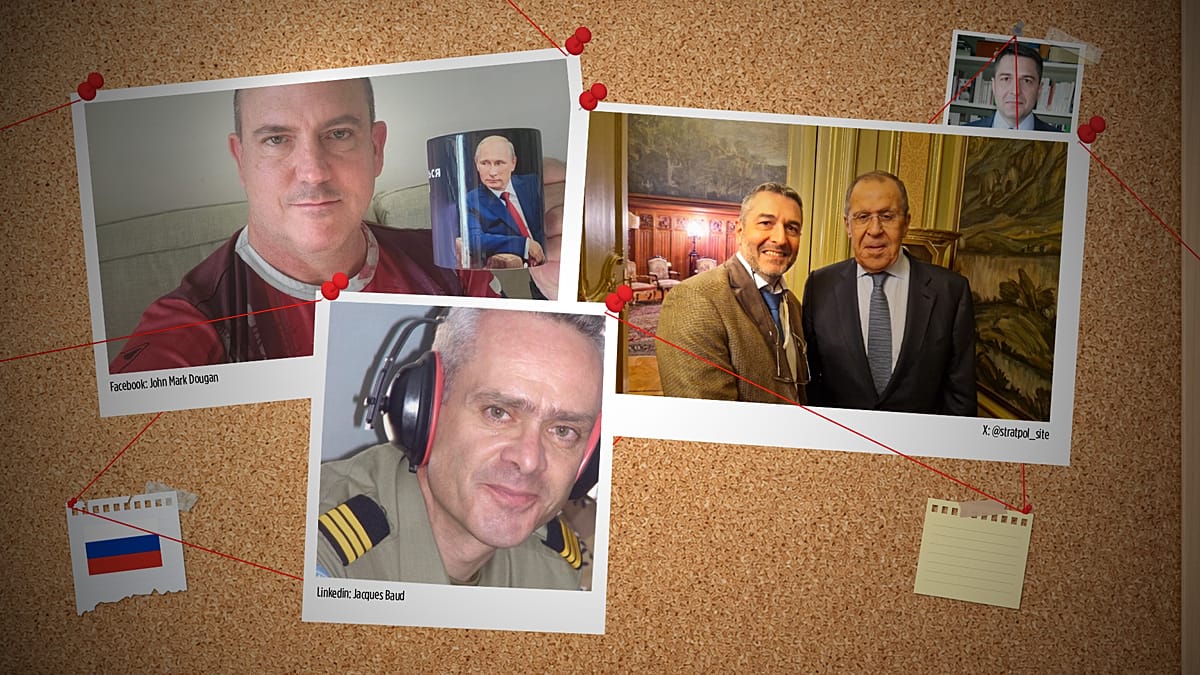
Three former officials from Western security institutions have come under fire for leveraging their previous credentials to disseminate propaganda, according to an investigation revealed yesterday. The individuals—one American and two Europeans—have allegedly built substantial platforms by capitalizing on their past associations with police forces, military branches, or intelligence agencies.
Security experts warn that these former officials carry particular influence because their backgrounds lend an air of credibility to their statements. “When someone with a military or intelligence background speaks, people tend to assume they have insider knowledge or special expertise,” explained Dr. Maria Kovacs, a specialist in disinformation at the London School of Economics.
The investigation found that all three individuals regularly appear on television networks, podcasts, and social media platforms where they present misleading information as authoritative analysis. Their commentary often aligns with specific political or ideological narratives that contradict official assessments from their former employers.
The American ex-official previously served in a federal law enforcement capacity before establishing a significant online following. According to sources familiar with the matter, this individual frequently contradicts current intelligence community positions while implying continued connections to inside sources.
The two Europeans, whose backgrounds include service in military intelligence and national police organizations, have similarly built media careers that trade on their former credentials. One has become a regular commentator on several news networks, while the other maintains a large social media following and appears frequently at political rallies.
“There’s a concerning pattern where these individuals present themselves as whistleblowers or truth-tellers while actually promoting narratives that serve particular interests,” said Thomas Bergmann, director of the European Center for Democratic Resilience. “Their former positions give weight to their claims, even when those claims lack substantive evidence.”
The phenomenon represents a growing challenge for Western democracies already grappling with disinformation campaigns. When propaganda comes from individuals with seemingly authoritative backgrounds, it becomes significantly more difficult for audiences to distinguish between legitimate analysis and manipulation.
Social media platforms have struggled to address this issue effectively. While policies exist to combat misinformation, content from individuals with established credentials often escapes scrutiny or receives less aggressive moderation due to their perceived authority.
Security analysts note that this trend is not entirely new but has accelerated in the current polarized media environment. During the Cold War, defectors were occasionally used for propaganda purposes, but today’s digital landscape allows former officials to build independent platforms without institutional backing.
“What’s particularly troubling is how these individuals often frame themselves as patriots while undermining the very institutions they once served,” noted Robert Simmons, a former intelligence community ethics officer. “They exploit public trust in security services while simultaneously eroding that trust.”
The investigation did not publicly identify the three individuals, citing ongoing monitoring of their activities and potential legal considerations. However, authorities in both Europe and the United States are reportedly reviewing options for addressing the issue without infringing on free speech protections.
Media literacy experts emphasize that consumers should maintain healthy skepticism even toward information coming from individuals with impressive credentials. “Always look for supporting evidence and multiple sources,” advised Patricia Whelan, director of Digital Media Education Initiative. “Someone’s past position doesn’t automatically make their current claims accurate.”
As Western democracies continue to face sophisticated information operations from both domestic and foreign actors, the role of former security officials in information ecosystems represents a complex challenge at the intersection of national security, free speech, and media integrity.
Fact Checker
Verify the accuracy of this article using The Disinformation Commission analysis and real-time sources.
