


Listen to the article
The Bollywood blockbuster “Dhurandhar” has surpassed 350 crores at the box office since its December 2025 release, cementing its place as another commercial success in India’s lucrative spy genre. While domestic critics have praised the performances of Ranveer Singh and Akshaye Khanna, and audiences have embraced it as an engaging procedural with espionage elements, the film represents something more significant in India’s cultural landscape.
Behind the film’s commercial triumph lies a deeper narrative about the growing influence of nationalist ideology in Indian cinema. “Dhurandhar” follows the familiar template of simplifying complex geopolitical relationships into clear-cut adversaries, potentially limiting nuanced public understanding of regional dynamics.
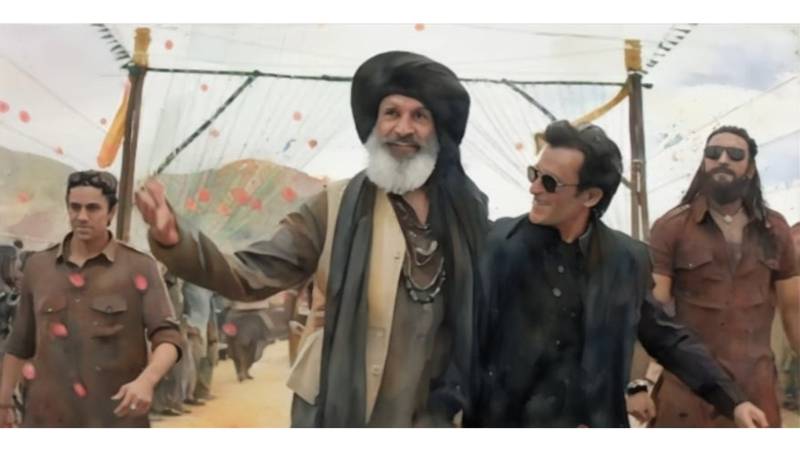
The plot centers on an Indian intelligence agent operating undercover in Karachi. Rather than depicting the Pakistani city’s rich cultural heritage and complex history, “Dhurandhar” portrays it primarily as a hub of terrorism. This one-dimensional representation has drawn criticism from various quarters, particularly in Pakistan.
In response to the film’s portrayal, the provincial government of Sindh announced its own production, “Mera Lyari,” specifically designed to showcase the authentic cultural richness and resilience of the area. This counter-narrative aims to challenge what many Pakistani officials view as “Dhurandhar’s” reductive storytelling.
Regional actors have particularly objected to the film’s characterization of Baloch people as criminals and terrorists. Critics point out that “Dhurandhar” fails to acknowledge Baloch history or culture, instead falsely depicting their celebration of tragic events like the 2008 Mumbai attacks.
The film also sidesteps Pakistan’s significant contributions to counter-terrorism efforts. Over the years, Pakistan has suffered thousands of military and civilian casualties and endured enormous economic costs in its fight against extremist networks. By portraying Pakistan primarily as a source of regional instability, “Dhurandhar” effectively erases the country’s frontline role in combating terrorism, reducing a nation of resilience and sacrifice to a cinematic villain.
This narrative disconnect becomes particularly apparent when considering recent regional conflicts. In May 2025, India and Pakistan engaged in a four-day missile, drone, and artillery confrontation—the region’s most significant military clash in decades. During this conflict, India acknowledged losing fighter jets, with Pakistan claiming to have shot down some of India’s most advanced aircraft. These events were later referenced repeatedly by U.S. President Donald Trump.
Yet despite these battlefield realities, Bollywood continues to project a narrative of Indian invincibility. Films like “Dhurandhar” transform real-world strategic limitations into fictional victories, featuring flawless intelligence operations, heroic missions, and absolute superiority. This creates a cinematic image of national power that often diverges significantly from geopolitical realities.
The incorporation of adversarial elements in Bollywood cinema for commercial purposes isn’t new—nationalism has long been a profitable formula. However, when entertainment supersedes informed discussion, it undermines the foundation for meaningful regional dialogue.
South Asia’s rich history encompasses cultural cross-pollination, economic interdependence, and overlapping social traditions. “Dhurandhar” reduces this complexity to a simplified, consumer-friendly version of an enemy. While Pakistan has made numerous appeals for diplomatic engagement, peace initiatives, and coexistence, the film’s focus on confrontation and villainy stands in opposition to these efforts.
The true concern isn’t simply that “Dhurandhar” perpetuates established narratives, but rather that audiences on both sides of the border would benefit from more authentic, nuanced perspectives that acknowledge shared humanity—a prerequisite for lasting peace in the region.
As “Dhurandhar” continues its commercial success, it raises important questions about cinema’s role in shaping public perception and the responsibility of filmmakers when addressing sensitive geopolitical issues. While entertainment remains the primary goal of commercial cinema, the impact of such narratives on regional understanding and diplomacy extends far beyond the box office.
Fact Checker
Verify the accuracy of this article using The Disinformation Commission analysis and real-time sources.

16 Comments
The Sindh government’s response is an interesting development. It will be worth watching how this plays out and whether it leads to more nuanced portrayals of Pakistan in Indian cinema going forward.
I agree. This could be an important moment for pushing back against reductive narratives and encouraging a more balanced, culturally-informed approach to depicting geopolitical relationships in popular media.
Interesting that this Bollywood film is drawing criticism for its simplistic portrayal of Pakistan and terrorism. Cinema can be a powerful medium, but it’s important to present complex geopolitical issues with nuance and balance.
I agree. Oversimplifying regional dynamics in films can reinforce harmful stereotypes and limit public understanding. A more nuanced, well-researched approach would be preferable.
I’m curious to learn more about the provincial government of Sindh’s response to the film’s depiction of Karachi. It’s good to see efforts to counter one-dimensional narratives and promote a richer cultural representation.
Yes, it’s encouraging that the local government is taking steps to provide a more balanced perspective. Films can have a significant influence, so responsible storytelling is important, especially on sensitive geopolitical topics.
This highlights the importance of critical analysis of media, especially when it comes to depictions of geopolitics and international relations. We should be wary of films that present a one-sided, simplistic view of complex issues.
Well said. It’s important for audiences to approach such films with a critical eye and seek out alternative sources of information to gain a more comprehensive understanding of the issues at hand.
Bollywood’s growing influence and its potential to shape public opinion is an interesting topic. While films should entertain, they also have a responsibility to avoid propagandistic narratives and oversimplifications.
Absolutely. The line between entertainment and propaganda can be thin, and it’s crucial for filmmakers to approach complex issues with nuance and objectivity, rather than reinforcing nationalist agendas.
The box office success of this film is interesting, but it’s important to look beyond the numbers and consider the deeper implications of its simplistic portrayal of Pakistan and terrorism. Nuance is crucial in these matters.
Well said. Commercial success doesn’t necessarily equate to responsible, well-rounded storytelling. It’s crucial to critically examine the narratives being promoted, especially when they have the potential to shape public discourse on geopolitical issues.
This is a complex issue without easy answers. While artistic expression should be free, filmmakers also have a responsibility to avoid perpetuating harmful stereotypes or oversimplifying sensitive geopolitical conflicts.
I agree. There’s a balance to be struck between creative freedom and social responsibility. Nuanced, well-researched depictions that avoid reductive narratives would be the ideal approach for films dealing with such sensitive topics.
It’s concerning to see nationalist ideology seeping into Bollywood productions. While films should entertain, they also have a responsibility to avoid perpetuating harmful stereotypes and one-sided political agendas.
Absolutely. Filmmakers need to be mindful of the impact their work can have on public understanding of complex issues. Responsible storytelling is key, especially on sensitive topics like international relations.