


Listen to the article
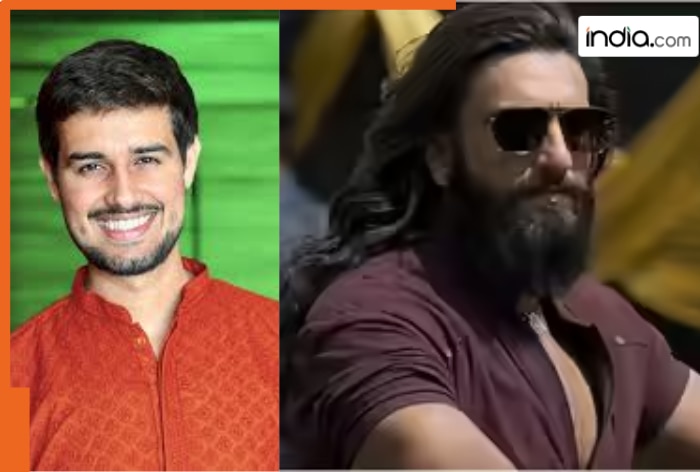
Actor Naveen Kaushik Responds to Dhruv Rathee’s Propaganda Claims About “Dhurandhar”
Aditya Dhar’s action thriller “Dhurandhar” has become the center of heated public debate while continuing its dominant box office run. The film, which has collected an estimated Rs 589.50 crore in India since its December 5 release, has sparked controversy beyond its commercial success, particularly after political commentator Dhruv Rathee labeled it as “dangerous propaganda.”
On Saturday, Rathee released a video titled “Reality of Dhurandhar,” in which he harshly criticized the film for what he described as propaganda based on falsehoods. His critique focused on how the film blends real events with fiction, creating what he considers a misleading narrative.
“The problem with Dhurandhar is that it repeatedly claims to be inspired by real events,” Rathee said in his video. He pointed out that the trailer explicitly states this connection and incorporates actual footage from the 26/11 terrorist attacks, including audio recordings of conversations between terrorists and their handlers.
Rathee argued that grounding the story in reality makes it “more believable than any other spy thrillers, such as Pathaan or Tiger films.” He went on to describe the film as “jhootha and vahiyat propaganda” (lies and falsehoods), suggesting that director Aditya Dhar was attempting to sell misinformation through entertainment.
“Well-made propaganda is more dangerous,” Rathee stated. “Films like The Taj Story and The Bengal Files were not dangerous, kyunki wo bakwaas films thi (because they were bad films). But Dhurandhar is an engaging film.”
In response to these allegations, actor Naveen Kaushik, who plays the character Donga alongside Ranveer Singh and Akshaye Khanna in the film, fired back at Rathee. In a recent interview, Kaushik suggested that Rathee was merely attempting to capitalize on the film’s popularity for his own gain.
“He is an opinionated person. I am associated with the film, I don’t agree with him obviously,” Kaushik stated. He added dismissively, “He got some views because of us, congratulations,” implying that Rathee’s critique was motivated by a desire for online engagement rather than genuine concern.
Kaushik is not the only industry figure to take issue with Rathee’s assessment. Actress Devoleena Bhattacharjee also criticized the commentator through a post on X (formerly Twitter), writing, “I so try to avoid & ignore your sh**ty videos & tweets. Dunno why X got it on my feedback. Anyways. Dhurandhar ke baarein mein sochna bandh kar (Stop thinking about Dhurandhar).”
This controversy highlights the increasingly complex relationship between entertainment, politics, and public discourse in India’s media landscape. Films that touch on sensitive historical events or geopolitical tensions often find themselves scrutinized not just for their artistic merit but also for their perceived political leanings or historical accuracy.
Despite the debates surrounding its content, “Dhurandhar” continues to perform strongly at theaters nationwide. The spy action thriller features an ensemble cast including R. Madhavan, Sanjay Dutt, and Arjun Rampal in key roles, with Sara Arjun and Rakesh Bedi in supporting parts.
Film industry analysts note that controversies often boost ticket sales rather than harm them, as public debates increase visibility and curiosity among potential viewers. The film’s commercial success suggests that audiences are responding positively regardless of the surrounding discourse.
Fans of the film will have more to look forward to, as the second installment of “Dhurandhar” is already scheduled for theatrical release on March 19, 2026, suggesting that the filmmakers are confident in the franchise’s continued appeal despite the controversies.
Fact Checker
Verify the accuracy of this article using The Disinformation Commission analysis and real-time sources.

7 Comments
Interesting to see this debate play out around a major Bollywood action thriller. I agree that incorporating real footage and events makes the storyline more gripping, but it also raises the stakes in terms of authenticity.
This seems like a complex issue without easy answers. I respect Rathee for raising concerns about potential propaganda, but the filmmakers may argue that artistic license is necessary to create an engaging cinematic experience.
As someone who generally enjoys thought-provoking films, I’m intrigued by this controversy. I hope the final product strikes a thoughtful balance between entertainment value and historical accuracy.
I can see both sides of this issue. On one hand, films have long dramatized real events for creative and commercial purposes. But Rathee raises a valid concern about the potential for propaganda if the line between fact and fiction is blurred too much.
As someone interested in the mining and commodities space, I’ll be curious to see how this film portrays relevant industries and economic issues. Accuracy will be important, especially given the political sensitivities.
This is a fascinating debate around the line between fact and fiction in film. While artistic license is common, it’s important that movies based on real events don’t mislead the audience or distort the truth.
It’s a tricky balance – movies want to engage audiences, but they also have a responsibility to handle sensitive historical events with care and accuracy. I’m curious to hear the filmmakers’ perspective on how they approached this.