


Listen to the article
CNN Defends Reporter Against State Department Accusations of “Pro-Iran Propaganda”
CNN has firmly defended its senior international correspondent Frederik Pleitgen following accusations from a top State Department official who claimed the journalist was spreading “pro-Iran regime propaganda” in his reporting from Tehran.
The network issued a statement Friday emphasizing that Pleitgen, who became the first reporter from a U.S.-based news outlet to enter Iran amid recent tensions, “is providing valuable insight for CNN’s audiences, adding to our wider reporting that features multiple perspectives from civilians, opposition voices, as well as officials, alongside raw photos and video capturing what Iran is like today.”
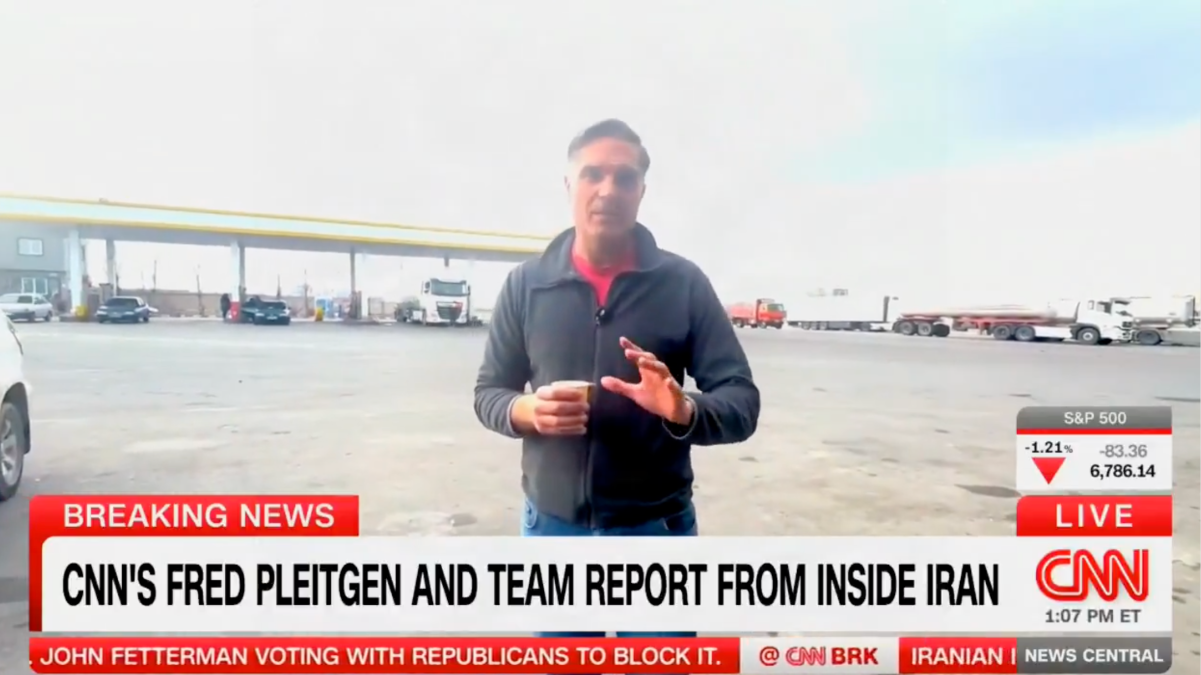
The controversy erupted when Dylan Johnson, the State Department’s Assistant Secretary of State for Global Public Affairs, derided Pleitgen’s reporting on social media. Johnson specifically targeted a segment showing Iranians still able to purchase coffee and groceries despite ongoing U.S. and Israeli military strikes, dismissively commenting, “Someone gave this guy a coffee…”
CNN’s statement highlighted that each of Pleitgen’s reports “provides full transparent disclosure that the team is reporting from inside Iran with government permission,” addressing concerns about the context of their reporting. The network emphasized the fundamental role of journalism: “to bear witness to events as they occur, to report out to audiences factually what a reporter is seeing, without agenda and with context.”
When an NPR reporter pressed the State Department on how Pleitgen’s firsthand observations constituted “propaganda,” the agency responded by encouraging news outlets “to verify information with official U.S. government sources before publication.” This suggestion runs counter to standard journalistic practice, where reporters routinely seek government comment but do not delay publishing eyewitness accounts pending government verification.
Working under challenging conditions with limited internet access, Pleitgen has documented daily life in Iran as he travels through Tehran. His reports show functioning gas stations and grocery stores, while also capturing the realities of conflict, including footage of explosions and “thick black smoke billowing from one location” in southern Tehran during pre-dawn strikes.
In correspondence with TheWrap, Pleitgen detailed the significant risks involved in his current assignment. “Personal safety is obviously a challenge with the ongoing air campaign, particularly when very heavy munitions are being used in dense urban areas,” he explained. Along with photojournalist Claudia Otto and his producer, Pleitgen noted they “are always on high alert for airstrikes, which happen frequently and without warning, making them especially hard to predict.”
The team takes practical safety measures, including tracking recent strike locations and “trying to keep clear of military and police installations when in country,” Pleitgen said.
This dispute highlights the ongoing tensions between government officials and journalists covering sensitive international conflicts. It also underscores the challenges media organizations face when reporting from countries with adversarial relationships with the United States, where accusations of bias or propaganda can emerge regardless of journalistic standards applied.
Pleitgen, known for his extensive experience reporting from conflict zones, responded directly to Johnson’s criticism on social media with a simple clarification: “I bought the coffee.”
The incident comes amid heightened regional tensions in the Middle East, with various U.S. news organizations dispatching correspondents throughout the region to provide on-the-ground coverage of the developing situation. CNN maintains that Pleitgen’s presence in Iran is particularly valuable precisely because it offers American audiences a rare firsthand look at conditions inside a country that remains largely inaccessible to Western journalists, especially during times of conflict.
Fact Checker
Verify the accuracy of this article using The Disinformation Commission analysis and real-time sources.

12 Comments
It’s good to see CNN standing up for its correspondent and pushing back against accusations of bias. Reporting on the ground in Iran is crucial, even if it challenges some narratives.
The State Department’s accusations raise concerns about attempts to control the narrative around Iran. CNN’s defense of its reporter is an important stand for press freedom.
The State Department’s accusations against the CNN reporter are concerning. Unbiased, fact-based reporting from Iran is crucial, even if it doesn’t align with preferred narratives.
This situation underscores the importance of press freedom and the ability of journalists to report on the ground without fear of repercussions. CNN’s defense of its correspondent is admirable.
It’s heartening to see CNN defending its correspondent’s reporting from Tehran. Objective coverage of the situation in Iran is critical, even if it challenges preconceptions.
This situation highlights the need for nuanced, fact-based reporting from conflict zones. CNN seems committed to that approach despite political pressure. Curious to see how this plays out.
Absolutely. Maintaining journalistic integrity in the face of accusations is crucial, especially on sensitive geopolitical issues like Iran.
The State Department official’s dismissive comments about Pleitgen’s reporting are concerning. Journalists should be free to provide balanced coverage without being accused of propaganda.
I agree. Discrediting on-the-ground reporting just because it doesn’t fit a preferred narrative is dangerous and undermines press freedom.
This dispute highlights the challenges journalists face in covering complex geopolitical issues. CNN’s commitment to transparent, balanced reporting is commendable.
Agreed. Maintaining journalistic integrity in the face of political pressure is essential for informing the public accurately.
The State Department’s dismissive reaction to CNN’s Iran reporting is troubling. Journalists should be able to provide on-the-ground perspectives without being labeled as propagandists.