


Listen to the article
In a recent appearance that has sparked significant controversy, former US Secretary of State Hillary Clinton attributed young Americans’ increasing criticism of Israel’s military actions in Gaza to what she described as “totally made-up” videos and “pure propaganda” on social media platforms, particularly TikTok.
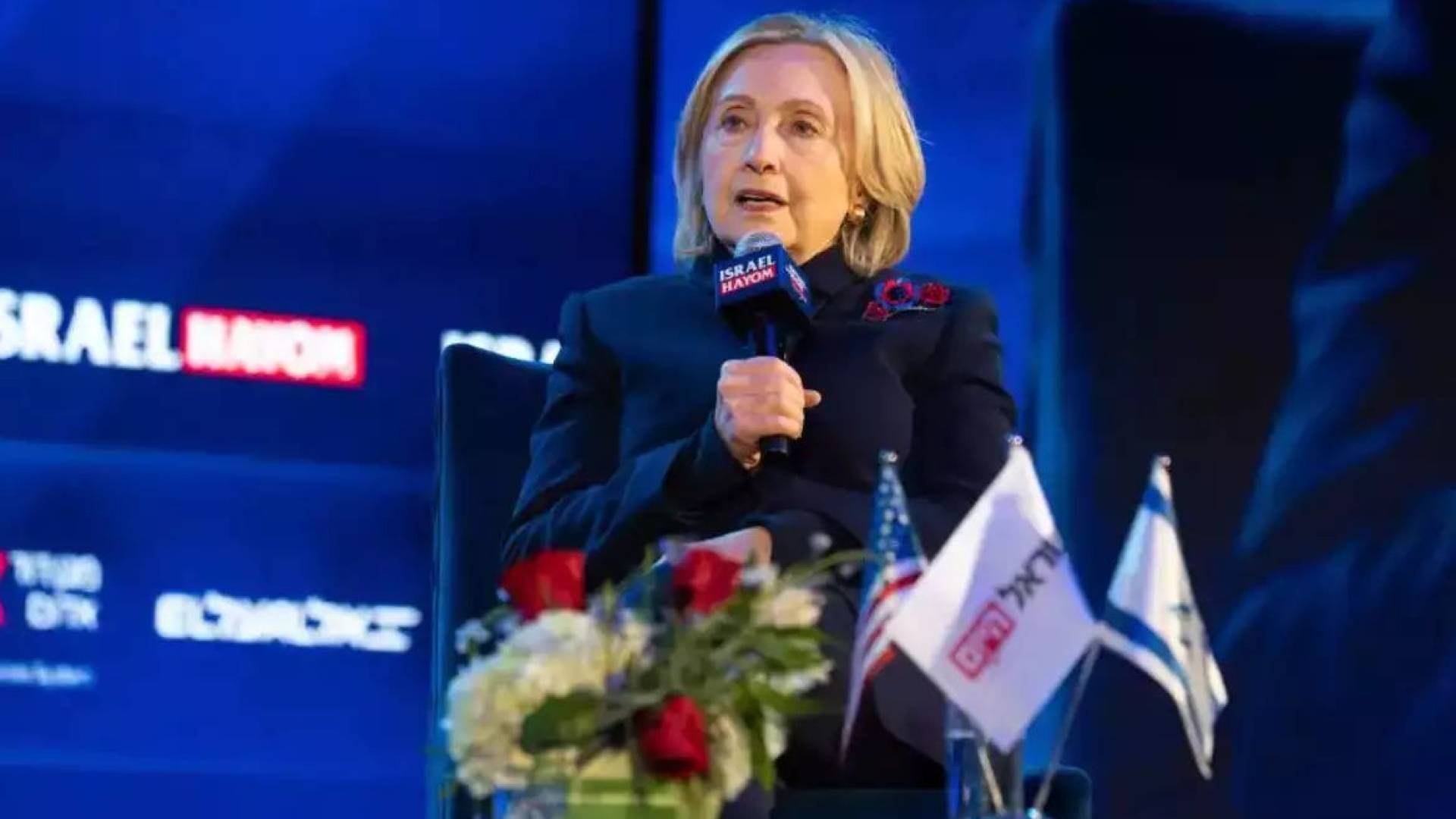
Speaking at a summit hosted by Israeli newspaper Israel Hayom on December 2, Clinton expressed concern that even “smart, well-educated” youth, including young Jewish Americans, are being influenced by what she characterized as decontextualized content lacking historical perspective.
“They were getting their information from social media, particularly TikTok,” Clinton stated during a panel moderated by Israel Hayom commentator Yoav Limor. “So just pause on that for a second. They are seeing short-form videos, some of them totally made up, some of them not at all representing what they claim to be showing, and that’s where they get their information.”
The former Secretary of State, who currently serves as a professor at Columbia University, recounted what she described as “shocking” conversations with students who she claimed “didn’t know history” and were swayed by clips of civilian suffering without proper context.
Clinton’s comments come at a time when polling data indicates a significant shift in American public opinion regarding the Israel-Gaza conflict. According to November 2025 surveys from Big Data Poll, sympathies for Israel are at historic lows, with a plurality of American voters now characterizing Israel’s actions in Gaza as “genocide.”
This marks a substantial transformation in public sentiment that crosses demographic lines. While Clinton focused on youth perspectives, data from Just Security’s Adil Haque indicates the largest opinion shifts have actually occurred among older Democrats, with unfavorable views of Israel rising from 43% to 66% among those over 50 years old.
The summit where Clinton spoke was organized by Israel Hayom, Israel’s most widely circulated daily newspaper. Founded in 2007 by the late casino magnate Sheldon Adelson, the publication is now managed by his widow, Miriam Adelson. The Adelson family has been a significant presence in American politics, with contributions exceeding $100 million to Donald Trump’s 2024 presidential campaign.
Progressive media outlets, including Truthout and Mondoweiss, have characterized Israel Hayom as having a “far-right” editorial stance, particularly noting its consistent support for Prime Minister Benjamin Netanyahu and alignment with hardline Israeli policy positions.
Clinton’s recent statements echo similar remarks she made in October 2025 in New York, where she suggested that China was manipulating TikTok algorithms to influence young Americans’ views on Israel. However, critics have noted that she has not provided specific examples of the fabricated videos she references.
Her dismissal of evidence has drawn criticism from various Jewish scholarly organizations and human rights groups. B’Tselem, a prominent Israeli human rights organization, concluded in July 2025 that Israel’s actions constitute genocide, basing their assessment on soldier testimonies and documented aid blockades.
The disagreement highlights deeper generational and ideological divisions within the Democratic Party. Older establishment figures like Clinton have struggled to counter youth-led protest movements and changing perspectives within the party’s base. A 2025 survey found that 50% of Jewish Americans under 30 now view Israel’s actions as genocidal, up from 20% before October 2023.
Meanwhile, the humanitarian situation in Gaza remains dire. The conflict, now entering its third year, has resulted in over 70,000 Palestinian deaths according to Gaza health authorities. United Nations reports have documented widespread starvation and destruction of critical infrastructure, conditions that persist despite a fragile ceasefire agreement reached in October 2025.
As public opinion continues to evolve on this contentious issue, Clinton’s comments represent a significant flashpoint in the ongoing debate over how information about the conflict is disseminated and interpreted across generational and technological divides.
Fact Checker
Verify the accuracy of this article using The Disinformation Commission analysis and real-time sources.

5 Comments
As someone with an interest in mining and energy, I wonder how this debate over social media’s role in geopolitics might impact industries like ours that are closely tied to regional conflicts and power dynamics. Food for thought.
Interesting perspective from Clinton on the influence of social media propaganda on young people’s views of the Israel-Palestine conflict. I can see how short-form video content could give an incomplete or misleading picture, especially for those lacking historical context.
That’s a fair point. Social media algorithms often prioritize provocative, sensationalized content over balanced reporting. Education and critical thinking skills are so important to navigate these complex issues.
While I respect Clinton’s experience, I’m not sure I fully agree with her assessment. Young people today are more globally connected than ever, and may be reacting to the real-world impacts of the conflict, not just social media propaganda.
That’s a good counterpoint. The rise of citizen journalism and firsthand accounts on social media could also be shaping views, for better or worse. It’s a complex issue without easy answers.