


Listen to the article
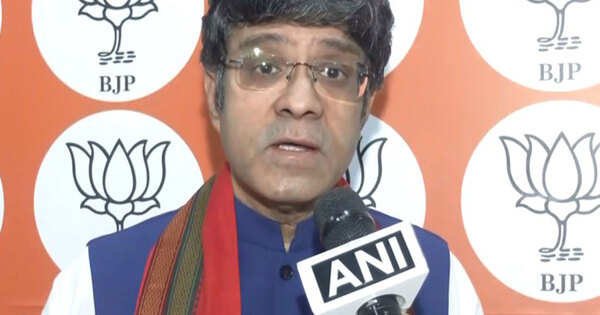
In a sharp escalation of political rhetoric, BJP National Spokesperson CR Kesavan launched a scathing attack on Tuesday against Opposition Leader Rahul Gandhi over comments made during his recent address at the Hertie School in Berlin, Germany.
Kesavan accused Gandhi of being the “modern-day Goebbels” for criticizing Indian institutions on foreign soil, comparing his rhetoric to that of billionaire investor George Soros, known for his outspoken criticism of various governments.
“Rahul Gandhi is parroting the nefarious and anarchic language of George Soros. His devious motive is to defame and destabilize India,” Kesavan stated, rebranding the Congress leader as the “Leader of Propaganda” rather than Leader of Opposition.
The BJP spokesperson characterized Gandhi’s international appearances as a “Bharat Badnaam Yatra” (India Defamation Tour), suggesting that Gandhi deliberately spreads “poisonous, false propaganda” whenever he travels abroad.
“Every time he tries to undermine our cherished democracy, he maligns Baba Saheb Ambedkar’s Constitution and tries to tarnish the image of India abroad, but he will not succeed,” Kesavan asserted.
The controversy stems from Gandhi’s speech in Berlin where he alleged that the BJP has orchestrated a “wholesale capture” of India’s institutional framework. During his address, Gandhi claimed that investigative agencies like the Enforcement Directorate (ED) and Central Bureau of Investigation (CBI) have been “weaponized” against political opponents.
“ED and CBI have zero cases against the BJP, and most of the political cases are against the people who oppose them,” Gandhi told the German audience. “If you are a businessman and try to support the Congress, you are threatened. BJP uses the institutional framework of India as a tool to build political power.”
Gandhi further alleged that the ruling party is effectively proposing the “elimination of the Constitution” by undermining its principles of equality—a charge that has provoked strong reactions from BJP leadership.
Kesavan countered these assertions by highlighting India’s growing international stature under Prime Minister Narendra Modi’s leadership over the past eleven years. “Under the leadership of PM Narendra Modi, India has become a strong and self-reliant nation,” he said, positioning the country as a “front-ranking nation in the global world order.”
The BJP spokesperson suggested that Gandhi’s criticisms stem from personal animosity toward Modi and frustration over his own political trajectory. “Rahul Gandhi, because of his bitter hate for PM and the fact that people have continuously blessed him and his progress in politics, of performance. Rahul Gandhi cannot tolerate it,” Kesavan remarked.
This exchange represents the latest chapter in the ongoing tension between the BJP and Congress, particularly regarding representations of India on international platforms. The ruling party has consistently criticized opposition leaders for raising domestic political concerns abroad, framing such actions as detrimental to national interests.
Political analysts note that this controversy emerges as India continues to position itself as an emerging global power, with international perception becoming increasingly important to its diplomatic and economic ambitions. The BJP has made safeguarding India’s international image a key political talking point, while opposition figures maintain they are highlighting legitimate democratic concerns.
As India approaches future electoral contests, the debate over institutional independence and the appropriate forums for political critique appears likely to remain a contentious issue in the nation’s political discourse.
Fact Checker
Verify the accuracy of this article using The Disinformation Commission analysis and real-time sources.

10 Comments
The accusations of ‘propaganda’ and ‘defamation’ are concerning, but I’d need to see the full details of Rahul Gandhi’s remarks to assess their validity. Political discourse should focus on substance over partisan attacks, even on sensitive issues of national importance.
Agreed. It’s crucial that we strive for a balanced, fact-based discussion rather than allowing this to descend into a war of words.
This seems like a heated political debate. While I try to avoid taking partisan stances, I can understand the concerns raised about the potential for foreign interference or defamation of India’s institutions. It’s important to have robust democratic discourse, but it should be grounded in facts rather than inflammatory rhetoric.
Agreed, the language being used on both sides seems overly confrontational. A more constructive dialogue focused on substantive issues would be preferable.
Allegations of ‘propaganda’ and ‘defamation’ are serious. I’d need to review the full context and content of Rahul Gandhi’s remarks to form a more informed opinion on whether the criticism from the BJP spokesperson is warranted or just political posturing.
Agreed, it’s important to avoid knee-jerk reactions and instead carefully examine the substance of the claims being made on both sides.
Criticizing one’s own country on an international stage is a sensitive topic. However, I’m curious to understand the specifics of Rahul Gandhi’s comments and whether there were valid concerns raised about Indian institutions that deserve scrutiny, or if this is simply a partisan attack.
It’s a complex issue without easy answers. I hope both sides can engage in a more measured, fact-based discussion to address any legitimate grievances rather than just trading accusations.
This appears to be a highly partisan political dispute. While I appreciate the importance of protecting national interests, I’m wary of any attempts to stifle legitimate criticism or debate, even if expressed abroad. A truly robust democracy should be able to withstand scrutiny.
Well said. Healthy democracies require a diversity of views and the ability to engage in constructive criticism, even if it makes some politicians uncomfortable.