


Listen to the article
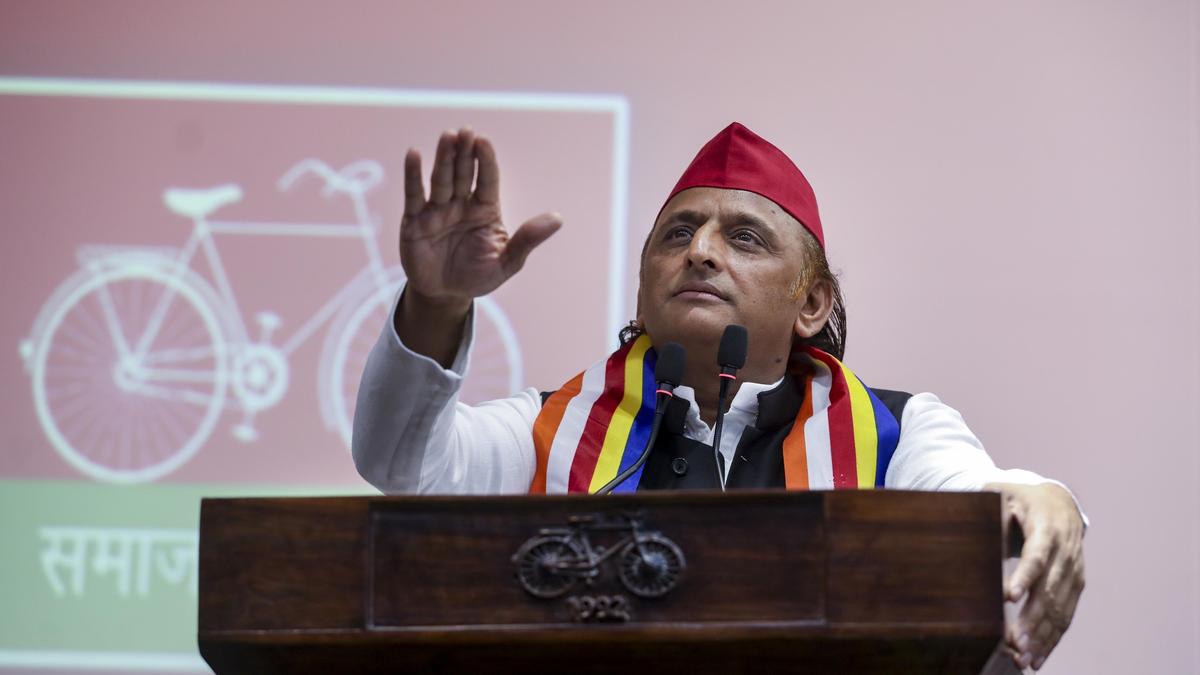
In a scathing critique of both the central and Uttar Pradesh administrations, Samajwadi Party President Akhilesh Yadav accused the BJP governments of failing to address fundamental governance issues while relying on what he termed “event-based politics” and propaganda campaigns.
Speaking at a press conference in Lucknow on Thursday, the former Uttar Pradesh Chief Minister painted a picture of a nation where citizens are “standing in queues for basic needs” such as cooking gas, highlighting what he described as a growing disconnect between government policies and public needs.
“The BJP’s governance model consistently pushes citizens into dire difficulties,” Yadav stated, specifically pointing to recent changes in LPG cylinder supply that he claimed were implemented without adequate production planning. His comments come at a time when the government has ordered that LPG supply be cut off to households that refuse to switch to piped natural gas (PNG) in areas where it’s available.
Yadav reserved particular criticism for the Uttar Pradesh government’s investment claims, calling for a thorough investigation into memoranda of understanding (MoU) recently signed by state officials. According to the opposition leader, many agreements were made with companies lacking strong financial credentials, creating what he described as a “false narrative” of investment in the state.
The technology sector also came under discussion, with Yadav noting that despite India’s significant potential to leverage Artificial Intelligence in agriculture—particularly for predictive analysis and improving farm productivity—the government has failed to create the necessary supportive ecosystem or provide adequate training programs to realize these benefits.
In a direct challenge to the BJP’s campaign strategies, Yadav accused the ruling party of allocating substantial resources to negative campaigning aimed at damaging opponents’ reputations rather than focusing on governance priorities. “They rely heavily on propaganda rather than addressing real issues,” he asserted.
On foreign policy matters, the Samajwadi Party chief suggested that India has “missed an opportunity” to strengthen its global standing during the ongoing conflicts in West Asia, attributing this to what he characterized as misguided economic and diplomatic policies by the central government.
Environmental concerns featured prominently in Yadav’s critique as well. He highlighted the growing human-animal conflict in rural areas, which he attributed to deforestation and illegal mining activities that have forced wildlife out of their natural habitats. Several fatalities have been reported in districts like Sitapur, Yadav noted, while alleging that the forest department has remained largely inactive in addressing these concerns.
The deteriorating condition of Uttar Pradesh’s waterways did not escape mention, with Yadav claiming that major rivers including the Ganga and Yamuna are suffering from severe pollution. “Garbage accumulation and poor sanitation are visible in many places along these once-sacred rivers,” he said.
Yadav’s wide-ranging criticism comes as political tensions in India’s most populous state continue to build, with both the BJP and opposition parties positioning themselves for upcoming electoral contests. The Samajwadi Party, which previously governed Uttar Pradesh under Yadav’s leadership from 2012 to 2017, has been mounting increasingly vocal challenges to Chief Minister Yogi Adityanath’s administration on issues ranging from law and order to economic development.
Political analysts note that Yadav’s focus on basic governance issues like inflation and unemployment signals the opposition’s strategy to highlight bread-and-butter concerns that directly affect voters’ daily lives, rather than engaging in ideological debates where the BJP has traditionally held an advantage.
Whether these criticisms will resonate with voters remains to be seen, but they represent a clear effort to frame the political narrative around governance performance rather than identity politics as India approaches its next electoral cycle.
Fact Checker
Verify the accuracy of this article using The Disinformation Commission analysis and real-time sources.

8 Comments
This is an interesting critique of the BJP’s governance approach. It highlights key issues like inflation, unemployment, and reliance on propaganda rather than addressing fundamental public needs. I’m curious to see how the BJP responds to these allegations.
You raise a fair point. The BJP will likely need to address these concerns head-on if they want to maintain public trust.
The concerns about the government’s investment claims and lack of transparency around MoUs are concerning. More investigation is certainly warranted to ensure proper accountability.
I agree. Without adequate scrutiny, these types of deals can easily become breeding grounds for corruption and cronyism.
It’s troubling to hear about the disconnect between government policies and public needs, especially when it comes to basic necessities like cooking gas. The BJP will need to demonstrate real progress on these issues to regain credibility.
Yadav makes some valid points about the BJP’s reliance on propaganda and event-based politics rather than substantive policy solutions. This is a common criticism leveled at the party, and they’ll need to address it if they want to retain public support.
The concerns raised about inflation and unemployment are significant, as these issues have a direct impact on people’s daily lives. The BJP will need to show tangible progress in addressing these economic challenges.
Agreed. Ultimately, the public will judge the government’s performance based on their ability to improve people’s living standards, not just their propaganda efforts.