


Listen to the article
Controversial Film “The Kerala Story” Continues to Spark Debate After National Award Win
One of 2023’s most contentious yet commercially successful films has reignited public discussion following its recent recognition at India’s National Film Awards. “The Kerala Story,” directed by Sudipto Sen, has claimed two prestigious National Awards, including Best Direction for Sen, bringing renewed attention to a film that has polarized audiences since its release.
The controversial feature depicts the alleged religious conversion of Hindu and Christian women in Kerala who were purportedly manipulated into joining the Islamic State (IS) terrorist organization. Despite facing significant criticism and opposition during its theatrical run, the film went on to become one of the highest-grossing Indian movies of 2023.
Critics have long labeled the film as “propaganda,” accusing it of presenting a distorted and one-sided narrative of complex social and religious issues in Kerala. Many commentators pointed to factual inaccuracies and what they described as an oversimplified portrayal of interfaith relationships and conversion in the southern Indian state.
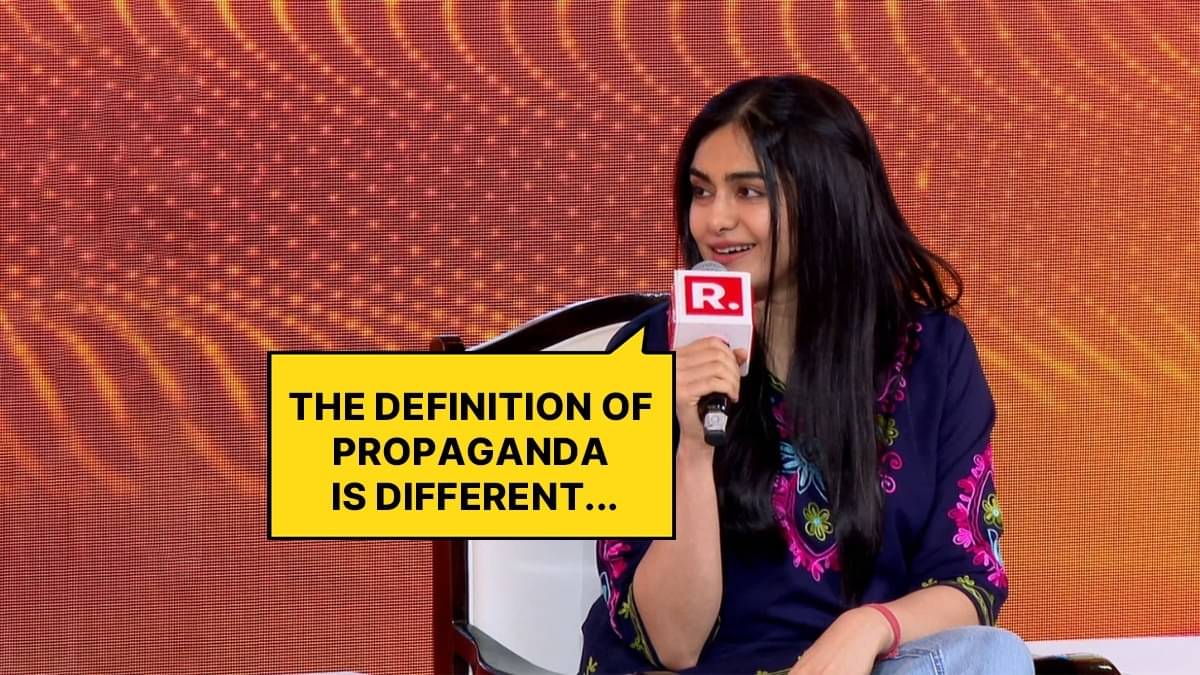
Adah Sharma, who starred as the lead character portrayed as a victim of “love jihad” – a controversial term used to describe alleged campaigns of religious conversion through marriage – recently defended the film at Republic Media Network’s Rashtra Sarvopari Sammelan.
“The Kerala Story has made history and the records it has broken… The movie touched a lot of hearts and it’s just magical,” Sharma stated. “There was a lot of opposition after the trailer dropped and before the film released, but all that subsided once people saw the movie. People were shaken a lot by this film.”
The actress emphasized personal conviction in the film’s message, adding, “My dad always told me if you say the truth, you should never be scared.”
When questioned about accusations that the film caters to specific ideological audiences, Sharma offered a nuanced response that acknowledged the subjective nature of such criticisms. “The definition of propaganda is different for everyone. Everyone should make the film they want,” she remarked.
She further suggested that the film could inspire others to produce similar content: “Make a movie about every state. If you want to say the truth, come out in the open and say it. With The Kerala Story, more people will find the strength to speak the truth.”
The film’s commercial success – grossing over ₹300 crore ($36 million) at the box office – came despite, or perhaps partially because of, the controversy surrounding it. Several Indian states, including West Bengal and Tamil Nadu, initially restricted its screening, while others embraced it as an important social commentary.
The National Award recognition has added another dimension to the ongoing discourse about the film’s merits and intentions. Film industry observers note that the award has given new legitimacy to a project that continues to divide public opinion along political and ideological lines.
Media scholars point out that “The Kerala Story” represents a growing trend in Indian cinema where politically charged narratives are finding both commercial success and institutional recognition, raising questions about the evolving relationship between filmmaking, social issues, and political discourse in the country.
As Indian cinema continues to explore sensitive social and political themes, films like “The Kerala Story” highlight the complex intersection of artistic expression, historical accuracy, and ideological perspectives that characterize contemporary media production in one of the world’s largest film industries.
Fact Checker
Verify the accuracy of this article using The Disinformation Commission analysis and real-time sources.

11 Comments
Adah Sharma’s comments on the need for truth in filmmaking are thought-provoking. Films can be powerful in shaping public perceptions, so it’s crucial that they avoid propagandistic tendencies and strive for balanced, factual storytelling – especially on complex sociopolitical topics.
Adah Sharma makes a fair point about the need for truth in filmmaking, especially on subjects with significant social and political implications. The accolades for The Kerala Story will only intensify the debate – I hope all sides can engage constructively on the merits of the film’s approach.
This film seems to be a very divisive and controversial topic. I’m curious to hear more about the concerns over factual inaccuracies and oversimplified portrayals. It’s important that films on sensitive social and religious issues strive for nuance and truth.
The Kerala Story seems to be a polarizing film that has struck a nerve. I appreciate Adah Sharma’s call for honesty and nuance in filmmaking on sensitive subjects. Responsible storytelling is essential, even (or especially) when dealing with controversial issues.
The debate around The Kerala Story highlights the delicate balance filmmakers must strike between artistic expression and social responsibility. Adah Sharma’s perspective on the need for truth and nuance in filmmaking is a valuable one, especially on complex, politicized subjects.
This film seems to have sparked a heated discussion. While creative freedom is important, Adah Sharma makes a fair point about the responsibility of filmmakers to approach sensitive topics with care, nuance and a commitment to factual accuracy. Responsible storytelling is crucial, even on controversial issues.
The Kerala Story appears to be a lightning rod for controversy. Adah Sharma’s call for honesty and nuance in cinematic portrayals of complex issues is understandable. Filmmakers wield significant influence, so responsible, fact-based storytelling is crucial, even on sensitive topics.
This is a complex and contentious issue. While the film’s commercial success suggests it has resonated with many viewers, the concerns over factual inaccuracies and oversimplification are valid. Filmmakers have a responsibility to approach such topics with care and balance.
The director’s National Award recognition is sure to reignite the debate around this film. While artistic freedom is important, there are valid concerns that this may be presenting a skewed narrative. I hope the filmmakers will engage with the critiques in a constructive way.
This film seems to have struck a chord, but the critiques around its approach are also worth considering. Adah Sharma’s comments on the importance of honest, responsible storytelling are thought-provoking. Filmmakers wield significant influence, so they must wield that power carefully.
The concerns over factual inaccuracies and oversimplification in The Kerala Story are understandable. Films on sensitive topics need to strive for nuance and balance, not propaganda. Adah Sharma’s call for truth in filmmaking is a valid one.