


Listen to the article
A Historic Nuclear Treaty Expires, Leaving Global Arms Control in Uncertainty
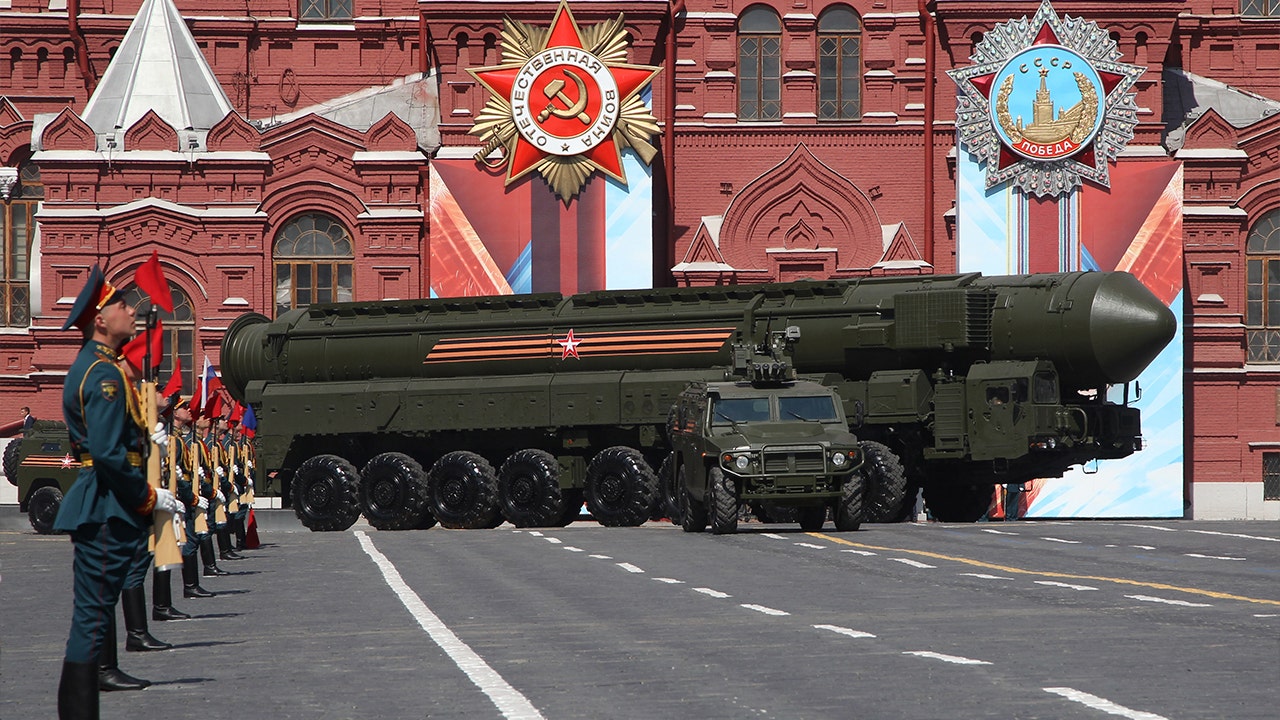
A historic nuclear arms reduction treaty expired Thursday, thrusting the world into a nuclear scenario not seen in more than five decades—one without binding limits on the size of Russia’s or America’s nuclear arsenals, and no inspection regime to verify Moscow’s actions.
The expiration of the New START treaty forces both nations to reevaluate assumptions that have guided nuclear planning for over a decade, according to Matt Korda, associate director of the Nuclear Information Project at the Federation of American Scientists.
“Up until now, both countries have planned their respective nuclear modernization programs based on the assumption that the other country is not going to exceed those central limits,” Korda explained. “Without those central limits, both countries are going to be reassessing their programs to accommodate a more uncertain nuclear future.”
Russia had already suspended its participation in New START in 2023, freezing inspections and data exchanges. However, the treaty’s complete expiration eliminates the last legal framework governing the size of the world’s two largest nuclear arsenals.
With no follow-on agreement in sight, the administration has maintained it cannot agree to arms control without China’s participation. Secretary of State Marco Rubio emphasized this position, stating, “The president has been clear in the past that in order to have true arms control in the 21st century, it’s impossible to do something that doesn’t include China because of their vast and rapidly growing stockpile.”
However, experts remain skeptical that China would agree to limit its nuclear arsenal before reaching parity with the United States—and Russia has indicated it would not pressure Beijing to join negotiations.
China aims to possess 1,000 nuclear warheads by 2030, but this figure remains substantially smaller than the Cold War superpowers’ arsenals. As of early 2026, the global nuclear landscape remains dominated by the U.S. and Russia, which together hold approximately 86% of the world’s total inventory. Each possesses around 4,000 total warheads, with roughly 1,700 deployed. Global nuclear stockpiles have declined to approximately 12,000 in 2025, down significantly from more than 70,000 in 1986.
Russia announced the suspension of its New START participation in February 2023, halting inspections and data-sharing while claiming it would continue respecting numerical limits. More recently, Moscow suggested extending the treaty for another year.
Korda noted this proposal likely stemmed from practical constraints rather than a fundamental shift in Russian policy. “It’s not in Russia’s interest to dramatically accelerate an arms race while its current modernization programs are going so poorly, and while its industrial capacity is tied up in Ukraine,” he said.
Without inspections and data exchanges, countries must rely solely on their intelligence capabilities—increasing uncertainty and encouraging worst-case scenario planning. “Without those onsite inspections, without data exchanges, without anything like that, all countries are really left with national technical means of being able to monitor each other’s nuclear forces,” Korda emphasized.
With New START’s limits now void, experts are less concerned about immediate construction of new nuclear weapons than about how quickly existing warheads could be deployed. Ankit Panda, a senior fellow at the Carnegie Endowment for International Peace, noted Russia could potentially move faster than the United States in the near term by “uploading” additional warheads onto missiles already in service.
“Uploading would be a process of adding additional warheads to our ICBMs and submarine-launched missiles,” Panda explained, adding that “the Russians could be much faster than the United States.”
Korda estimates that a large-scale upload wouldn’t happen overnight but could alter force levels relatively quickly. “We’re looking at maybe a timeline of about two years and pretty significant sums of money for each country to execute a complete upload across the entire force,” he said, noting that a worst-case scenario could “roughly result in doubling the sizes of their deployed nuclear arsenals.”
This advantage, however, faces longer-term industrial constraints. The U.S. nuclear weapons complex lacks its former production capacity, limiting how quickly Washington could sustain a larger arsenal. “The United States is currently unable to produce what is going to be a target for 30 plutonium pits,” Panda observed—a fraction of Cold War output levels.
Nicole Grajewski, a Carnegie Endowment fellow, noted that Russia’s production capabilities vary across the nuclear weapons development chain. “Russia is very good at warhead production,” she explained. “What Russia is really fundamentally constrained on is the delivery vehicle side of it.”
This limitation is particularly pronounced as the Ukraine conflict continues, since Russia’s missile and delivery system production relies on facilities also supporting conventional weapons used in the war.
Grajewski expressed greater concern about Moscow’s investment in nuclear systems outside traditional arms control frameworks than about rapid buildup of treaty-covered forces. “What is more concerning is Russia’s advances in asymmetric domains,” she said, pointing to systems like the Poseidon nuclear-powered torpedo and nuclear-powered cruise missiles not covered by existing treaties.
President Donald Trump has previously indicated interest in pursuing arms control with both Russia and China, while also controversially suggesting the U.S. should resume nuclear testing. “If there’s ever a time when we need nuclear weapons like the kind of weapons that we’re building and that Russia has—and that China has, to a lesser extent, but will have—that’s going to be a very sad day,” Trump said in February 2025. “That’s going to be probably oblivion.”
Fact Checker
Verify the accuracy of this article using The Disinformation Commission analysis and real-time sources.

6 Comments
This development underscores the fragility of the global nuclear order. Without effective arms control mechanisms, the risk of miscalculation and unintended escalation increases. I hope the US and Russia can find a way to restart productive negotiations and restore some semblance of stability.
This is a troubling sign of the deteriorating US-Russia relationship. The expiration of the New START treaty removes an important safeguard against nuclear proliferation. I’m concerned about the potential for a new arms race and the destabilizing effects it could have on global security.
This is a concerning development. The expiration of the New START treaty could lead to an escalation in the arms race between the US and Russia, with potentially destabilizing global consequences. It’s crucial for both countries to prioritize diplomacy and find ways to reinstate binding nuclear limits.
The breakdown of nuclear arms control agreements is worrying. Without verification and transparency, the risk of miscalculation and unintended escalation increases. I hope the US and Russia can find a way to revive constructive dialogue and negotiation on this critical issue.
The lack of binding limits on nuclear arsenals is deeply concerning. Both the US and Russia need to demonstrate responsible leadership and find ways to re-establish mutual trust and verifiable agreements. The stakes are too high for this issue to be left unresolved.
The expiration of the New START treaty is a significant setback for nuclear nonproliferation efforts. Both the US and Russia must show restraint and work to reestablish verifiable limits on their nuclear arsenals. The world cannot afford another arms race.