


Listen to the article
Texas Redistricting Battle Tests Trump’s Coattails in Midterm Strategy
Republicans in Texas have unveiled a new congressional map designed to significantly strengthen their position in the upcoming midterm elections, potentially flipping five Democratic-held seats. The strategy’s success, however, hinges on whether voters who supported President Donald Trump in 2024 will remain loyal to Republican candidates when he’s not on the ballot.
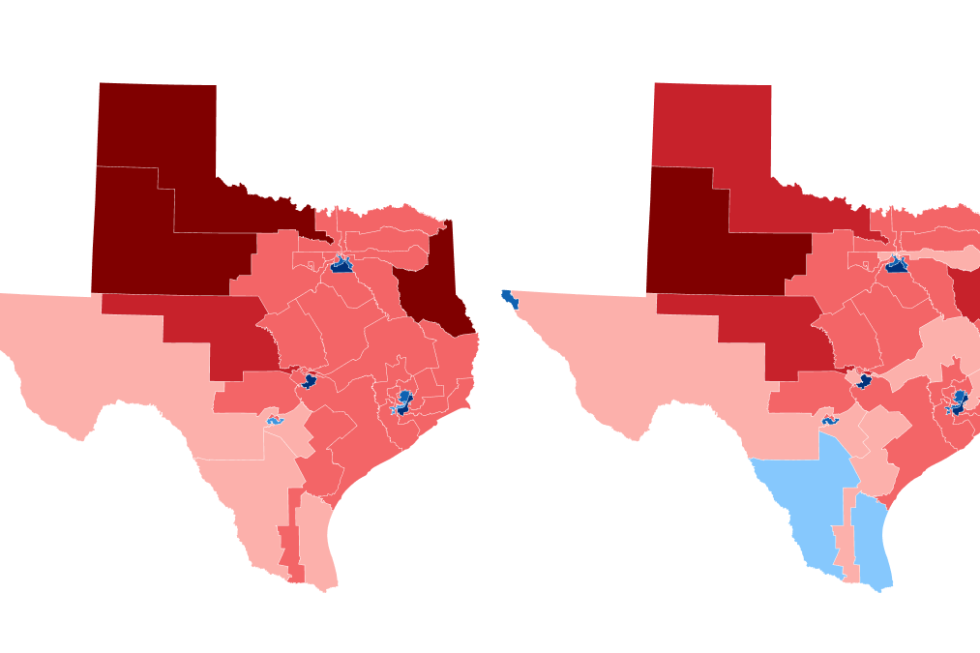
The ambitious redistricting plan aims to reduce Democratic representation from 13 to just 8 seats out of Texas’s 38 congressional districts, a target explicitly set by Trump himself. To accomplish this, Republican mapmakers employed a tactic known as “cracking” – deliberately dispersing Democratic-leaning voters across multiple districts where they’re outnumbered by Republican voters, making it difficult for Democrats to secure majorities.
“The city of Fort Worth has no Democratic representation,” lamented Democratic Representative Marc Veasey, who is retiring rather than seeking reelection in his significantly redrawn district. “It’s going to be sad. I feel terrible.”
The effectiveness of the redistricting strategy depends heavily on voting patterns. If Texans vote in the upcoming midterms exactly as they did in the 2024 presidential election – when Trump performed exceptionally well – Republicans stand to gain all five targeted seats, including the current Democratic-held 28th and 34th Districts. An Associated Press analysis indicates that under 2024 voting patterns, most races wouldn’t be particularly competitive, with only four districts having margins within 15 percentage points.
However, the political landscape could shift significantly. If voter preferences revert to 2020 patterns, Republicans may struggle to achieve their five-seat goal. Districts along the southern border with high Hispanic populations would shift from narrow Republican margins to slight Democratic advantages. Similarly, districts in and around Dallas would become more competitive, though still leaning Republican. Under 2020 voting patterns, nine districts would have margins within 15 points.
The 2024 election represented a particularly favorable environment for Republicans nationwide, especially for Trump. Voters expressed significant dissatisfaction with the incumbent Democratic administration and economic conditions, creating a Republican-friendly climate that may not persist into the midterms.
A critical factor in the redistricting calculus is the notable rightward shift among Hispanic voters in 2024 compared to previous elections. This demographic, heavily represented along Texas’s southern border and in several major cities, supported Trump at significantly higher rates than in 2020. Republican mapmakers are banking on this shift becoming a durable realignment rather than a temporary phenomenon.
Yet there are warning signs for Republicans in heavily Hispanic areas. Despite Trump’s double-digit improvements along the southern border, voters there still returned Democratic incumbents Henry Cuellar and Vicente Gonzalez to Congress. Both representatives are running again in redrawn districts, suggesting that Trump’s popularity might not automatically transfer to other Republican candidates.
The distinction between presidential-year voting and midterm participation patterns adds another layer of uncertainty. Midterm elections typically draw different voter demographics than presidential contests, with turnout generally lower and the electorate often skewing toward more reliable, partisan voters.
Political analysts note that redistricting strategies always involve educated guesswork about future voting behaviors. The Texas map represents a calculated risk that the Republican gains of 2024 reflect a lasting shift in the state’s political composition rather than a Trump-specific surge.
The ultimate success of Texas’s controversial redistricting plan remains an open question that only upcoming elections can answer. As primaries get underway, political observers will be watching closely for early indicators of whether Republican mapmakers correctly anticipated the state’s evolving political landscape or overplayed their hand based on a single election’s results.
What’s clear is that the stakes are extraordinarily high, with the potential to significantly alter Texas’s congressional delegation and impact the balance of power in Washington for years to come.
Fact Checker
Verify the accuracy of this article using The Disinformation Commission analysis and real-time sources.

10 Comments
The loss of Democratic representation in Fort Worth is concerning. Redistricting should aim to preserve fair and competitive districts, not entrench one party’s power. Voters will have the final say.
Maintaining balanced and representative districts is crucial for a healthy democracy. Voters will be the ultimate arbiters of the redistricting plan’s success.
Cracking Democratic voters across districts is a common gerrymandering tactic, but it can backfire if voters see it as an unfair power grab. Texas will be a closely watched battleground in the upcoming midterms.
Agreed. Voters tend to dislike blatant attempts at gerrymandering, so the GOP will need to tread carefully.
Redistricting is always a contentious issue, with each party trying to gain an advantage. It’ll be interesting to see how Texas voters respond to the proposed changes and whether they stick with Republicans even without Trump on the ballot.
You raise a good point. Voter loyalty will be a key factor in determining the success of the GOP’s redistricting strategy in Texas.
Redistricting is a delicate process that should prioritize fairness and representation. The Texas plan appears to favor the GOP, but voters may push back if they see it as an overreach. It’ll be an interesting race to follow.
Agreed. Maintaining the integrity of the electoral process should be the top priority, not partisan advantage. Voters will have the final say on the effectiveness of the Texas redistricting plan.
Texas is a key battleground state, and the redistricting plan will be closely watched. It remains to be seen whether Republican voters will continue to support the party even without Trump on the ballot.
Voter loyalty and turnout will be critical factors in determining the outcome of the Texas redistricting plan. The midterms will provide a clear indication of the strategy’s effectiveness.