


Listen to the article
Florida’s Catholic bishops urged President Donald Trump on Monday to temporarily halt immigration enforcement operations during the Christmas season, but the White House quickly rejected the appeal, affirming that deportation efforts would continue uninterrupted through the holidays.
The request came in a letter from Miami Archbishop Thomas Wenski, with seven other members of the Florida Conference of Catholic Bishops as signatories. The bishops argued that the administration’s aggressive enforcement approach is now affecting individuals who pose no criminal threat to American communities.
“The border has been secured. The initial work of identifying and removing dangerous criminals has been accomplished to a great degree,” Wenski wrote. “At this point, the maximum enforcement approach of treating irregular immigrants en masse means that now many of these arrest operations inevitably sweep up numbers of people who are not criminals but just here to work.”
The bishops expressed particular concern about the emotional toll on families during what is traditionally a season of unity and celebration. “A climate of fear and anxiety is infecting not only the irregular migrant but also family members and neighbors who are legally in the country,” the letter stated.
White House spokeswoman Abigail Jackson offered a terse response that made no reference to the holiday season or the bishops’ humanitarian concerns. “President Trump was elected based on his promise to the American people to deport criminal illegal aliens. And he’s keeping that promise,” Jackson wrote in an email.
The exchange highlights the ongoing tension between the Trump administration’s hardline immigration policies and religious leaders advocating for more compassionate treatment of migrants. It also underscores the administration’s unwillingness to modify enforcement operations even during significant cultural and religious holidays.
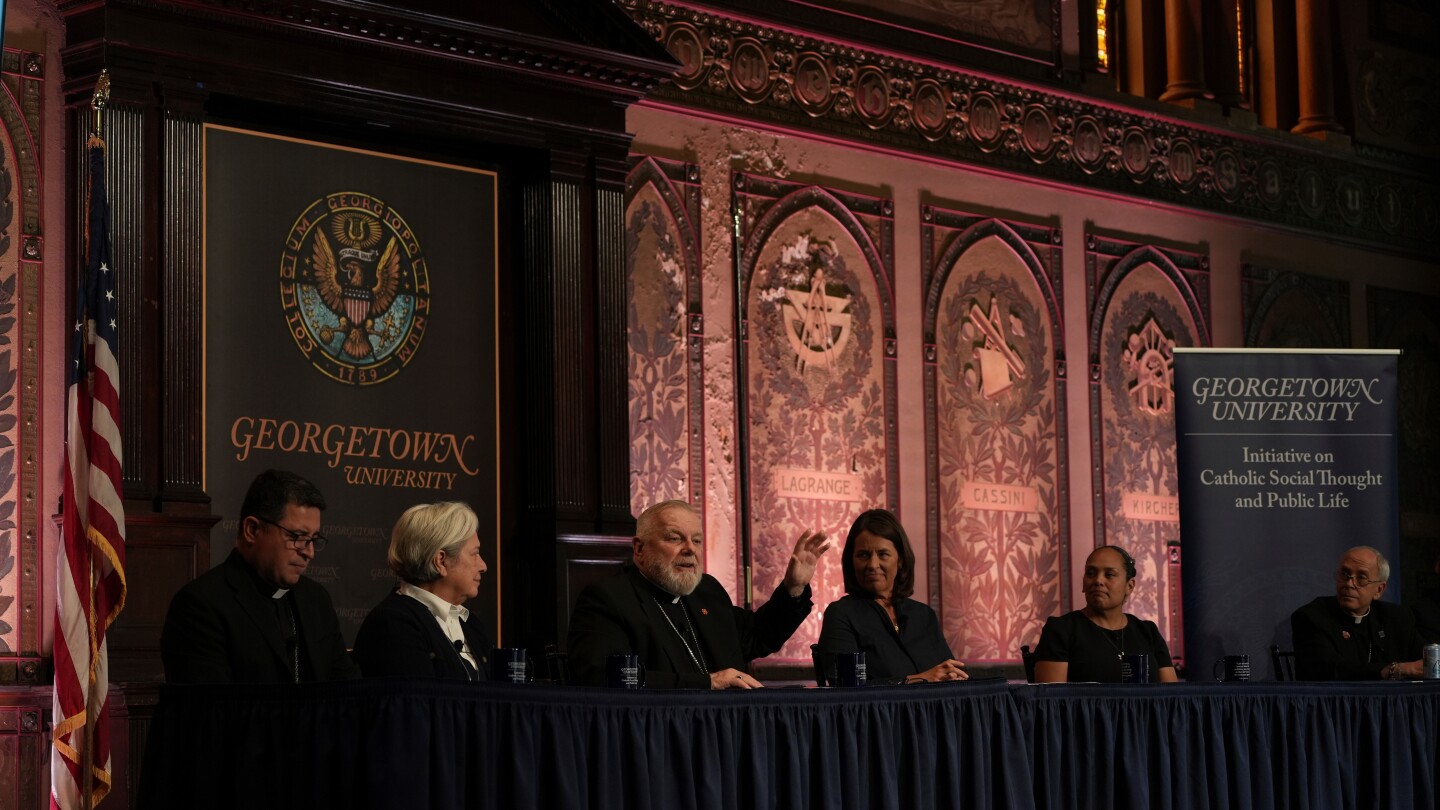
Archbishop Wenski has emerged as a prominent voice for immigrant rights within the Catholic Church. In September, he participated in a panel discussion at Georgetown University where he criticized the administration’s immigration policies for disrupting families and community life.
During that forum, Wenski emphasized immigrants’ vital contributions to the American economy. “If you ask people in agriculture, you ask in the service industry, you ask people in health care, you ask the people in the construction field, and they’ll tell you that some of their best workers are immigrants,” he said. “Enforcement is always going to be part of any immigration policy, but we have to rationalize it and humanize it.”
Beyond public advocacy, the archbishop has engaged directly with detained immigrants. He joined the “Knights on Bikes” ministry, an initiative by the Knights of Columbus focused on addressing the spiritual needs of people in immigration detention centers. Wenski described praying with the group outside a Florida Everglades detention facility nicknamed “Alligator Alcatraz” before eventually gaining permission to celebrate Mass inside the center.
“The fact that we invite these detainees to pray, even in this very dehumanizing situation, is a way of emphasizing and invoking their dignity,” Wenski explained.
The bishops’ appeal comes as immigration enforcement has intensified under the Trump administration, with Immigration and Customs Enforcement (ICE) conducting workplace raids and neighborhood operations that have resulted in thousands of arrests. Critics argue these operations often separate families and detain individuals with no criminal records who have lived and worked in the United States for many years.
The White House’s refusal to consider a holiday enforcement pause indicates that the administration remains committed to its strict immigration agenda despite religious and humanitarian objections. As Christmas approaches, immigrant communities across the country face the prospect of continued enforcement operations during what is, for many, an important religious and family celebration.
Fact Checker
Verify the accuracy of this article using The Disinformation Commission analysis and real-time sources.

14 Comments
This is a contentious political issue, but I think the bishops raise a valid point about the human toll. Even if the law requires enforcement, perhaps some flexibility or additional support for families could be considered during the holiday season.
It’s a complex situation without easy solutions. I appreciate the bishops advocating for compassion, but the White House also has a responsibility to uphold the law. An open dialogue is needed to find a reasonable compromise.
The White House’s decision to continue deportations during the holidays, despite the bishops’ appeal, seems pragmatic from a policy standpoint but does raise ethical concerns. It’s a complex issue without easy answers, and I hope both sides can engage in constructive dialogue to find a reasonable compromise.
I appreciate the bishops’ advocacy for compassion, but the White House also has a responsibility to uphold the law. Perhaps a middle ground could be found that provides some relief for families without completely suspending enforcement.
The White House’s position seems inflexible, but I can understand the desire to maintain consistent enforcement. At the same time, the bishops make a compelling case about the emotional impact on families. A middle ground may be possible with careful consideration.
This is a sensitive issue where reasonable people can disagree. I hope both sides can engage in constructive dialogue to find a solution that balances the needs of security and human dignity.
This is a complex issue with valid arguments on both sides. The bishops raise an important point about the human impact, but the White House also has a responsibility to enforce immigration laws. An open and respectful dialogue is needed to find a reasonable compromise.
I agree that this is a sensitive situation that requires nuanced consideration. Perhaps a temporary pause could provide some relief, while longer-term solutions that balance security and compassion are explored.
The White House’s decision to continue deportations during the holidays seems pragmatic from a policy standpoint, but it does raise ethical concerns about the impact on families. It’s a sensitive issue requiring nuanced, good-faith dialogue.
I’m curious to hear more perspectives on how to navigate the balance between effective immigration enforcement and minimizing harm to vulnerable individuals and families.
While I understand the bishops’ concern for families, immigration enforcement is a complex issue with valid arguments on both sides. Maintaining the rule of law is important, but the human impact on vulnerable individuals should also be carefully considered.
This is a challenging situation without easy answers. A temporary pause could provide some relief, but long-term solutions that balance security and compassion are needed.
While the White House is focused on upholding the law, the bishops’ appeal for a temporary pause during the holidays highlights an important humanitarian concern. Perhaps a compromise could be reached to provide some relief for families without completely suspending enforcement.
It’s a challenging situation without easy answers. I’m curious to hear more about potential solutions that could address the needs of both security and compassion.