


Listen to the article
The long-term fallout of the war in Iran continues to reshape the Middle East, leaving alliances strained and the global balance of economic and military power in flux. As the dust settles, Iran’s theocracy, though damaged, retains newfound economic leverage, while leadership in both the U.S. and Israel approaches upcoming elections having fallen short of their war aims.
With U.S. and Iranian representatives set to meet in Pakistan this weekend, the consequences of the conflict are reverberating across multiple fronts, from international diplomacy to global energy markets.
For Israeli Prime Minister Benjamin Netanyahu, the war has produced mixed results. Despite setting ambitious initial goals—neutralizing Iran’s missile and nuclear programs, ending support for proxy groups, and creating conditions for an uprising against the Iranian government—none have been fully achieved.
In a recent televised address following the ceasefire, Netanyahu acknowledged incomplete objectives but claimed “immense achievements,” stating, “Iran is weaker than ever, and Israel is stronger than ever.” With Israeli elections on the horizon, Netanyahu must now convince a war-weary public that these partial gains justify the disruption caused by nonstop air-raid sirens and frequent sheltering.
His political future may hinge on whether upcoming ceasefire talks with U.S. support can transform battlefield gains into a permanent agreement protecting Israeli interests, while maintaining a strong relationship with President Trump following a war that proved deeply unpopular in America.
Iran, meanwhile, finds itself in an unexpected position of strength despite significant damage to its infrastructure. The mere threat of sea mines and potential attacks from the Revolutionary Guard has effectively closed the strategically vital Strait of Hormuz, giving Tehran leverage in negotiations.
Even the death of 86-year-old Supreme Leader Ayatollah Ali Khamenei has been reframed by hard-liners as an opportunity to install his more radical son, Mojtaba. Ahead of the Islamabad talks, Iran has presented maximalist demands, including continuing uranium enrichment—one of Trump’s primary justifications for initiating the conflict.
However, Iran’s position remains precarious. Its military installations lie in ruins, its missile arsenal is largely depleted, and the threat of domestic unrest looms, particularly given the extensive damage to the country’s oil, gas, and steel industries.
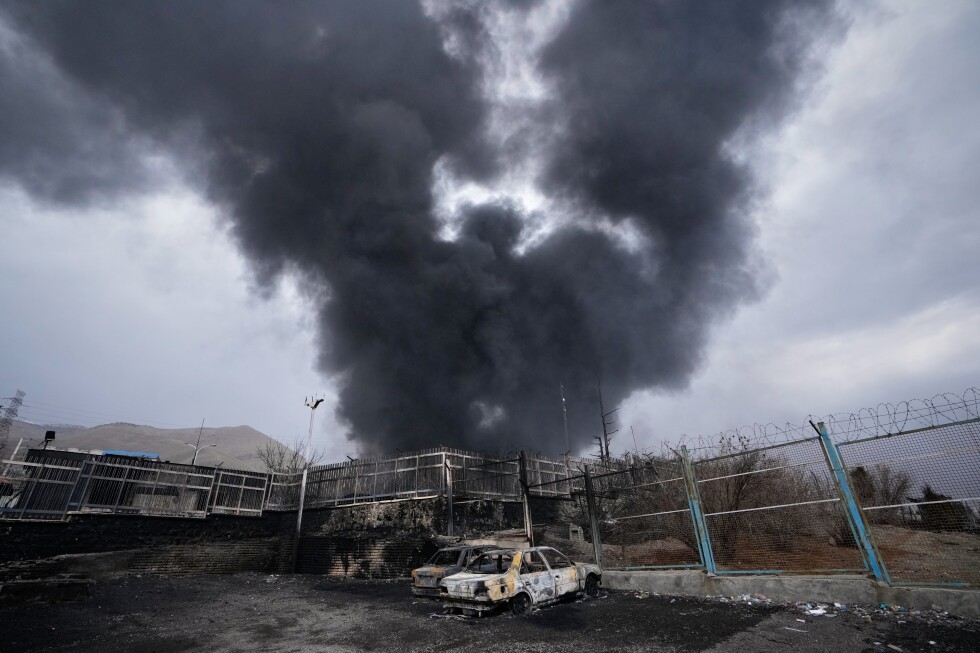
The Gulf Arab states have found themselves caught in the crossfire despite pleas to be left out of the conflict. Iranian drone and missile attacks targeted airports, energy facilities, military bases, and civilian infrastructure across the region. Many Gulf states were forced to close refineries or reduce oil output during the fighting. Even with the ceasefire in place, Iran’s de facto control of the Strait of Hormuz through threats alone prevents these nations from getting energy shipments to market.
Regional responses vary widely, from Oman’s diplomatic efforts to the United Arab Emirates’ forceful denunciation of Iranian aggression and insistence that the status quo cannot continue.
In Lebanon, the war has exacted a devastating toll, with the ceasefire bringing uncertainty rather than relief. The U.S. and Israel maintain that their agreement with Iran does not extend to the Israel-Hezbollah conflict, while Iran claims it does. Though Lebanese and Israeli officials have agreed to direct negotiations—potentially leading to both a ceasefire and discussions about a peace agreement—significant obstacles remain.
Lebanon wants Israeli strikes to cease before talks begin, a condition Israel is unlikely to accept. Most analysts believe Lebanon lacks the capacity to disarm Hezbollah by force or enforce any agreement without the group’s consent. Meanwhile, the fighting continues, having displaced more than a million people and killed nearly 1,900.
On the international stage, the conflict has severely strained NATO relations. Trump has repeatedly tested the 32-member alliance, cutting assistance to Ukraine, threatening Denmark over Greenland, and demanding increased defense spending. His response to the Iran conflict—deriding allies as “cowards” and NATO as “a paper tiger”—has raised existential questions about the alliance’s future.
Trump has expressed particular frustration with NATO members ignoring his call for support as Iran effectively closed the Strait of Hormuz, and with Spain and France restricting the use of their airspace and military facilities for U.S. operations against Iran.
Domestically, the war has undermined Trump’s economic promises. Rather than curbing inflation and lowering prices, the conflict has driven up gas costs, sent stock markets reeling, weakened the labor market, and reignited inflation. With midterm elections approaching, these economic challenges threaten Republican control of Congress.
U.S. consumer prices rose 3.3% in March from a year earlier, up sharply from February’s 2.4%, representing the largest yearly increase since May 2024. The surge in gas prices—from about $3 per gallon before the conflict to approximately $4.15—is particularly burdensome for lower and middle-income households.
Internationally, oil prices have skyrocketed with Brent crude, the global benchmark, jumping from roughly $70 per barrel before the war to more than $119 at times, settling recently at $96.58. With approximately one-fifth of the world’s oil normally traveling through the now-effectively closed Strait of Hormuz, and with production facilities damaged across the Middle East, energy markets face continued volatility despite the ceasefire.
As negotiations proceed in Islamabad, the path to lasting stability remains uncertain, with each stakeholder pursuing conflicting objectives in a dramatically altered regional landscape.
Fact Checker
Verify the accuracy of this article using The Disinformation Commission analysis and real-time sources.

9 Comments
While the war may have weakened Iran’s position, the country’s economic leverage remains a significant factor. Navigating this complex dynamic will be crucial for all parties involved.
The impact on global energy markets is a key concern. Any disruptions to Iran’s oil and gas production could significantly ripple through the industry.
This war has highlighted the fragility of the Middle Eastern political landscape. The long-term implications for the region’s stability are concerning.
The meeting in Pakistan will be crucial in determining the next steps. Both sides will need to demonstrate flexibility and a willingness to compromise.
Agreed. Reaching a sustainable diplomatic solution will be essential for stabilizing the region and global energy markets.
This conflict has certainly had far-reaching global implications. It will be interesting to see how the diplomatic talks in Pakistan unfold and what concessions or compromises may emerge from them.
It’s a complex geopolitical landscape, with alliances strained and the balance of power in flux. This conflict will have ramifications for years to come.
Netanyahu’s claim of ‘immense achievements’ despite incomplete objectives suggests a need to rally domestic political support. The public’s war-weariness will likely be a key factor in the upcoming Israeli elections.
Absolutely, Netanyahu will have to carefully balance his rhetoric to appeal to voters who may be disillusioned by the war’s outcomes.