


Listen to the article
Utah Repeals Controversial Ban on Public Sector Collective Bargaining
Utah has reversed course on a controversial labor law that briefly stripped collective bargaining rights from public employees across the state. Republican Governor Spencer Cox on Thursday approved the repeal of what labor experts had described as one of the most restrictive labor policies in the nation.
The original ban, passed in February by Utah’s Republican-controlled Legislature, had prevented labor unions from negotiating on behalf of teachers, firefighters, police officers and other public sector workers. Lawmakers who supported the initial legislation argued it was necessary to allow employers to engage directly with individual employees rather than working through union representatives.
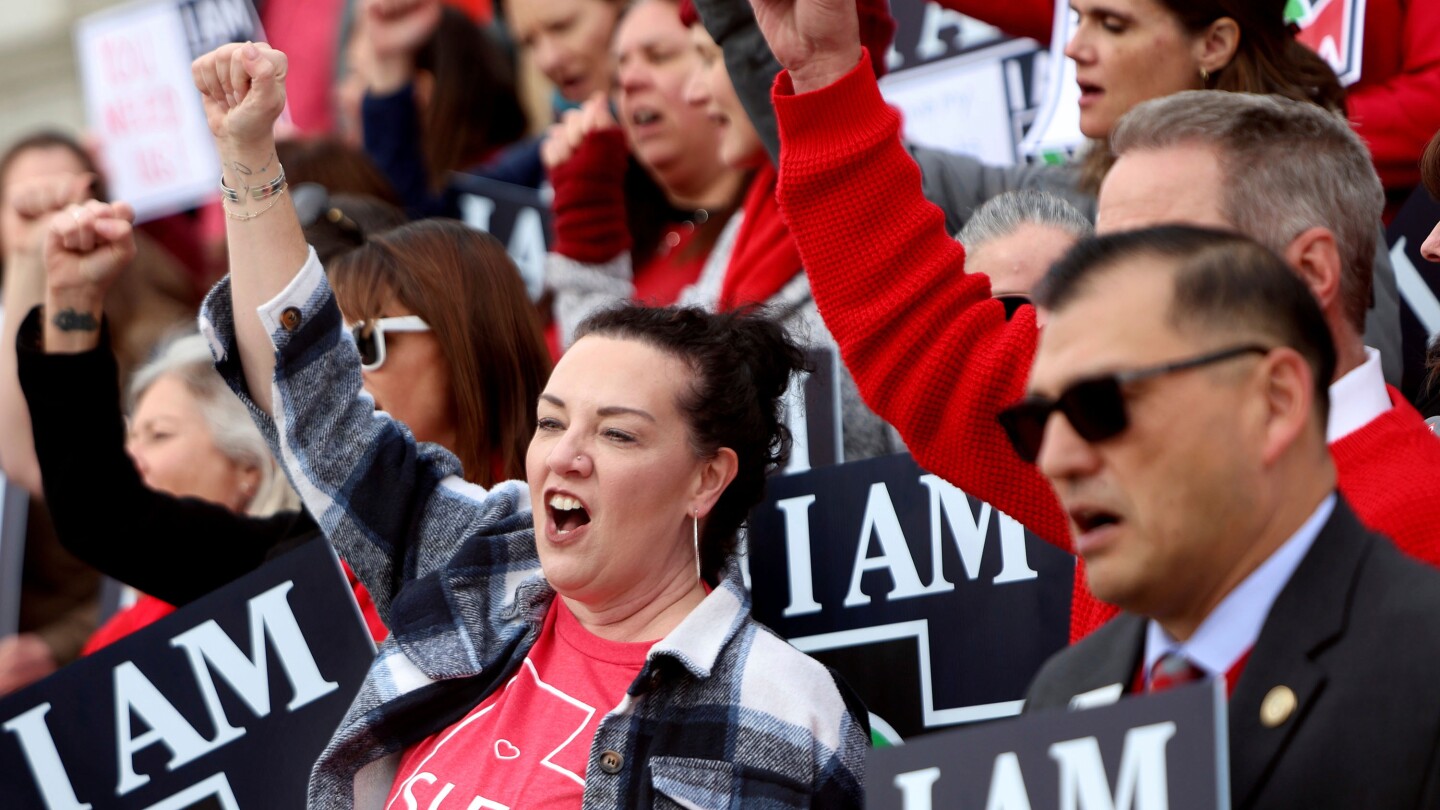
The ban had sparked immediate and sustained backlash. Thousands of union members from both public and private sectors staged demonstrations outside the governor’s office for a week, urging Cox to veto the bill. Despite these protests, Cox signed the measure into law.
Opposition continued to build in the months following implementation, ultimately leading lawmakers to reconsider their position. During a special legislative session this month, the Legislature voted to repeal the controversial measure entirely.
Republican State Representative Jordan Teuscher, who originally sponsored the bill, framed the reversal as an opportunity for reset. “This allows us to step back, to lower the temperature and to create space for a clearer and more constructive conversation,” Teuscher said, while maintaining that the initial policy was sound but had been “overshadowed by misinformation and unnecessary division.”
Political analysts note that the repeal comes at a strategic time for Utah Republicans, who are preparing to defend their four U.S. House seats in the 2026 midterm elections. A new congressional map creates a heavily Democratic-leaning district in the Salt Lake City area, potentially complicating Republican electoral calculations.
By repealing the controversial ban, Republicans may be seeking to appease key constituencies, particularly police officers and firefighters—groups that typically lean conservative but were strongly opposed to losing their collective bargaining rights.
Under the short-lived law, public employees could still join unions, but these organizations were prohibited from formally negotiating for better wages, benefits, and working conditions on members’ behalf. This limitation effectively neutralized unions’ primary function in representing workers’ interests.
Public educators, who represent the largest group of public employees utilizing collective bargaining in Utah, viewed the original policy with particular alarm. Many perceived it as a deliberate attempt by Republican lawmakers to weaken teachers unions and clear obstacles to advancing their education agenda without organized opposition.
The context extends beyond Utah, as teachers unions nationwide have become vocal opponents of various Republican education policies. These include efforts to eliminate diversity, equity and inclusion programs, expand school choice vouchers, and restrict transgender students’ bathroom use and sports participation.
Union leaders expressed satisfaction with the repeal. Randi Weingarten, president of the American Federation of Teachers, and Brad Asay, the Utah chapter leader, released a joint statement calling the reversal “a historic step in the right direction to return respect and dignity to the workers of Utah.”
The repeal represents a significant victory for organized labor in a conservative state where union influence has historically been limited. It also demonstrates how sustained grassroots opposition can sometimes successfully challenge and reverse controversial legislation, even in states with single-party dominance in government.
Fact Checker
Verify the accuracy of this article using The Disinformation Commission analysis and real-time sources.

10 Comments
The repeal of the ban on collective bargaining for public sector unions in Utah seems like a positive step. It’s good to see the state reversing course on this restrictive policy in response to public pressure. This should help strengthen the position of teachers, firefighters and police in negotiations.
While I understand the argument that employers should be able to engage directly with employees, the right of public sector workers to collectively bargain is an important protection. Curious to see if this change leads to any notable shifts in the dynamics between unions and the government in Utah.
While I can understand the argument that direct engagement between employers and employees is important, the right of public sector unions to collectively bargain is a crucial protection. Glad to see Utah taking this step to reverse its restrictive policy in this area.
Agree, the repeal of the collective bargaining ban for public sector unions in Utah seems like a positive move that could strengthen the voice of workers in negotiations with the government.
This is an interesting move by Utah. Collective bargaining rights are an important part of giving a voice to public sector workers. It will be worth watching how this plays out and whether it leads to any changes in negotiations between unions and the government.
This repeal of the collective bargaining ban for public sector unions in Utah is an intriguing move. It will be worth following to see if it leads to any notable shifts in how the state’s teachers, firefighters and police are able to negotiate with the government going forward.
The reversal on the collective bargaining ban for Utah’s public sector workers is an interesting development. It will be worth monitoring how this plays out and whether it has any broader implications for labor relations in the state. Repealing such a restrictive policy seems like the right call.
Agreed, the reversal of the ban is a positive step. It will be interesting to see if this leads to any changes in the dynamics between public sector unions and the government in Utah.
This is an interesting shift in Utah’s labor policies. The repeal of the ban on collective bargaining for public sector unions like teachers and firefighters could have some meaningful implications. It will be worth monitoring how this plays out and if it leads to any notable changes.
The reversal on the collective bargaining ban for Utah’s public sector workers is a notable development. It will be interesting to monitor whether this change has any significant impact on labor relations in the state or if it’s primarily a symbolic gesture.