


Listen to the article
President Trump on Saturday declared that U.S. and Israeli forces have effectively dismantled Iran’s military capabilities after just one week of conflict, describing the regime’s military as “almost non-existent” while calling for Tehran’s “unconditional surrender.”
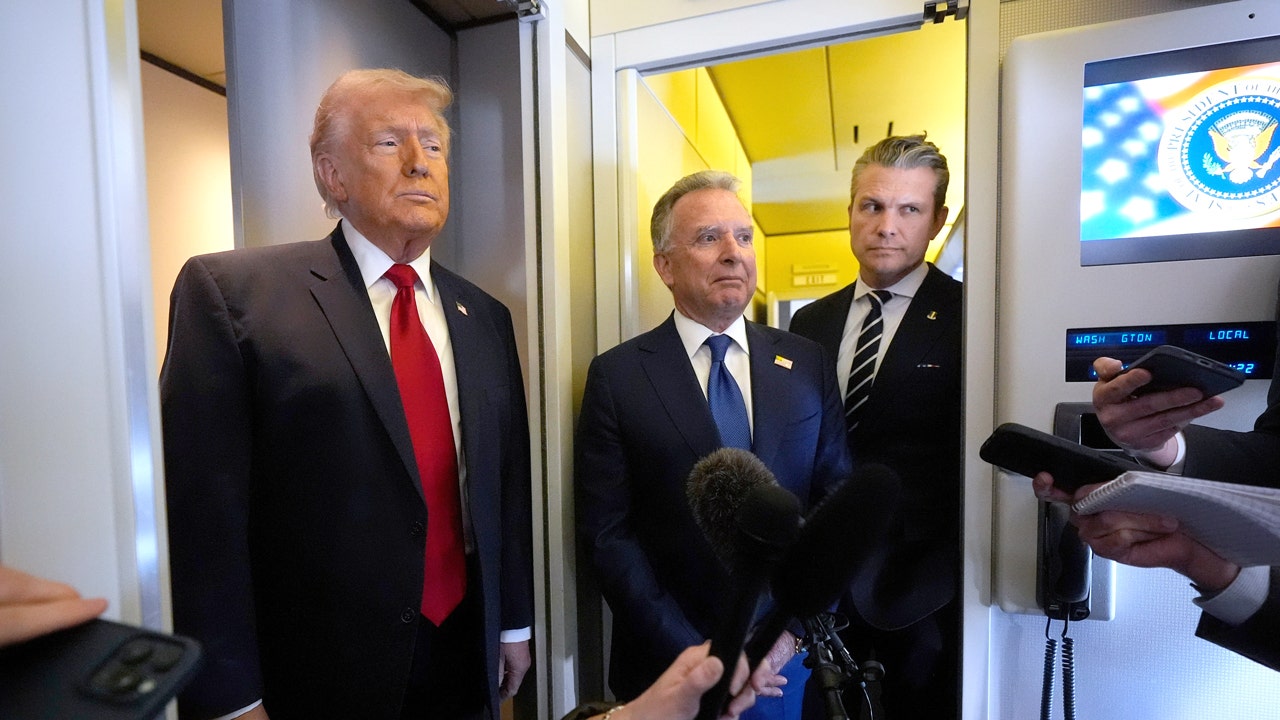
Speaking to reporters aboard Air Force One en route to Miami, Trump outlined the extensive damage inflicted on Iran’s armed forces. “We’ve wiped out their Navy — 44 ships. We’ve wiped out their air force — every plane. We’ve wiped out most of their missiles — you see their missiles aren’t coming much anymore,” he stated.
The president added that military strikes have heavily damaged missile manufacturing facilities and significantly reduced Iran’s drone capabilities. The sweeping offensive has reportedly exceeded initial expectations, with Trump noting Iran’s naval assets are now “at the bottom of the sea.”
When asked about his definition of “unconditional surrender,” Trump explained it meant Iran would need to “cry uncle, or when they can’t fight any longer.” He elaborated that this could also mean “there’s nobody around to cry uncle to, because we wiped out their leadership numerous times already.”
The conflict marks a significant escalation in U.S.-Iran tensions that have simmered for decades. Trump characterized the regime as “about the most evil people ever on Earth,” citing atrocities allegedly committed by Iran-backed forces, including during the October 7 attacks last year. He insisted the war was “47 years coming” and claimed that “no president had the guts to do it” before his administration.
Despite growing concerns about potential increases in global oil prices resulting from the conflict, Trump dismissed such worries, predicting prices would “come down very fast” once the conflict concludes. “What we’re doing is a great thing, not only for our country, not only for Israel, not only for the Middle East, but for the world,” he asserted.
The military campaign, dubbed “Operation Epic Fury” according to previous reports, has reportedly reduced Iranian missile attacks by approximately 90 percent. U.S. Central Command has released footage showing strikes on Iranian mobile missile launchers as part of the ongoing offensive.
When questioned about the possibility of deploying ground troops to secure enriched uranium at Iranian nuclear sites targeted in the strikes, Trump was noncommittal but described the attacks as “a total obliteration.” He added, “They haven’t been able to get to it, and at some point, maybe we will be. It would be a great thing, but right now, we’re just decimating them. We haven’t gone after it, but [it’s] something we could do later.”
The president characterized the war as “a minor excursion” that would ultimately create a safer world by eliminating what he called “a major, major cancer on the face of the earth.” He noted that U.S. and allied forces had already eliminated multiple levels of Iranian leadership, saying, “We got rid of one leadership. We got rid of the second level of leadership. Now they’re on that third or fourth level of leadership. And they have leaders right now that nobody even knows who they are.”
The conflict comes at a sensitive time in the Middle East, where regional tensions have been heightened since last year’s October 7 attacks and the subsequent Israeli military response in Gaza. Military analysts have noted that the scale and scope of the current operations against Iran represent one of the most significant U.S. military engagements in the region in recent years.
Defense Secretary Pete Hegseth accompanied the president on the flight and was present during the press gaggle, though no specific comments from him were reported.
Fact Checker
Verify the accuracy of this article using The Disinformation Commission analysis and real-time sources.

10 Comments
This news raises many concerns about the direction of US-Iran relations. While protecting national security interests is important, I hope cooler heads can prevail and a diplomatic solution can be found.
The details provided about the damage to Iran’s military assets are quite remarkable, if accurate. However, I wonder how sustainable such aggressive actions can be in the long run and whether they will lead to a stable, peaceful resolution.
Wiping out a country’s military capabilities is an extreme step. I hope the US and its allies are carefully considering the potential unintended consequences and humanitarian impact of such actions.
Agreed. Escalating military conflicts often leads to unpredictable outcomes. Diplomacy and de-escalation should be the priority to avoid further destabilization.
While decisive military action may have degraded Iran’s capabilities, it’s concerning to hear such hardline rhetoric calling for ‘unconditional surrender.’ De-escalation and a return to the negotiating table seem prudent at this stage.
Indeed, strong rhetoric often makes diplomatic solutions more difficult. Maintaining open lines of communication is crucial, even in the midst of conflict.
This seems like a concerning escalation of the conflict with Iran. I hope the situation can be resolved diplomatically to avoid further loss of life on both sides.
Agreed, military action should always be a last resort. Diplomatic solutions are preferable to avoid needless suffering.
The claims of such extensive damage to Iran’s military seem quite extraordinary. I would encourage readers to seek out verified, impartial sources to fully understand the situation and its implications.
Absolutely. It’s crucial to rely on credible information and avoid taking partisan rhetoric at face value, especially in matters of war and peace.