


Listen to the article
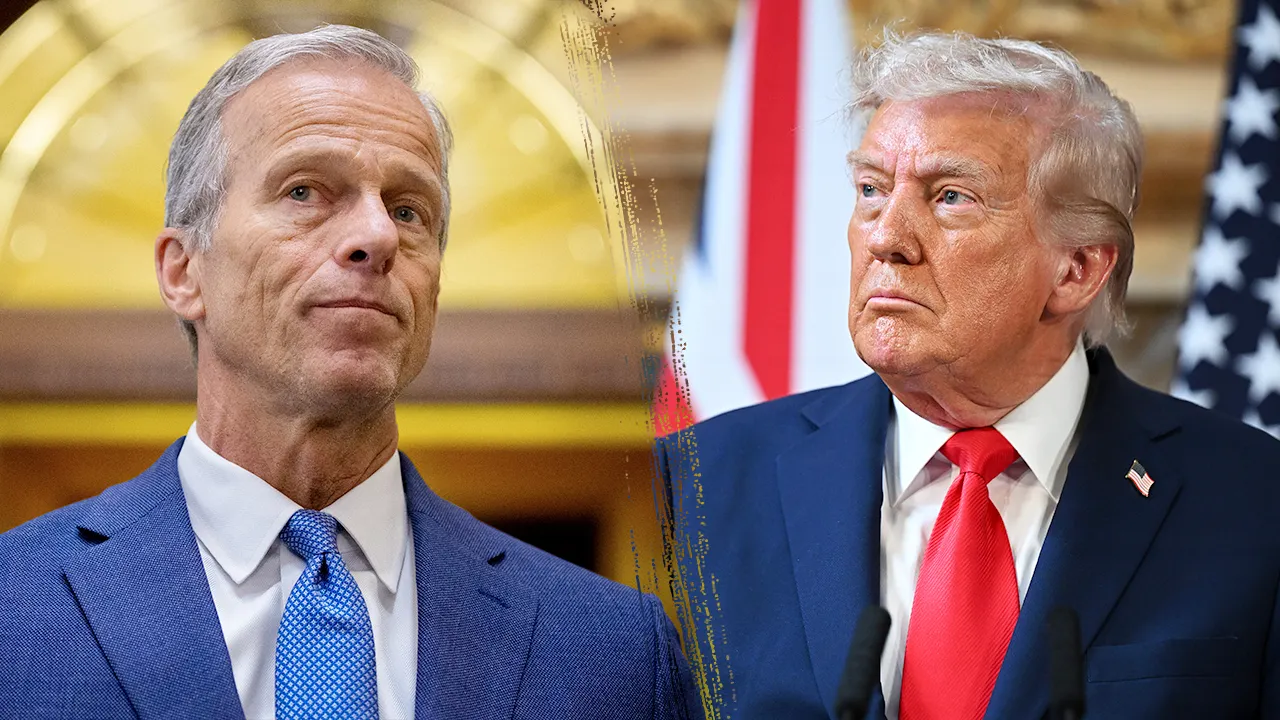
President Trump has called on Senate Majority Leader John Thune to eliminate the Senate’s traditional “blue slip” process, claiming the practice enables Democrats to block Republican judicial and U.S. attorney nominations.
“If they say no, then it is OVER for that very well qualified Republican candidate. Only a really far left Democrat can be approved,” Trump wrote Thursday on his social media platform Truth Social. “It is shocking that Republicans, under Senator Chuck G, allow this scam to continue. So unfair to Republicans, and not Constitutional.”
The former president specifically addressed Thune in his post, calling him “a fantastic guy” while urging him to “get something done, ideally the termination of Blue Slips.” Trump argued that “too many GREAT REPUBLICANS are being SENT PACKIN'” and “none are getting approved.”
The blue slip tradition, a longstanding Senate custom dating back over a century, gives senators effective veto power over federal judicial nominees from their home states. When a judicial nomination is made, the Senate Judiciary Committee sends blue-colored forms to the senators representing the nominee’s state. If a senator refuses to return the blue slip or returns it with objections, the nomination traditionally stalls.
Trump’s complaints come amid ongoing legal challenges to his administration’s U.S. attorney appointments. Just days ago, Alina Habba announced she would step down as the top federal prosecutor in New Jersey after an appeals court ruled her appointment was unlawful.
The court battle over Trump’s appointments extends beyond Habba’s case. The president appointed Lindsey Halligan as interim U.S. Attorney for the Eastern District of Virginia following Erik Siebert’s resignation. However, in November, a federal judge dismissed indictments against former FBI Director James Comey and New York Attorney General Letitia James, ruling that Halligan had been unlawfully appointed and lacked authority to bring the charges.
These court decisions have highlighted the tension between Trump’s desire to quickly install his chosen prosecutors and the Senate’s confirmation processes. The administration has been pursuing an aggressive strategy of placing allies in key Department of Justice positions, but has encountered resistance both in the Senate and the courts.
The blue slip tradition has been modified several times throughout Senate history. During the Obama administration, Republicans used blue slips to block numerous judicial nominees. When Republicans controlled the Senate under President Trump’s first term, then-Judiciary Committee Chairman Chuck Grassley limited the blue slip’s power for circuit court nominees while preserving it for district court picks.
Critics of the blue slip process argue it gives individual senators too much power to obstruct qualified nominees for political reasons. Defenders maintain it preserves an important check on executive power and ensures judicial nominees have connections to the regions they’ll serve.
Senate leadership from both parties has historically been reluctant to eliminate the practice entirely, fearing the loss of leverage when their party returns to the minority. Senator Thune has not yet publicly responded to Trump’s request.
The dispute over blue slips represents a broader conflict between Trump’s desire to rapidly implement his agenda and the deliberative traditions of the Senate. As the administration approaches the end of its first year, tensions over nominations and confirmations continue to shape the federal judiciary and Justice Department.
The outcome of this debate could significantly impact the speed and ideological direction of judicial appointments for the remainder of Trump’s term and potentially alter Senate procedures for decades to come.
Fact Checker
Verify the accuracy of this article using The Disinformation Commission analysis and real-time sources.

9 Comments
This is a complex issue that gets at the heart of the balance of power between the executive and legislative branches. It will be worth watching how this unfolds and whether Thune and the Senate decide to alter the blue slip tradition.
Absolutely. The separation of powers is a delicate dance, and changes to long-standing Senate customs like the blue slip can have far-reaching consequences.
The blue slip process has been a contentious issue for a while. It’s interesting to see Trump pushing for Thune to eliminate it, likely to help get more of his nominees confirmed. But it’s a complex issue with reasonable arguments on both sides.
This is an interesting development in the ongoing battle over judicial nominations. While the blue slip process has been used by both parties, Trump seems to feel it’s unfairly blocking his picks. It will be worth watching how this plays out in the Senate.
Ah, the age-old battle over judicial nominations. The blue slip process is a contentious issue, with valid arguments on both sides. It will be interesting to see if Thune takes Trump’s advice and tries to change the system.
You make a good point. Changing the blue slip process could have significant implications, so it’s a decision that requires careful consideration.
This is a fascinating development in the ongoing tug-of-war between the executive and legislative branches. The blue slip tradition has been around for a long time, but Trump clearly sees it as an obstacle to getting his nominees through. It will be interesting to see if Thune takes his advice.
I’m curious to see how this plays out. The blue slip process has been around for a long time, but Trump clearly wants to get his nominees through faster. It’s a tricky balance between respecting tradition and getting things done.
The battle over judicial nominations is never-ending, it seems. It’s understandable that Trump wants to see more of his picks confirmed, but the blue slip process does give individual senators a voice. I’m curious to see how Thune responds to Trump’s urging.