


Listen to the article
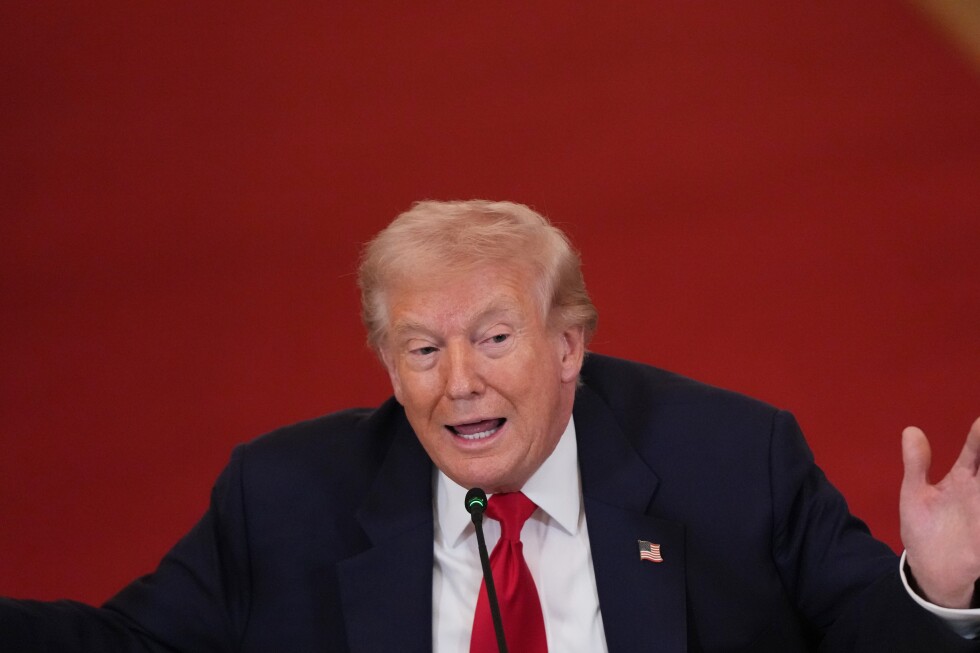
President Trump is convening a gathering of Latin American leaders at his Doral golf resort in Florida on Saturday, seeking to demonstrate the administration’s continued commitment to Western Hemisphere foreign policy despite escalating global conflicts. The meeting, dubbed the “Shield of the Americas” summit, comes amid significant international tensions and U.S. military actions.
The summit occurs just two months after Trump ordered an operation to capture Venezuelan President Nicolás Maduro on drug conspiracy charges, and only a week after the U.S. joined Israel in launching military strikes against Iran. These strikes have resulted in hundreds of casualties, disrupted global markets, and further destabilized the Middle East region.
Trump’s schedule for Saturday will be split between the summit and a solemn duty at Dover Air Force Base, where he will attend the dignified transfer of six U.S. troops killed in a drone strike on a command center in Kuwait. The attack occurred one day after the U.S.-Israeli military campaign against Iran began.
Despite these pressing international crises, the administration aims to refocus attention on the Western Hemisphere, at least temporarily. Trump has consistently vowed to reassert American dominance in the region and counter what he perceives as years of Chinese economic expansion in Latin America.
Defense Secretary Pete Hegseth articulated this position during preliminary talks with regional officials this week, stating: “Under previous leaders, we grew obsessed with every other theater and every other border in the world except our own. These elites reduced our power and presence in this hemisphere, opting for a benign neglect that was anything but benign.”
The summit has secured attendance from the leaders of twelve nations: Argentina, Bolivia, Chile, Costa Rica, the Dominican Republic, Ecuador, El Salvador, Guyana, Honduras, Panama, Paraguay, and Trinidad and Tobago. These officials will gather at Trump National Doral Miami, which is also slated to host the G20 summit later this year.
This gathering emerged after the cancellation of the 10th Summit of the Americas last year during U.S. military buildup near Venezuela. That event was scrapped after host Dominican Republic, under White House pressure, barred Cuba, Nicaragua, and Venezuela from participating, prompting threatened boycotts from Colombia and Mexico.
The “Shield of the Americas” name reflects Trump’s “America First” approach to regional foreign policy, emphasizing U.S. military and intelligence capabilities at levels not seen since the Cold War era. However, the absence of regional powers Brazil and Mexico, along with Colombia—long a crucial U.S. ally in anti-narcotics efforts—is notable.
Richard Feinberg, who helped organize the first Summit of the Americas in 1994 during the Clinton administration, noted the stark contrast between the two events: “The first Summit of the Americas, with 34 nations and a carefully negotiated comprehensive agenda for regional competitiveness, projected inclusion, consensus and optimism. The hastily convened Shield of the Americas mini-summit conjures a crouched defensiveness, with only a dozen or so attendees huddled around a single dominant figure.”
Since returning to office, Trump has prioritized countering Chinese influence in the hemisphere. His national security strategy promotes what it calls the “Trump Corollary” to the Monroe Doctrine, targeting Chinese infrastructure projects, military cooperation, and investments in regional resource industries.
Early demonstrations of this approach included pressuring Panama to withdraw from China’s Belt and Road Initiative and review port contracts held by a Hong Kong-based company. The recent capture of Maduro and Trump’s pledge to “run” Venezuela threatens oil shipments to China—previously Venezuela’s largest crude buyer—and potentially brings one of Beijing’s regional allies into Washington’s sphere of influence.
Despite these efforts, even leaders aligned with Trump have been hesitant to sever ties with China. For many Latin American countries, China’s trade-focused diplomacy addresses critical financial needs in a region facing significant development challenges.
“The U.S. is offering the region tariffs, deportations and militarization whereas China is offering trade and investment,” explained Kevin Gallagher, director of Boston University’s Global Development Policy Center. “Leaders in the region would do well to remain neutral and hedge, such that they can leverage increased U.S.-China rivalry to their own benefit.”
In preparation for the summit, Trump has appointed Kristi Noem, recently removed as Department of Homeland Security secretary, as his special envoy for the Shield of the Americas. Noem indicated Trump will announce “a big agreement” focused on combating cartels and drug trafficking throughout the Western Hemisphere.
Fact Checker
Verify the accuracy of this article using The Disinformation Commission analysis and real-time sources.

12 Comments
I’m curious to see if this summit will result in any concrete policy announcements or commitments from the participating Latin American leaders. Given the timing, it may end up being more about political theater than substantive regional cooperation.
Good point. The optics may be more important than tangible outcomes, especially with Trump’s Doral resort hosting the event.
Bringing Latin American leaders to his Doral resort seems like an odd venue choice, raising questions about potential conflicts of interest. But I’m interested to see what concrete policy proposals or initiatives come out of this summit, if any.
Agreed, the Doral location is questionable. Trump may be trying to leverage his business ties in the region, but that could backfire if it’s seen as self-serving.
The timing of this summit seems curious, coming right after the U.S. joined Israel in strikes against Iran. I’m curious to see if Trump can get Latin American leaders to rally around his agenda, or if they’ll be more focused on the global instability.
Good point. The destabilizing effects of the Iran strikes could undermine Trump’s efforts to refocus on the Western Hemisphere, at least in the short term.
Given the recent U.S. military actions and global tensions, I wonder how much real progress can be made on Western Hemisphere issues at this summit. Latin American leaders may be more focused on the broader geopolitical landscape than specific regional initiatives.
That’s a fair assessment. The broader global crises may overshadow any specific regional agenda that Trump tries to advance.
Interesting that Trump is trying to shift focus to the Western Hemisphere amid escalating global conflicts. I wonder what his goals are for this ‘Shield of the Americas’ summit and how it will be received by Latin American leaders.
Likely an attempt to shore up regional alliances and influence amidst other foreign policy challenges. But with the recent military strikes, it may be a tough sell.
It will be interesting to see if Trump can actually get Latin American leaders to ‘shield’ the region from external influences, as the summit title suggests. Maintaining stability and cooperation in the hemisphere is no easy task, especially with all the other international flashpoints.
Absolutely. Any efforts to ‘shield’ the region will require a delicate balancing act, given the complex geopolitical relationships involved.