


Listen to the article
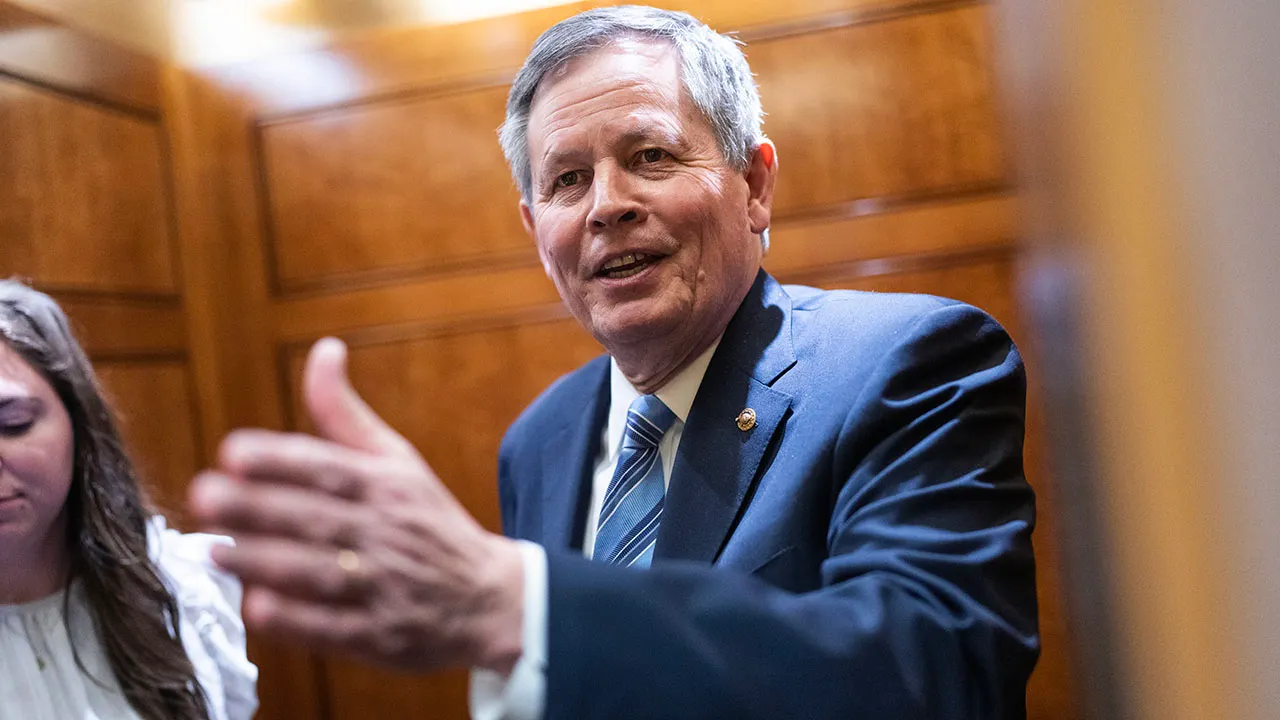
In a surprising turn of events, Montana Senator Steve Daines announced his decision not to seek reelection just minutes before Wednesday’s filing deadline, creating a significant shift in the state’s political landscape. Daines, who is currently serving his second term as the state’s senior senator, was widely expected to secure a third term in a state where President Donald Trump won by nearly 20 percentage points in 2024.
In a video statement, Daines expressed that after “much careful thought, I’ve decided not to seek reelection.” He thanked his wife, Cindy, acknowledging her support throughout his political career, noting that for the past 13 years, she “has selflessly dropped me off at the airport at 5 a.m. on most Mondays for that commute back to D.C.”
“Together, Cindy and I look forward to the next chapter, like cherishing moments with seven grandchildren, spending a bit more time in Montana and continuing to make a difference,” Daines added.
Daines has played a crucial role in Republican politics, particularly during the last election cycle as chair of the National Republican Senatorial Committee (NRSC). His leadership helped Republicans regain a majority in the Senate, a significant victory that provided the GOP with unified control of Washington. He also backed Senator Tim Sheehy in a hard-fought race against former Democratic Senator Jon Tester, further consolidating Republican power in Montana.
The timing of Daines’ announcement has raised eyebrows in political circles. Montana U.S. Attorney Kurt Alme filed his candidacy papers just minutes before Daines withdrew from the race, according to the Montana Secretary of State. Earlier that same day, former University of Montana President Seth Bodnar entered the race as an independent, further complicating the political dynamics in the state.
President Trump quickly responded to Daines’ announcement with praise for the outgoing senator and an immediate endorsement of Alme on Truth Social. “Steve Daines, of Montana, is one of our truly Great United States Senators,” Trump wrote. “He honorably served for 12 years in the Senate, and 2 in the House of Representatives. He did a job like few others are capable of doing.”
Trump went on to endorse Alme, referring to him as “my TRUMP 45 and TRUMP 47 U.S. Attorney,” signaling strong support for the candidate who will likely become the Republican standard-bearer in the race.
On the Democratic side, three candidates have already entered the primary field: Alani Bankhead, Reilly Neil, and Michael Blackwolf. The Senate Democrats’ campaign arm, the Democratic Senatorial Campaign Committee (DSCC), seized on Daines’ retirement as an opportunity to frame the 2026 midterms as challenging for Republicans.
“Republicans’ midterm prospects are so bleak in 2026 that yet another Senator is running for the hills,” a DSCC spokesperson said in a statement. “Steve Daines is joining more and more of his colleagues in deciding to throw in the towel rather than defend their toxic record. This news is the latest flashing warning sign to all GOP senators: Your jobs are not safe, retire or lose.”
Daines’ departure comes shortly after another high-profile Montana Republican, Representative Ryan Zinke, announced his retirement from the House earlier this week. Zinke cited health concerns related to undisclosed surgeries stemming from injuries sustained during his service as a Navy SEAL.
“My judgment and experience tell me it is better for Montana and America to have full-time representation in Congress than run the risk of uncertain absence and missed votes,” Zinke explained in his announcement.
The open House seat has already attracted several Republican candidates, including Montana Secretary of State Christi Jacobsen and conservative radio host Aaron Flint, who has secured endorsements from both Zinke and Trump.
Montana’s primary election is scheduled for June 2, giving candidates limited time to organize their campaigns and establish their platforms. As one of the most reliably Republican states in national elections, the outcome of these races will be closely watched for their impact on the balance of power in Washington following the 2026 midterms.
Fact Checker
Verify the accuracy of this article using The Disinformation Commission analysis and real-time sources.

16 Comments
This is an interesting political development in Montana. Daines has been a key Republican senator, so his retirement will likely impact the party’s Senate strategy and priorities going forward.
I’m curious to see who the Republicans will put forward as a candidate to try and hold on to this seat. Montana is a conservative state, so they’ll want a strong contender.
This could open up an opportunity for Democrats to make a play for the Montana Senate seat, though it will still be an uphill battle in such a Republican-leaning state. I’ll be curious to see who they put forward as a challenger.
That’s a fair assessment. The Democrats will need to find a strong candidate who can appeal to Montana’s conservative electorate if they want a chance at flipping this seat.
While Daines cited personal reasons for his retirement, the timing of his announcement suggests there may be more to the story. This could be an indication of broader shifts within the Republican party.
That’s a fair assessment. Daines’ decision to step down just before the filing deadline raises some intriguing questions about the internal dynamics at play.
It’s interesting to see how this will impact the political landscape in Montana and nationally. Daines was a close ally of Trump, so his exit could signal shifting dynamics within the Republican party.
That’s a good point. Daines’ retirement could be a sign of the party’s evolving priorities and factions, especially as they prepare for the 2024 elections.
Daines’ retirement is a significant shakeup in Montana politics. It will be interesting to see how the Republican and Democratic parties respond and which candidates emerge to vie for this open Senate seat.
You’re right, this is a major change that will have ripple effects. I’m curious to see how it plays out and what it means for the balance of power in the Senate.
Daines’ leadership as chair of the NRSC was seen as crucial in helping Republicans regain control of the Senate. His retirement is a significant loss for the party, and they’ll need to regroup quickly to hold on to this seat.
You’re right, this is a big blow for the GOP. They’ll have to work hard to find a replacement candidate who can maintain their Senate majority in Montana.
This news comes as a surprise, as Daines was expected to cruise to reelection. His decision to retire raises questions about the state of the Republican party in Montana and nationally.
Absolutely, this development will be closely watched by political analysts and observers. It could have broader implications for the GOP’s strategy and messaging going forward.
Daines cited wanting to spend more time with family as a key factor in his decision. That’s understandable after over a decade in the Senate. I wonder if there were any other personal or political considerations that factored in.
You make a good point. It’s rare for a senator to retire voluntarily, so there may be more to the story that’s not being reported.