


Listen to the article
Trump Administration Targets Maduro Regime with New Sanctions in Narco-State Crackdown
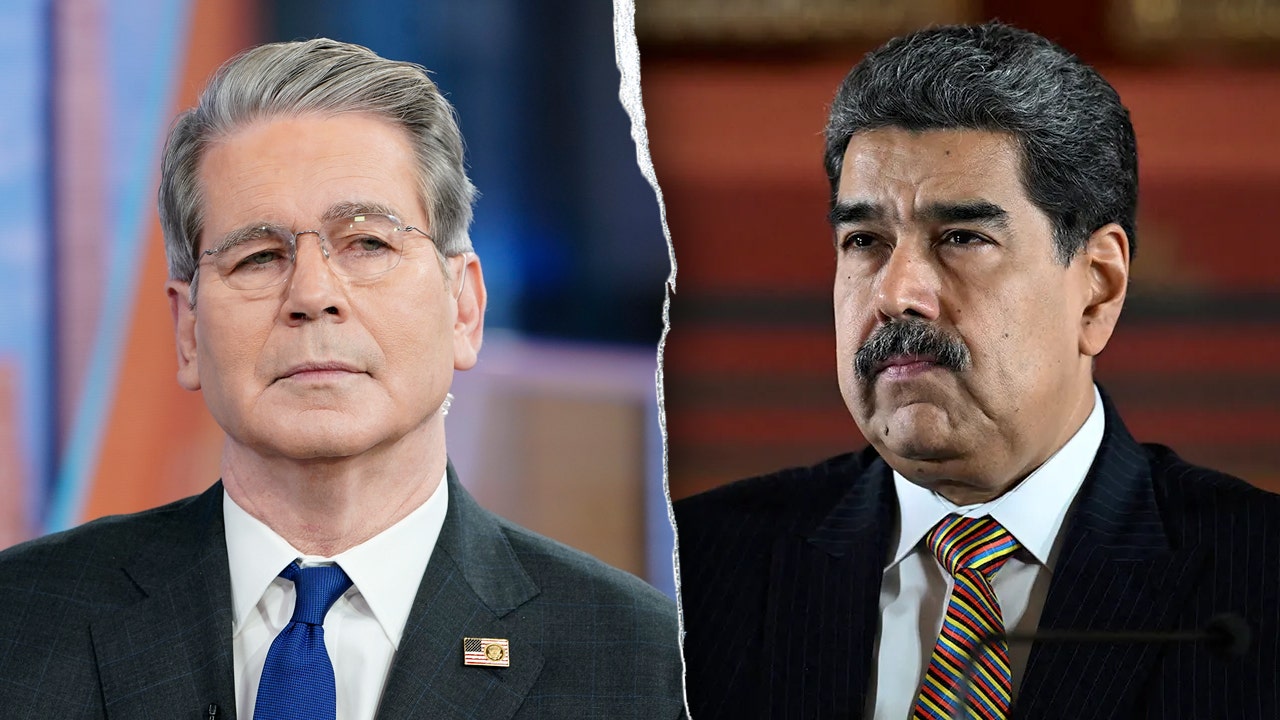
The Treasury Department announced new sanctions Friday targeting seven family members and associates connected to Nicolás Maduro’s Venezuelan regime, marking an escalation in the Trump administration’s efforts to combat what it describes as a “rogue narco-state.”
Treasury Secretary Scott Bessent emphasized the administration’s determination to counter Venezuela’s role in drug trafficking to the United States. “Today, Treasury sanctioned individuals who are propping up Nicolás Maduro’s rogue narco-state. We will not allow Venezuela to continue flooding our nation with deadly drugs,” Bessent stated.
The sanctions, implemented through the Office of Foreign Assets Control (OFAC), aim to address corruption and deceptive practices involving the Venezuelan government that the administration believes threaten U.S. national security and public health.
This action comes amid a broader push by the Trump administration to apply pressure on the Maduro regime, which the United States has refused to recognize as Venezuela’s legitimate government since 2019. The targeted sanctions represent the administration’s continuing strategy to isolate Maduro economically while cutting off financial lifelines to his inner circle.
The Venezuela sanctions coincide with other significant foreign policy developments, including challenges to U.S. troops in Syria that are testing the administration’s counter-ISIS strategy and its relationship with Syria’s new leadership. Senator Marco Rubio has separately identified what he calls the “single most serious threat” to the United States from the Western Hemisphere, further highlighting regional security concerns.
On Capitol Hill, Venezuela policy has drawn bipartisan attention, with 134 House Republicans demanding “assurances” regarding the easing of certain Syria sanctions. The administration’s approach to international sanctions has become a focal point of congressional oversight as lawmakers seek to maintain pressure on adversarial regimes.
Meanwhile, domestic political battles continue to shape the administration’s agenda. The Treasury Department is engaged in a legal dispute with Harvard University, appealing a ruling that restored $2.7 billion in federal funding to the institution. Conservative legal groups are also pressuring the administration to eliminate race-based considerations in CDC funding tools used by local officials.
In a controversial development that has captured public attention, the Kennedy Center in Washington, D.C., is being renamed following a unanimous board vote to add Trump’s name to the historic building. Workers were photographed installing “Donald J. Trump” signage above the current Kennedy Center name, signaling a significant shift in how the iconic performing arts venue will be identified.
The administration is also facing scrutiny over document disputes, with Senate Majority Leader Chuck Schumer accusing Trump officials of an Epstein files “cover-up.” Representative Thomas Massie has set what he calls a “litmus test” for the Department of Justice regarding Epstein disclosures as a congressional deadline passes without full compliance.
In immigration enforcement news, the Department of Homeland Security is receiving support from attendees at a conservative gathering known as AMFest, who reportedly “overwhelmingly” called for Immigration and Customs Enforcement (ICE) to target their hometowns, contrasting with Democratic opposition to expanded enforcement operations.
The administration’s climate and energy policies continue to generate debate, with conservative groups declaring 2025 a “tipping point” on what they term “climate hysteria” as Trump advances his energy agenda focused on increasing domestic production and rolling back environmental regulations.
As these developments unfold, the administration’s actions against the Maduro regime represent one component of a multifaceted approach to both domestic and international challenges shaping the political landscape in Washington.
Fact Checker
Verify the accuracy of this article using The Disinformation Commission analysis and real-time sources.

12 Comments
The new sanctions against Maduro’s inner circle are a strong signal, but Venezuela’s crisis is deeply entrenched. I hope this is part of a larger, coordinated strategy to bring about real change in the country.
This crackdown on Maduro’s associates and family members shows the administration’s determination to counter Venezuela’s role in the international drug trade. However, the ultimate impact remains to be seen.
The Trump administration’s escalation of sanctions against Maduro’s inner circle is an important step, but dealing with Venezuela’s complex political and economic crisis will require a comprehensive strategy.
I agree, a multi-faceted approach addressing the regime’s corruption, human rights abuses, and economic policies will be crucial to creating real change in Venezuela.
While I understand the need to pressure Maduro’s regime, I’m curious how effective these targeted sanctions will be in practice. Do they go far enough to curb Venezuela’s drug flows and government corruption?
That’s a fair question. The administration will likely need to take additional actions beyond just sanctions to have a real impact on Venezuela’s narco-state activities.
These new sanctions against Maduro’s inner circle are a strong move to counter Venezuela’s drug trafficking and corruption. The administration is determined to address the national security threat posed by Maduro’s ‘narco-state’.
Absolutely, the US must take a firm stance against Venezuela’s role in the drug trade. Sanctions can help cut off funding and influence for Maduro’s regime.
The new sanctions targeting Maduro’s inner circle are a significant move, but Venezuela’s problems run deep. I wonder if this alone will be enough to force real change in the country.
That’s a valid concern. The administration may need to consider other forms of diplomatic and economic pressure to compel the Maduro regime to alter its behavior.
While I appreciate the administration’s efforts to address Venezuela’s drug trafficking issues, I’m skeptical these targeted sanctions will have a major impact on Maduro’s hold on power.
You raise a fair point. Broader, sustained pressure may be required to truly undermine the Maduro regime and its illicit activities.