


Listen to the article
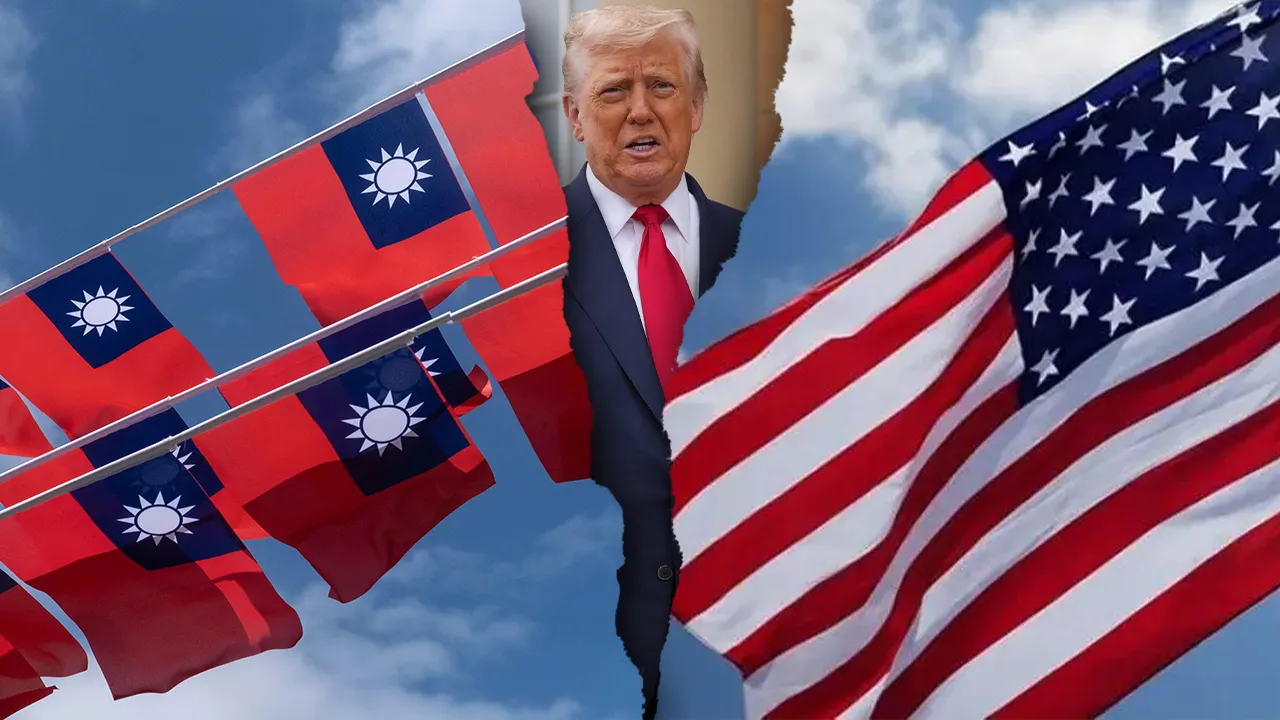
President Trump’s administration unveiled a historic $11 billion arms deal with Taiwan on Wednesday, marking the largest U.S. military sale ever to the island nation. The package surpasses the previous record of $8.4 billion authorized during former President Joe Biden’s administration.
The comprehensive agreement consists of eight separate arms sale arrangements covering a wide range of military hardware and systems. A centerpiece of the deal is more than $4 billion worth of 82 High Mobility Artillery Rocket Systems (HIMARS) and 420 Army Tactical Missile Systems (ATACMS) – weapons systems similar to those the United States has provided to Ukraine during its conflict with Russia.
Additional components include 60 self-propelled howitzer systems valued at over $4 billion and unmanned aerial vehicles (drones) worth more than $1 billion. The package is rounded out with military software ($1+ billion), Javelin and TOW missiles (over $700 million), helicopter spare parts ($96 million), and refurbishment kits for Harpoon missiles ($91 million).
The State Department defended the agreement as essential for America’s “national, economic, and security interests,” highlighting that it supports Taiwan’s ongoing efforts to modernize its armed forces and maintain credible defensive capabilities. This stance reflects the longstanding U.S. commitment to Taiwan’s security under the Taiwan Relations Act of 1979, which requires Washington to provide Taiwan with defensive arms.
The timing of the deal comes amid escalating tensions in the Taiwan Strait and the broader Indo-Pacific region, where China has increased military exercises and intimidation tactics. Security experts have warned that U.S. missile stockpiles could be rapidly depleted in the event of a conflict with China, making the bolstering of Taiwan’s defensive capabilities a strategic priority.
Taiwan’s Foreign Minister Lin Chia-lung expressed gratitude for the U.S. commitment, emphasizing that such support is “key for deterring a conflict in the Taiwan Strait.” The arms sale represents a significant enhancement of Taiwan’s self-defense capabilities at a time when Chinese military activities around the island have intensified.
China’s response was swift and forceful. Foreign Ministry spokesperson Guo Jiakun condemned the deal, claiming that Taiwan independence forces are “squandering the hard-earned money of the people to purchase weapons at the cost of turning Taiwan into a powder keg.” He warned that U.S. arms support “will only accelerate the push of the Taiwan Strait toward a dangerous situation of military confrontation and war.”
The Chinese government has long considered Taiwan a breakaway province that must be reunified with the mainland, by force if necessary. President Xi Jinping has made Taiwan’s “reunification” with China a cornerstone of his leadership and has refused to rule out military action to achieve this goal.
This arms deal requires congressional approval before implementation, though significant opposition is not expected given the traditional bipartisan support for Taiwan’s defense needs. The package reflects the continued U.S. adherence to its “One China Policy” while simultaneously maintaining unofficial relations with Taiwan and providing defensive capabilities.
The massive arms transfer represents one of the most significant demonstrations of U.S. support for Taiwan in recent years and signals the Trump administration’s commitment to countering China’s growing influence in the region. It also highlights the increasing importance of Taiwan in U.S. strategic calculations in the Indo-Pacific, particularly regarding semiconductor manufacturing and other critical industries where Taiwan plays a vital global role.
As regional tensions continue to simmer, the arms package stands as a tangible symbol of America’s determination to preserve stability in the Taiwan Strait and to support the democratic government in Taipei against Beijing’s increasingly assertive posture.
Fact Checker
Verify the accuracy of this article using The Disinformation Commission analysis and real-time sources.

11 Comments
The scale of this deal underscores the Biden administration’s strategic priority of strengthening Taiwan’s defenses against potential aggression from China.
It will be crucial to monitor how China responds to this major US military support for Taiwan.
This massive arms package for Taiwan is a clear message from the US about its commitment to the island’s security and autonomy. It’s bound to further strain US-China relations.
This is a significant arms sale, both in terms of the dollar value and the types of advanced weapons systems involved. It signals a deepening US-Taiwan defense cooperation.
Arming Taiwan with advanced missile systems like HIMARS is a bold move by the US. It will undoubtedly heighten the stakes in the US-China rivalry over Taiwan.
From a military and defense standpoint, this is a major development. The US is clearly doubling down on its commitment to Taiwan’s defense capabilities.
I wonder how this will impact ongoing diplomacy between the US and China regarding the Taiwan issue.
The details on this massive arms sale to Taiwan are quite striking. It’s clear the US is committed to bolstering Taiwan’s defense capabilities, especially with systems like HIMARS that have proven effective in Ukraine.
I’m curious to see how China will respond to this significant military aid package for Taiwan.
This deal underscores the strategic importance of Taiwan for the US, both economically and geopolitically. It will be interesting to monitor how it impacts regional tensions in the Taiwan Strait.
The scale of this sale is unprecedented. It shows the Biden administration is willing to take a strong stance in supporting Taiwan’s security.