


Listen to the article
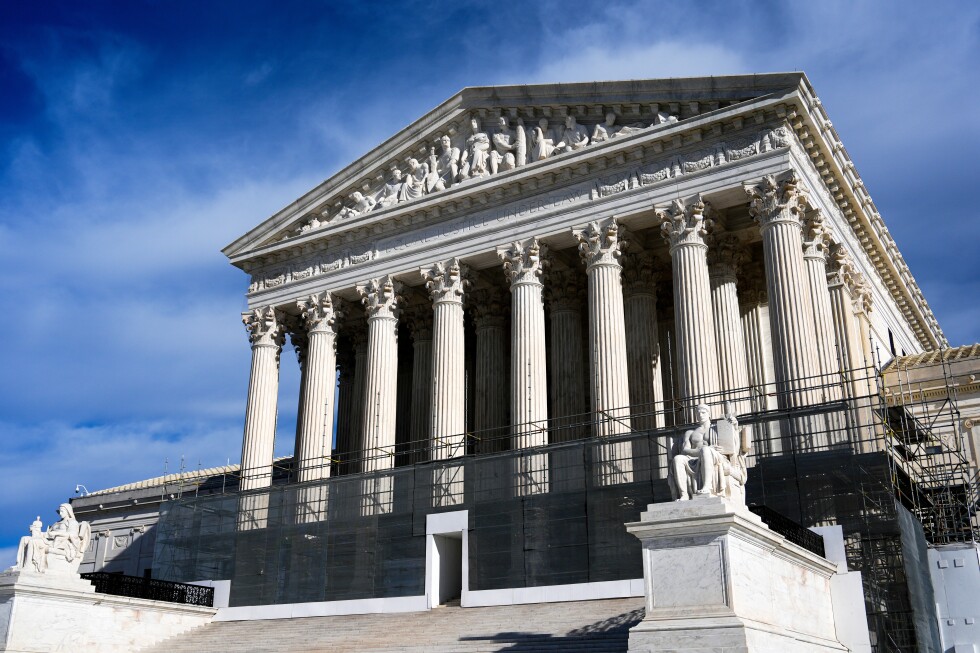
The Supreme Court on Monday ruled in favor of Republicans by blocking a New York state court decision that would have required redrawing the boundaries of New York City’s only Republican-held congressional district. The high court determined that the district, which covers Staten Island and part of Brooklyn, will not need to be redrawn for the 2026 elections despite lower court findings that the current boundaries unfairly diminish the voting power of Black and Hispanic residents.
In a decision that divided along ideological lines, the Supreme Court’s conservative majority halted the state court ruling without providing detailed reasoning, as is common in emergency appeals. The three liberal justices dissented from the decision.
The district in question is represented by Republican Congresswoman Nicole Malliotakis and encompasses all of Staten Island along with a small section of southern Brooklyn. A New York state judge had previously ordered the state’s Independent Redistricting Commission to redraw the map after determining that the district diluted minority voting power.
Justice Samuel Alito wrote that the state judge’s ruling under New York’s constitution amounted to “unadorned racial discrimination” that violates the U.S. Constitution. This assertion reflects the conservative majority’s skepticism toward redistricting decisions that explicitly consider race as a factor.
In her dissent, Justice Sonia Sotomayor criticized the Supreme Court’s intervention, writing: “Time and again, this Court has said that federal courts should not meddle with state election laws ahead of an election.” She characterized the majority’s decision as “the unprecedented step of staying a state trial court’s decision in a redistricting dispute on matters of state law without giving the State’s highest court a chance to act.”
The ruling represents a significant victory for Republicans in the ongoing national battle over congressional redistricting. With the GOP currently holding a razor-thin majority in the House of Representatives, every district has outsized importance for control of the chamber in upcoming elections.
Congresswoman Malliotakis celebrated the decision, characterizing the redistricting effort as “an attempt to manipulate our state’s courts to use race as a weapon to rig our elections.” She thanked the justices for preventing voters in her district from being “stripped of their ability to elect a representative who reflects their values.”
This case is part of a broader redistricting struggle across the country that intensified after former President Donald Trump urged Republicans in Texas to redraw congressional districts for political advantage. Democrats responded with their own redistricting efforts in states like California, leading to legal challenges across multiple states.
The Supreme Court has already allowed controversial new maps in California and Texas to be used in this year’s elections while court challenges continue. The New York ruling follows this pattern of permitting existing maps to remain in place during election cycles.
The original challenge to New York’s 11th Congressional District came from a law firm affiliated with Democrats. They had proposed reshaping the district by removing the Brooklyn section and instead incorporating a portion of Lower Manhattan. This change would have replaced Republican-leaning neighborhoods with areas that strongly favored Democrats in recent elections.
While the state judge didn’t approve that specific proposal, he ruled that changes were necessary to better reflect the growing Black and Hispanic populations on Staten Island. The judge had deferred to the state’s bipartisan redistricting commission to develop a new map, but the Supreme Court’s ruling now halts that process.
New York State Republican Party Chairman Ed Cox praised the Supreme Court order, criticizing Democratic Governor Kathy Hochul and other party leaders for allowing the redistricting challenge to proceed in the first place.
The decision highlights the Supreme Court’s increasing involvement in redistricting disputes and reflects the ongoing tension between state and federal authority in managing elections, particularly in politically competitive districts that could determine control of Congress.
Fact Checker
Verify the accuracy of this article using The Disinformation Commission analysis and real-time sources.

10 Comments
The Supreme Court’s decision to preserve the GOP-held district in NYC is sure to be a contentious issue. Redistricting should prioritize fair representation for all constituents, not political gain. I’m curious to see what further challenges or reforms may arise from this case.
Redistricting can be a politically charged process, and this case underscores the need for more transparent and impartial methods. I’m curious to see how this issue evolves and whether it leads to any changes in how district boundaries are drawn.
This ruling highlights the ongoing debate around gerrymandering and its impact on minority voting power. While the Supreme Court upheld the GOP-held district, I wonder if there will be further legal challenges or calls for redistricting reform.
The Supreme Court’s decision to maintain the GOP-held district in NYC is sure to be controversial. Redistricting is a complex issue, and I hope this case prompts further scrutiny of the process and calls for reform to ensure fair representation for all constituents.
Redistricting can be a contentious issue, with both parties often trying to gain an advantage. It’s important to find a balance between political interests and ensuring equitable representation for all constituents. I hope this case prompts deeper discussions on redistricting reform.
The Supreme Court’s decision to preserve the GOP-held district in NYC is sure to be met with criticism from those who believe it diminishes minority voting rights. Redistricting is a crucial issue, and I hope this case sparks productive discussions on how to ensure fair representation.
Interesting development in NY politics. While the Supreme Court decision may preserve the GOP district, it raises questions about fair representation for minority voters. I’m curious to see how this plays out and if there will be further legal challenges.
The Supreme Court’s ruling to maintain the GOP-held district in NYC is sure to be controversial. Minority voting rights should be a top priority when redrawing district boundaries. Hopefully, this leads to more scrutiny of the redistricting process going forward.
This ruling highlights the ongoing challenges of redistricting and the need for more transparent and impartial processes. While the decision may be a strategic win for Republicans, it raises concerns about minority voting rights. I hope this case leads to productive discussions on how to ensure fair representation.
Preserving the GOP district in NYC may be a strategic win for Republicans, but it raises concerns about fair representation. Redistricting is a complex issue, and I hope this case leads to more transparent and impartial processes in the future.