


Listen to the article
In a rare break from her measured approach, Virginia Governor Abigail Spanberger addressed several contentious issues that have marked her first hundred days in office, firmly declaring “Virginia is not a sanctuary state” while defending her immigration enforcement policies.
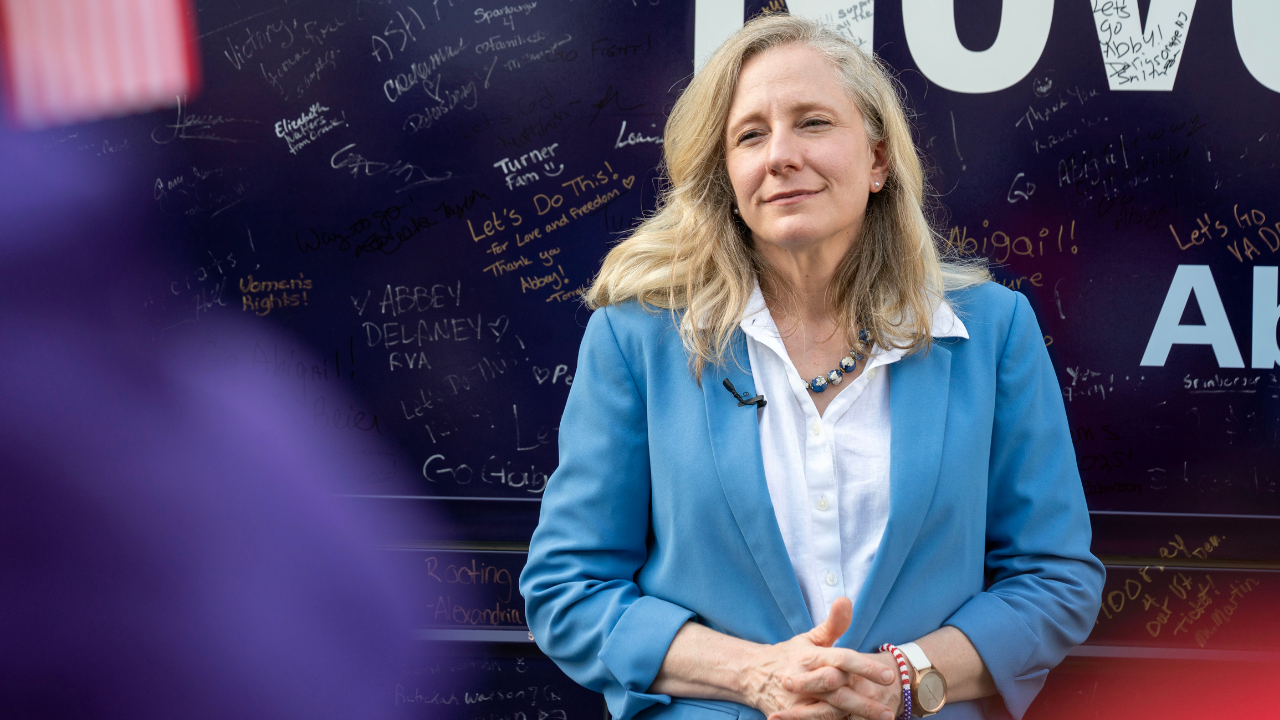
Speaking outside the Executive Mansion in Richmond, Spanberger pushed back against criticism of her decision to terminate predecessor Glenn Youngkin’s 287(g) cooperation agreement with the Department of Homeland Security. The agreement allowed state police to perform certain immigration enforcement functions under federal supervision.
“There’s a lot of misinformation out there,” Spanberger said, explaining that her directive only prevents Virginia State Police from being placed under DHS supervision. “I feel very strongly about that because Virginia State Police is a top-notch law enforcement agency. And I don’t think it is responsible for us or me as governor or the Commonwealth of Virginia to put Virginia State Police under the supervision or direction of ICE.”
The governor emphasized that her policy does not prohibit local law enforcement agencies from entering their own 287(g) agreements with federal immigration authorities, stating, “My predecessor said they had to. I simply said I was not forcing them to.”
However, critics point to a bill that arrived on Spanberger’s desk on March 31, sponsored by State Senator Saddam Salim (D-Dunn Loring), which would ban any Virginia law enforcement agency from engaging in 287(g) agreements unless presented with a judicial warrant, subpoena, or detainer signed by a judge.
The immigration enforcement debate has intensified following several high-profile crimes allegedly committed by undocumented immigrants in Virginia, with opponents arguing that Spanberger’s policies create a de facto sanctuary environment.
Spanberger insisted that interagency cooperation remains intact, noting that the Department of Corrections still provides monthly lists of non-citizens in custody to DHS. “It was only the 287(g) agreements that I said state agencies cannot enter into,” she clarified, adding that task forces continue to collaborate and that Virginia authorities will assist ICE when warrants are involved.
The governor also addressed a recent Washington Post poll showing her with the lowest net-favorability rating of any Virginia governor since the 1990s. “I would say, if everybody hated me, why is everybody putting my face on their mailers for the referendum?” she remarked, suggesting her visibility indicates public influence rather than unpopularity.
Spanberger defended her support for a controversial redistricting effort backed by Virginia Senate President L. Louise Lucas, despite previously opposing gerrymandering during her 2019 campaign. Critics claim the proposed redraw would effectively eliminate all but one Republican congressional district in the state.
“What matters to me in the end is what I am delivering for people,” Spanberger stated. “I knew when I first was elected that I would have a big target on me.” She dismissed suggestions that she should be more actively campaigning for the redistricting plan, citing differences between her position as a first-term governor and that of California’s Gavin Newsom, who has been more publicly vocal about similar initiatives.
Meanwhile, ICE Director Todd Lyons challenged Spanberger’s approach, telling Fox News the governor should “read the headlines” about immigration-related issues in Fairfax County and elsewhere before distancing herself from federal immigration enforcement. “I never thought in my whole career, someone would campaign on going against law enforcement,” Lyons said.
The tensions highlight Virginia’s evolving political landscape, with Spanberger navigating the complexities of immigration policy in a state that has seen significant demographic and political shifts in recent years. As a former CIA officer and moderate Democrat who flipped a Republican-held congressional seat before becoming governor, Spanberger faces the challenge of balancing progressive priorities with public safety concerns in a commonwealth that remains politically divided.
Fact Checker
Verify the accuracy of this article using The Disinformation Commission analysis and real-time sources.

11 Comments
This is a complex issue with valid concerns on both sides. I’m glad the governor is engaging directly to provide clarity and correct misinformation. Maintaining public safety while respecting civil liberties is crucial.
As a Virginia resident, I appreciate the governor taking a firm stance on maintaining state control over law enforcement. Immigration is a federal responsibility, and the state shouldn’t be pressured to deputize its police force.
Agreed. The governor seems to be striking the right balance between cooperating with federal authorities and preserving the independence of state-level policing.
As someone who follows mining and energy issues, I’m curious how these immigration policy changes could impact the workforce and operations in those sectors. Hoping the governor can provide clarity on how businesses will be affected.
Good point. The mining, metals, and energy industries rely on a stable legal workforce, so any shifts in immigration enforcement could have ripple effects that are worth understanding.
I’m glad the governor is addressing the ‘sanctuary state’ allegations head-on. Clarity and transparency on these policies is crucial, especially when there’s a lot of misinformation circulating.
Yes, getting the facts out there and correcting misconceptions is the right approach. These are sensitive issues that require nuanced policymaking.
The governor’s stance on not placing the state police under ICE supervision seems reasonable, given the potential conflicts that could arise. Maintaining the integrity and independence of state law enforcement is important.
Agreed. Keeping state and federal immigration enforcement roles distinct can help avoid blurring of responsibilities and potential abuses of authority.
Interesting to see the governor addressing these immigration enforcement issues. It’s a complex topic with valid concerns on both sides. Curious to hear more about the specifics of the policy changes and how they’ll impact local law enforcement cooperation with federal agencies.
The governor seems to be striking a balance between state and federal roles in immigration enforcement. It will be important to monitor how this plays out and ensure public safety remains the top priority.