


Listen to the article
U.S. Southern Command Chief Retires Amid Controversial Caribbean Drug Operations
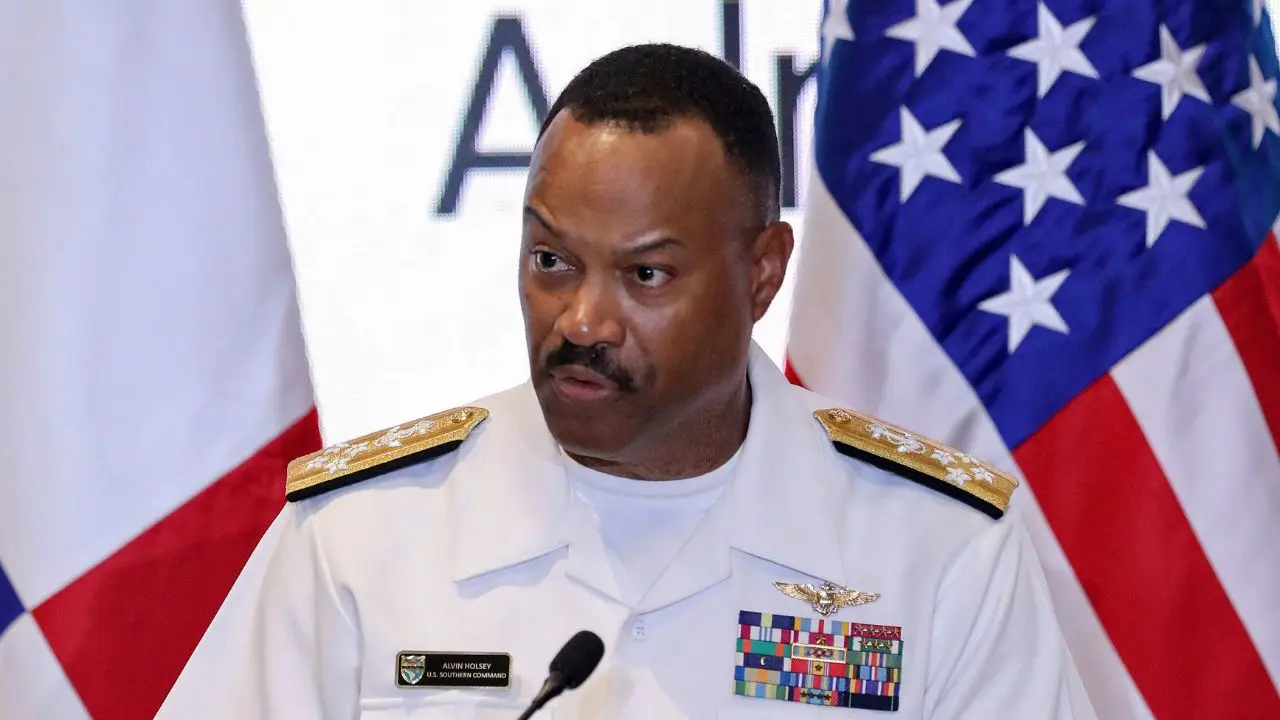
Navy Admiral Alvin Holsey, commander of U.S. Southern Command (SOUTHCOM), retired Friday after less than a year in his position as scrutiny intensifies over military strikes against alleged drug-trafficking vessels in Caribbean waters.
Holsey, who assumed command in November 2024, unexpectedly announced his retirement in October as operations escalated in the region. His departure comes amid the Trump administration’s aggressive campaign against drug cartels, which President Trump has declared a central focus of his security policy.
The timing of Holsey’s retirement is unusual, especially considering his predecessor, Army General Laura Richardson, served a full three-year term from 2021 to 2024. While Holsey did not publicly state reasons for his early departure, The New York Times reported that tensions had developed between the admiral and Secretary of War Pete Hegseth over the pace and nature of anti-drug operations.
According to the Times, Holsey had expressed concerns about some of the strikes, which reportedly angered Hegseth, who believed the admiral wasn’t being aggressive enough in targeting drug traffickers. This reportedly led to Hegseth pressuring Holsey to step down.
At Friday’s retirement ceremony, Holsey simply stated, “We have worked hard and tirelessly to build relationships and understand requirements across the region. To be a trusted partner, we must be credible, present and engaged.”
The Pentagon referred media inquiries to Hegseth’s October social media statement, which read: “The Department thanks Admiral Holsey for his decades of service to our country, and we wish him and his family continued success and fulfillment in the years ahead.”
Holsey’s naval career spanned 37 years after his commissioning in 1988. His experience included flying SH-2F Seasprite and SH-60B Seahawk helicopters, serving as SOUTHCOM deputy commander, deputy chief of Naval personnel, and commander of the USS Carl Vinson carrier strike group.
Air Force Lieutenant General Evan Pettus has taken over SOUTHCOM leadership. Pettus brings extensive combat experience, with more than 2,700 flight hours in F-15E Strike Fighter and A-10 “Warthog” aircraft, and participation in Operations Iraqi Freedom and Inherent Resolve.
The leadership change occurs as the Trump administration intensifies its military approach to combating drug trafficking. In February, the administration designated several cartel groups, including Tren de Aragua and Sinaloa, as foreign terrorist organizations. Since September, U.S. forces have conducted over 20 strikes against suspected drug vessels in Latin American waters.
The administration also took the unprecedented step of deploying the aircraft carrier USS Gerald R. Ford to the region and established a new counter-narcotics task force. On Wednesday, U.S. forces seized an oil tanker off Venezuela’s coast, further escalating operations.
These actions have drawn increasing congressional scrutiny. A bipartisan group including Senate Minority Leader Chuck Schumer (D-N.Y.), Senators Tim Kaine (D-Va.), Adam Schiff (D-Calif.), and Rand Paul (R-Ky.) introduced a war powers resolution on December 3 aimed at preventing military action against Venezuelan territory.
Critics have particularly questioned the legality of some operations, especially after reports emerged that a second strike was conducted against a vessel that had survivors from an initial attack in September.
Despite growing congressional concerns, the Trump administration maintains it has full authority to conduct these operations and has signaled intentions to expand the campaign. During a December 3 statement, President Trump said, “We’re knocking out drug boats right now at a level that we haven’t seen. Very soon we’re going to start doing it on land too.”
The administration’s increasingly aggressive stance toward drug cartels and the command transition at SOUTHCOM suggest a new phase in U.S. counter-narcotics operations may be unfolding in Latin America, with potentially significant implications for regional security dynamics.
Fact Checker
Verify the accuracy of this article using The Disinformation Commission analysis and real-time sources.

13 Comments
While the administration’s focus on targeting drug cartels is laudable, the reported tensions between the SOUTHCOM commander and the Secretary of War are concerning. Maintaining a clear chain of command and ensuring that military operations adhere to proper protocols is crucial.
Absolutely. Transparency and accountability are essential, especially when it comes to military activities in sensitive regions like the Caribbean. I hope the upcoming scrutiny will provide a clearer picture of what led to the commander’s abrupt retirement.
This story highlights the delicate balance between political priorities and military decision-making. I’m curious to learn more about the specific concerns the SOUTHCOM commander had regarding the anti-drug operations, and whether they were justified.
While the administration’s focus on combating drug cartels is understandable, the reported tensions between the military leadership and political appointees are troubling. Maintaining a clear chain of command and ensuring that operations adhere to ethical and legal standards is crucial.
Agreed. Proper oversight and accountability are essential, especially when it comes to sensitive military activities in the Caribbean. I hope the upcoming scrutiny will provide a clearer picture of what led to this abrupt retirement and what steps will be taken to address any issues.
The retirement of the SOUTHCOM commander amidst scrutiny over Caribbean military operations is certainly a concerning development. It will be important for the administration to address any issues or misconduct in a transparent manner and ensure that future operations are conducted with proper oversight.
This seems like a complex issue with a lot of moving parts. I’m curious to learn more about the specific concerns the admiral had regarding the strikes against alleged drug-trafficking vessels. Transparency around the decision-making process would be important.
Agreed. The timing of the retirement and the reported tensions between the admiral and the administration raise some red flags. Hopefully, there will be a thorough investigation to understand what led to this abrupt departure.
Interesting to see the SOUTHCOM commander retire abruptly amidst scrutiny over military operations in the Caribbean. Seems there may have been tensions between the admiral and the administration over the conduct of these anti-drug efforts.
Yes, it’s concerning to hear about potential disagreements over the tactics used in these operations. Proper oversight and accountability are crucial when it comes to military activities in the region.
This is an important story to follow, as the dynamics between military leadership and political appointees can have significant implications for the conduct of operations. I’ll be keeping an eye on any further developments around this retirement and the ongoing Caribbean drug interdiction efforts.
This is a complex and sensitive issue that deserves close attention. The reported disagreements between the SOUTHCOM commander and the administration over the conduct of anti-drug operations in the Caribbean raise important questions about military decision-making and civilian control. Transparency and accountability will be key going forward.
The administration’s aggressive stance on drug cartels is understandable, but the military operations in the Caribbean need to be carried out responsibly and with proper oversight. I hope the upcoming scrutiny will shed light on any potential issues or misconduct.